
Last updated November 25, 2026
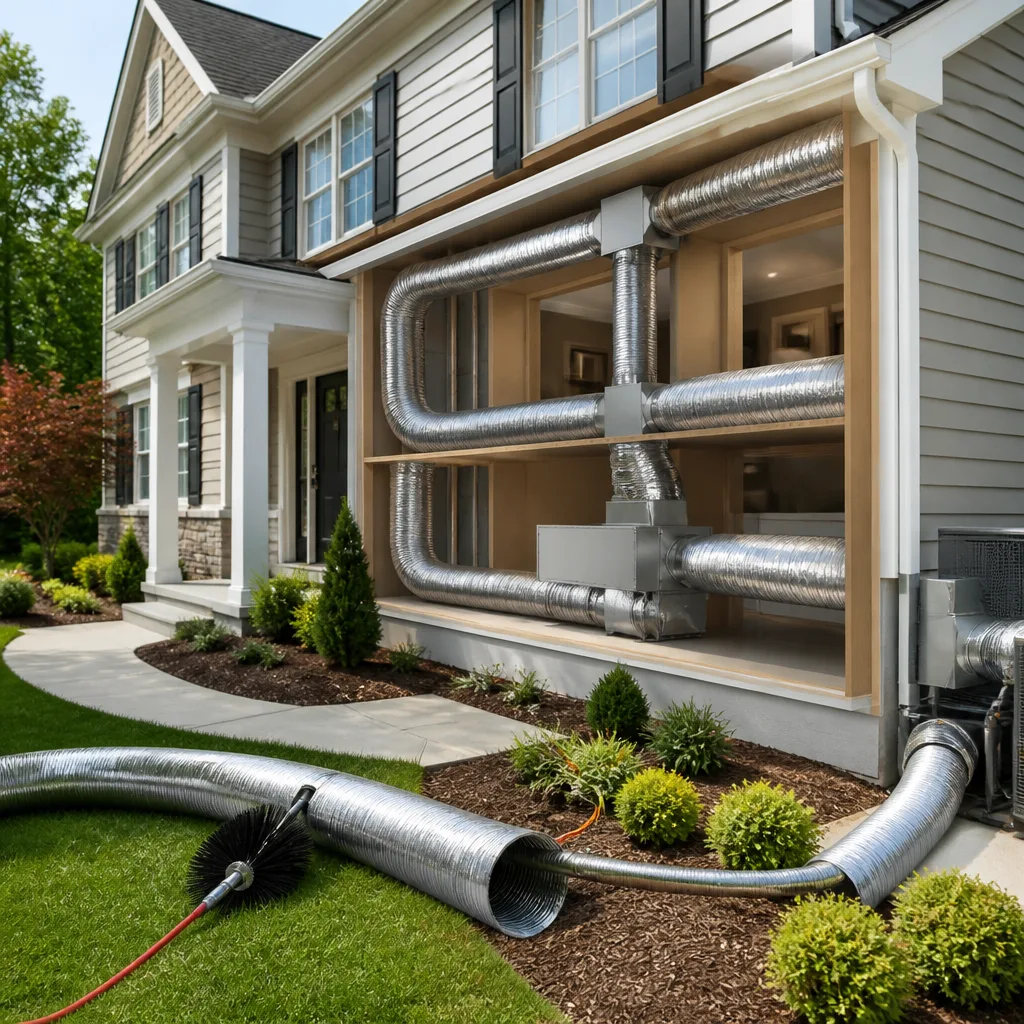 Whole-home duct cleaning
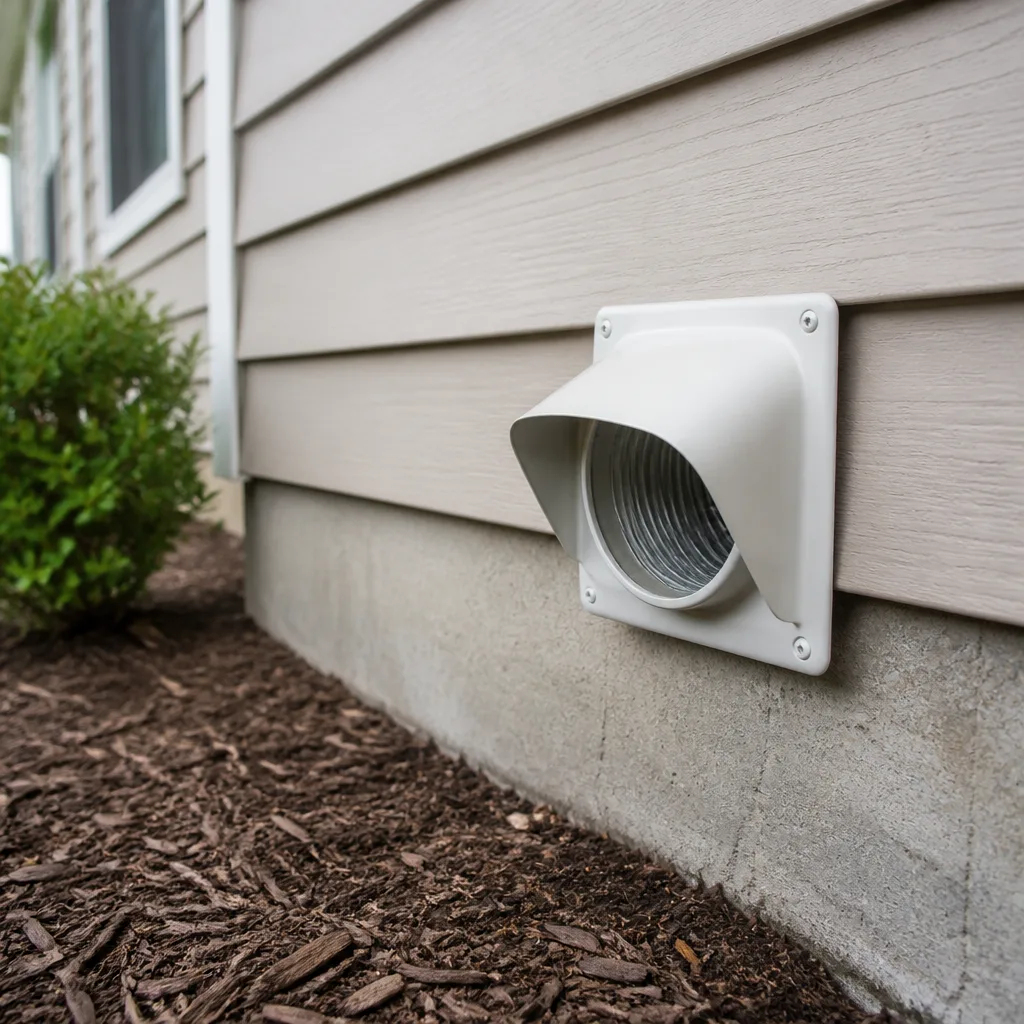 Dryer vent cleaning
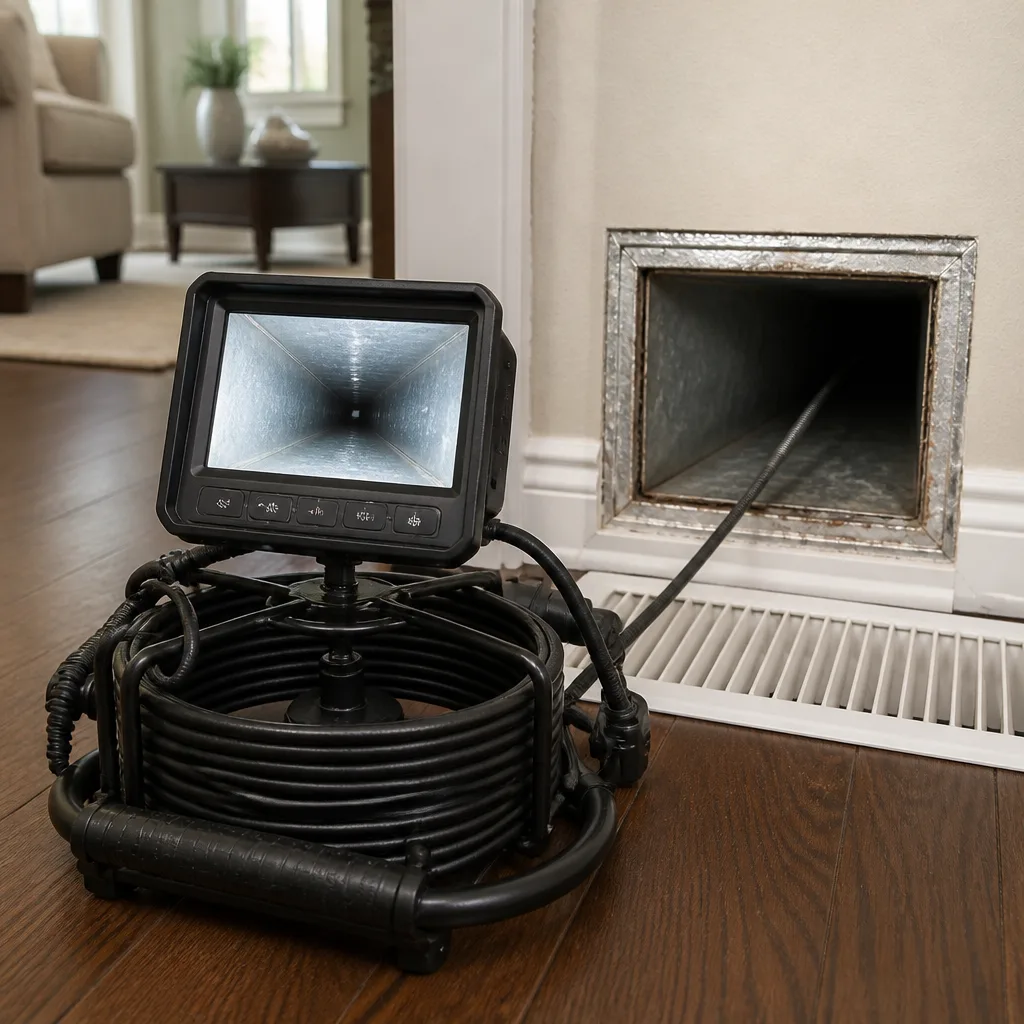 Camera inspection
 Sanitizing & deodorizing
Whole-system duct and dryer vent check with before-and-after photos - you see exactly what came out of your vents
That "$99 whole-house special" is a bait ad - the real number appears once they are in your hallway, or the "clean" is a shop-vac at the register. We photograph the inside of your ducts before and after instead.
Air Duct Cleaning Cost Breakdown: The Fullerton Homeowner’s Reference for 2026
The correct price for air duct cleaning in Fullerton in 2026 is not $99, and it is not always $900. It depends on square footage, duct configuration, system access, and whether the air handler is in scope. Here’s how to do the math.
Most published prices for duct cleaning are not prices at all. They’re a door-opener: a coupon rate that gets a technician into your home and then expands once the truck is parked. The homeowner never sees the actual scope of work until the invoice grows. What follows is a line-by-line breakdown of what a legitimate Fullerton duct cleaning job costs, what each pricing tier actually buys, and how to calculate a fair number for your specific house before you call anyone. We’ll cover why per-vent pricing tends to cost more in the end, what a real itemized estimate looks like, and which add-ons earn their place in a quote. If you want the short version on how the work is done, see our guide to air duct cleaning.
Quick Answer
A full-system air duct cleaning in Fullerton typically runs $350 to $850 for a single-system home, with multi-system houses, hard-to-access attic ductwork, and heavy renovation debris pushing into the $900 to $1,200 range. A legitimate job includes vacuum setup, access-point sealing, contact vacuuming of every run, air handler cleaning, and sanitizing. Anything under $250 for a whole-home job usually skips most of that scope, and anything over $1,200 should come with a written line-item explanation of exactly what’s what.
Styles & brands we work with
- Whole-home duct cleaning
- Dryer vent cleaning
- Camera inspection
- Sanitizing & deodorizing
Table of Contents
- Per-Vent Pricing vs. Whole-System Pricing
- What Drives the Cost of Duct Cleaning in Fullerton
- What a Legitimate Itemized Quote Includes
- The Four Price Tiers and What Each One Buys
- Add-Ons That Are Legitimate vs. Add-Ons That Aren’t
- How to Get a Binding Written Quote
- Calculating a Fair Price for Your Home
- HVAC Cleaning and Dryer Vent: Separate Line Items
Per-Vent Pricing vs. Whole-System Pricing
Per-vent pricing is the reason duct cleaning has a trust problem. A company quotes “$49 per vent,” the homeowner counts twelve vents, and the invoice lands at $588 before any work starts. Or the technician arrives, counts fourteen vents and two returns, adds a supply-trunk charge and a sanitizing fee, and the resulting invoice is nearly double what the homeowner expected. The problem isn’t the arithmetic. It’s that per-vent pricing has no relationship to the actual labor involved.
Here’s what per-vent pricing consistently skips:
- The return-side trunk line. Most per-vent quotes only cover supply registers. The return ducts carry the heaviest dust load and rarely get touched.
- The air handler. Per-vent pricing almost never includes the blower compartment, evaporator coil, or plenum. That’s where the dust source usually lives.
- Vacuum setup and containment. A proper truck-mount or portable HEPA unit with negative pressure takes time to set up and seal. Per-vent jobs often skip it and run a shop vac from register to register.
- Contact vacuuming labor. Every supply boot and return grille needs to be physically brushed with the vacuum running. Per-vent pricing treats this as optional.
Whole-system pricing inverts that. The quote is for the entire system scope: one price for all supply runs, all returns, the air handler, and the sanitizing treatment. The homeowner knows the total before the truck arrives, the number of vents becomes irrelevant to the invoice, and the technician’s incentive runs toward doing the full scope rather than counting registers.
For Fullerton homes, which frequently have between 8 and 16 supply runs plus two or three returns in a single-story ranch or a two-story with a central trunk, whole-system pricing is almost always the better structure. If you’re near the older neighborhoods around Downtown Fullerton or along the Commonwealth corridor, the duct count can creep higher than the original build documents suggest because of additions and conversions over the decades.
What Drives the Cost of Duct Cleaning in Fullerton
Two Fullerton houses on the same block can quote $200 apart on a duct cleaning job. The difference usually comes down to five variables we look at when we’re building an estimate.
Foundation Type: Slab vs. Raised
A large share of Fullerton’s residential housing sits on slab-on-grade foundations, which puts most of the trunk line in the attic. That’s actually good for cleaning access, because attic ductwork is reachable through a scuttle or a hatch. Raised-foundation homes, more common in pockets that predate the postwar build-out, have under-floor ducts that force shorter vacuum runs and tighter containment. Under-floor work takes more setup time and more access points, and that shows up in the quote.
Attic Ductwork Access Difficulty
Some Fullerton attics are walkable with a full standing headroom down the center spine. Others are a low-pitch crawl that forces a technician onto their knees for the entire run. The labor difference is significant. Old flex duct tangled around joists, or a trunk line routed over an addition with no clear walking path, both raise the job time. That’s real cost, and any legitimate contractor will reflect it in the estimate.
Single System vs. Multi-System
Many Fullerton homes run a single HVAC system with one air handler. Larger two-story homes, particularly in the hillside areas, often have a second system serving a second floor or a converted space. Each system is a separate scope. A two-system house costs roughly 1.6 to 1.9 times a single-system house because the setup, vacuum runs, air handler cleaning, and sanitizing treatment all repeat. The second system is not a small add-on, and any quote that treats it as one is probably not cleaning it properly.
Contamination Level
Renovation debris, pet dander, tobacco residue, and mold amplification in a return plenum all change the scope. Standard cleaning handles normal residential buildup. Moderate or heavy contamination needs additional equipment and typically additional time. If a home recently went through a kitchen remodel or a flooring replacement, the ducts will carry drywall dust and sawdust, and the quote should reflect it openly.
Whether Coil and Air Handler Are In Scope
Cleaning the ducts without touching the evaporator coil is a half-clean system. The coil traps dust and moisture, and it deposits them back into the air stream every time the system runs. Some quotes leave coil cleaning out to keep the number low, then sell it as a “surprise” once the technician is on site. A written survey of the system before quoting prevents that.
What a Legitimate Itemized Quote Includes
Here’s what actually happens during a proper duct cleaning, in the order it usually happens. Use this list to check whether the quote you’ve been given reflects the real scope or just the saleable parts of it.
- On-site system survey. Before any tools come out, the technician counts supply runs and returns, locates the air handler, checks the coil, and looks at the return plenum. This walk-through is how the quote becomes a real number instead of a guess.
- Vacuum setup and negative pressure. A professional-grade vacuum system (Rotobrush and Nikro are the industry standards) connects to the main trunk through a sealed access port. The goal is a slight negative pressure through the whole system so dislodged dust travels to the vacuum, not into the room.
- Access points. Cutting and sealing access ports at strategic trunk and run locations. Each port is sealed with foil tape, mastic, or a dedicated cap after the work is done, so the system is air-tight again when the technician leaves.
- Contact vacuuming every supply run. A rotary brush or air whip runs through each supply line with the main vacuum pulling behind it. Every register boot gets the same treatment. This is the labor-heavy step that per-vent pricing usually skips.
- Return duct cleaning. The return plenum and return trunks carry the heaviest dust load. They need the same brush-and-vacuum treatment, plus a wipe-down if the buildup has caked on.
- Air handler and coil cleaning. Blower wheel, blower compartment, evaporator coil face, and filter rack. Heavily soiled coils may need a dedicated cleaning with a proper coil cleaner.
- Sanitizing treatment. An EPA-registered sanitizer applied to the cleaned duct interior controls mold spores and odor-causing organisms. This step is optional on clean systems and essential on systems with musty odor, pet dander, or visible growth.
- Before-and-after documentation. Every professional-grade cleaning produces photos of the duct interior before and after. If the technician won’t show you the photos, the cleaning is hard to verify.
- Filter replacement and system check. A fresh filter in the rack, and a run-test of the system to confirm airflow is where it should be.
If a quote skips steps 2, 4, 5, or 6, it is not a full-system cleaning. It might be a partial cleaning, and a partial cleaning has real value in some cases, but the price should reflect that and the quote should say so plainly.
The Four Price Tiers and What Each One Buys
Air duct cleaning in Fullerton settles into four recognizable tiers. The numbers below are typical estimated ranges for a single-system home with 8-16 supply runs and standard access.
Tier 1: $99 to $250 (The Coupon Job)
This is the “we’re in your neighborhood today” price. What it buys: a technician who runs a shop-type vacuum over the grilles visible in each room, possibly a quick brushing of the register boots, and an invoice that expands once contamination is “discovered.” Return ducts, air handler, and coil are effectively never in scope. If the job is honest and it’s just a basic surface-level cleaning, it’s a $150-250 partial service – not the full-system cleaning the coupon implies.
Tier 2: $250 to $450 (A Partial Full-System Cleaning)
This tier touches the main trunk and supply runs but often leaves the return side or the air handler out. Sometimes this is legitimate: a home that’s been cleaned recently and only needs a maintenance pass. Sometimes it’s a full-system quote that quietly dropped two line items to hit a price. Read the itemization carefully. If the air handler and return plenum are missing, it’s not a full-system job.
Tier 3: $450 to $850 (The Legitimate Full-System Cleaning)
This is the range where most Fullerton single-system homes land for a full scope. Supply runs, returns, air handler, coil, and sanitizing are all included, and the job takes four to eight hours depending on access. Rotobrush or Nikro equipment is used, access ports are sealed after, and before-and-after photos document the work.
Tier 4: $850 to $1,200 (Multi-System, Heavy Contamination, or Difficult Access)
A two-system home, a house coming out of a major renovation, or a property with a low-pitch crawl attic and long runs. Additional scope: a second air handler, a second coil, contamination-class cleaning with dedicated containment equipment (Abatement Technologies systems are built for exactly this), or a mold remediation concern that goes beyond standard sanitizing.
Any quote under $99 is a door-knock. Any quote over $1,200 needs to be a detailed line-item estimate with a reason for every line. The written estimate sets the final price, and if the scope hasn’t changed, the invoice shouldn’t either.
Add-Ons That Are Legitimate vs. Add-Ons That Aren’t
The line between a legitimate upsell and a manufactured fee is usually whether the add-on addresses a measurable condition in the system. Here’s how we sort them.
Legitimate Add-Ons
- Evaporator coil cleaning. The coil is where dust, moisture, and biological growth collect. Cleaning it after the ducts have been cleared is logical and has measurable effect on airflow and coil efficiency. Legitimate every time the coil is visibly soiled.
- Duct repair and sealing. Cleaning frequently reveals disconnected joints, torn flex duct, and failed mastic at trunks. Sealing those leaks is the single highest-value follow-up to a cleaning. We do this in-house so a discovered leak doesn’t turn into a referral to a second contractor. See Fullerton Air Duct Cleaning Co for the full scope. The right equipment changes what’s possible here – one visit can clean, repair, and seal.
- Post-cleaning filtration upgrade. A media filter cabinet or a higher-MERV filter rack (Honeywell and Aprilaire are the brands most commonly installed) keeps the cleaned system cleaner for years. Worth the cost on a system that was heavy before cleaning.
- Dryer vent cleaning. Separate from the HVAC scope, but almost always worth doing at the same time. Covered in our dryer vent cleaning guide.
- UV-C air treatment. Legitimate for homes with confirmed biological growth on the coil or persistent musty odor after cleaning. Not legitimate as a blanket “add this for cleaner air” line item.
Add-Ons That Usually Aren’t Worth It
- “Antimicrobial fogging” sold as routine. If there’s no visible growth and no odor, standard sanitizing covers the same ground. Fogging on a clean duct is a margin line, not a cleaning step.
- “Sealing up every duct” without identifying a leak. A $500 “duct sealant treatment” applied without a leak survey is a cost item, not a repair. Legitimate sealing identifies the leaks first.
- Replacing intact flex duct during a routine cleaning. Duct that’s holding pressure and shows no tear doesn’t need replacement because a technician said so. Ask for the leak test.
- “Whole-house HEPA” retrofit add-ons. Real HEPA bypass filtration is expensive and often under-sized for the existing return. Correct sizing matters, and a quick add-on sale skips the sizing.
We keep our scope clean on this: what we find, we can fix. If a duct joint is separated during cleaning, we can seal it or repair it on the same call. The repair is a real line item, quoted before work begins, and photographed after.
How to Get a Binding Written Quote
A quote given over the phone, on the website, or as a flat “starting at” number is not a quote. It’s a marketing figure. Actual cost depends on things only visible on site: duct count, foundation type, attic access, contamination level, system count, and coil condition. A company that gives you a real number without looking has either over-quoted you for safety or under-quoted you to close the sale. Neither is doing you a favor.
To get a binding written quote:
- Request an on-site system review. Not a van rollout with an inspection fee. A scheduled walk-through that produces the scope.
- Ask what the quote includes, specifically. Supply runs, returns, air handler, coil, sanitizing, filter replacement, before-and-after photos. If any of those are missing, the quote is incomplete.
- Ask for the price in writing before the crew starts. The written estimate sets the final price. If the crew “discovers” something, that’s a new line item to approve, not a silent invoice expansion.
- Confirm what the company won’t charge for. The estimate is free. If a company wants money to quote, they’re pricing out their competition, not their cost.
- Ask how the work is documented. Photos of the duct interior before and after, per system. Legitimate contractors are happy to show them.
- Verify licensing and insurance. The local pro is licensed and insured as their state requires. Ask, and read the certificate.
When the estimate matches the invoice and both match the work you saw, you can trust the pricing model. That’s the standard we hold ourselves to: one flat price per system, agreed before the work starts.
Calculating a Fair Price for Your Home
Here’s a rough way to sanity-check a quote before you call anyone. It won’t replace an on-site estimate, but it will tell you when a number is in the right ballpark and when it isn’t.
- Count the systems. One air handler, one scope. Two air handlers, roughly 1.6 to 1.9 times the single-system price.
- Count the supply runs. A Fullerton home usually runs 8 to 16 supply registers. Above 16 (large ranches, additions), expect to be near the top of the $450 to $850 range.
- Count the returns. Two or three is standard. Ad hoc returns from a converted garage or a bonus room mean an extra scope item.
- Note the access. Walkable attic: standard. Crawl attic: add 15 to 30 percent. Below-floor ducts: add 10 to 20 percent. Both: add 25 to 45 percent.
- Check for renovation within the last 18 months. Drywall, sawdust, and insulation debris add to the scope. Add 10 to 20 percent.
- Check for a recent cleaning. A system cleaned within the last two years may not need the full scope. Ask for a maintenance price versus a full-scope price.
- Compare to the tier ranges above. If the quote lands within $100 of the range you calculated, it’s structurally honest. If it’s $300 below the range, it’s a partial cleaning being sold as a full one. If it’s $400 above the range, ask for the line-item reason.
Most Fullerton quotes in the $450 to $850 range will hold up under this math. The quotes that come in at $149 or $1,400 will not, and those are the ones worth asking about.
HVAC Cleaning and Dryer Vent: Separate Line Items
Duct cleaning is one scope within a larger indoor air quality picture. Two other items commonly appear on a Fullerton homeowner’s shopping list, and it’s worth keeping them straight.
HVAC cleaning is the air handler side: blower wheel, blower compartment, evaporator coil, drain pan, filter rack. Some systems need it every cleaning; others only when the coil is visibly soiled. Cleaning the ducts without cleaning the air handler leaves the source of the contamination in place. We treat this as its own line item, quoted separately and honestly. More on that in our HVAC cleaning page.
Dryer vent cleaning is a separate system entirely. Lint accumulation in a dryer vent is a fire risk and a real performance problem on its own schedule, roughly once a year for typical households. It doesn’t overlap with the duct cleaning scope except that both can be done on the same visit. If the ducts and the dryer vent are both overdue, an honest contractor will quote them together without pretending one requires the other.
We use professional-grade equipment across all scopes. Rotobrush and Nikro for the duct cleaning itself, Abatement Technologies containment systems for heavy contamination, Guardsman-grade cleaning and protection products for the sanitizing and post-cleaning treatment. The right tools change what’s possible on a single visit, and finding a problem after cleaning is not a second contractor’s problem to solve.
Common Mistakes to Avoid
- Booking a job based on a coupon. A coupon is a marketing number, not a scope. Every coupon-driven job we’ve seen quoted expanded substantially once the technician was on site. Ask for the whole-system price in writing first.
- Accepting a quote over the phone. It cannot be accurate without reviewing duct count, foundation type, and attic access. If the company insists, ask what their “survey” process is and whether they’ll revise the number after.
- Not asking whether the air handler is included. Many quotes leave the coil out to keep the total low. The cleaned ducts then feed the same soiled coil and the effect is partially erased. Confirm coil cleaning is in the line items.
- Ignoring the return side. In our experience, Fullerton jobs that look clean at the registers still show heavy buildup in the return plenum. Confirm the return side is in the scope.
- Skipping before-and-after photos. Photos are how you verify the work happened in the areas you can’t see. A contractor unwilling to show them is asking you to buy on trust alone.
- Paying for “sanitizing” on a clean system. Sanitizing is a legitimate step when there’s growth or odor. On a clean system it’s a sales line. Read the itemization.
- Scheduling a duct cleaning without a plan for dryer vent and HVAC. These three scopes work well together on a single visit. Splitting them across multiple appointments raises the total and delays the whole system being clean.
See the difference
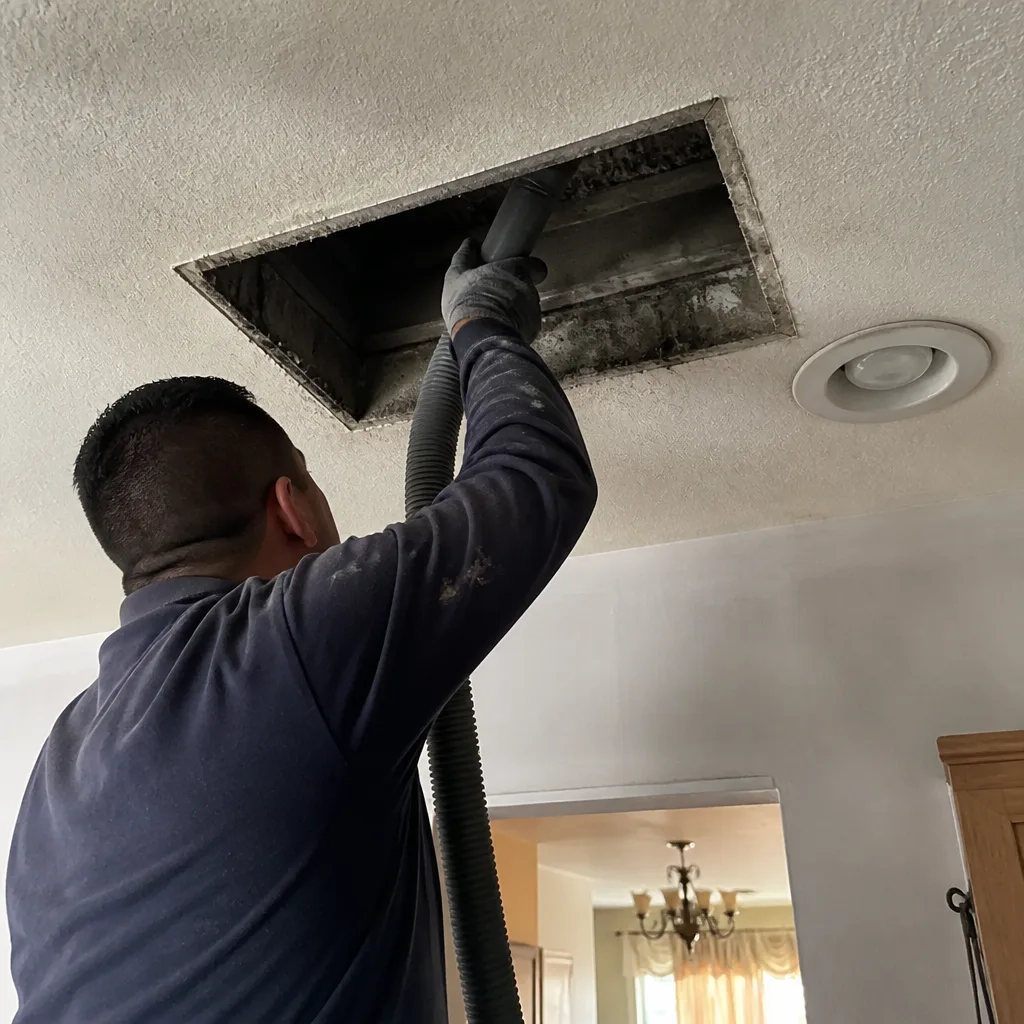 Before
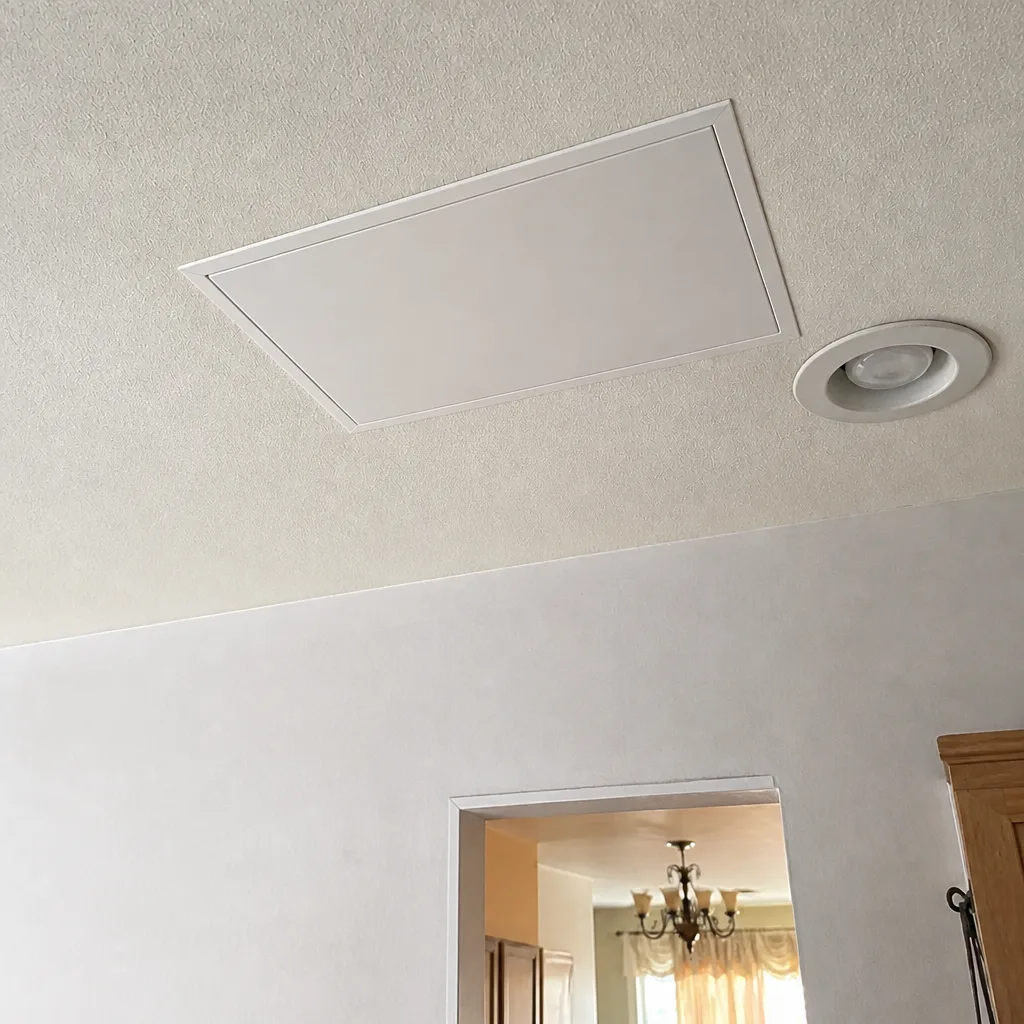 After
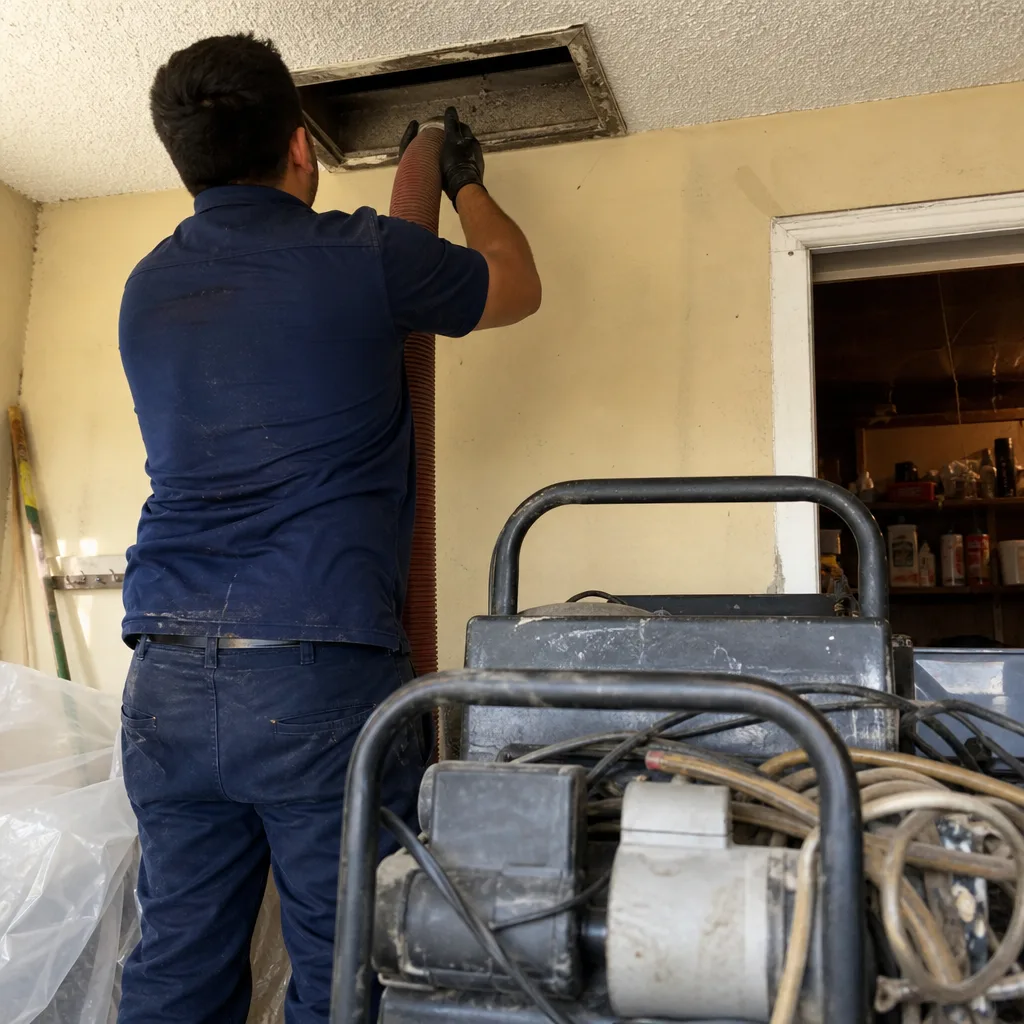 Before
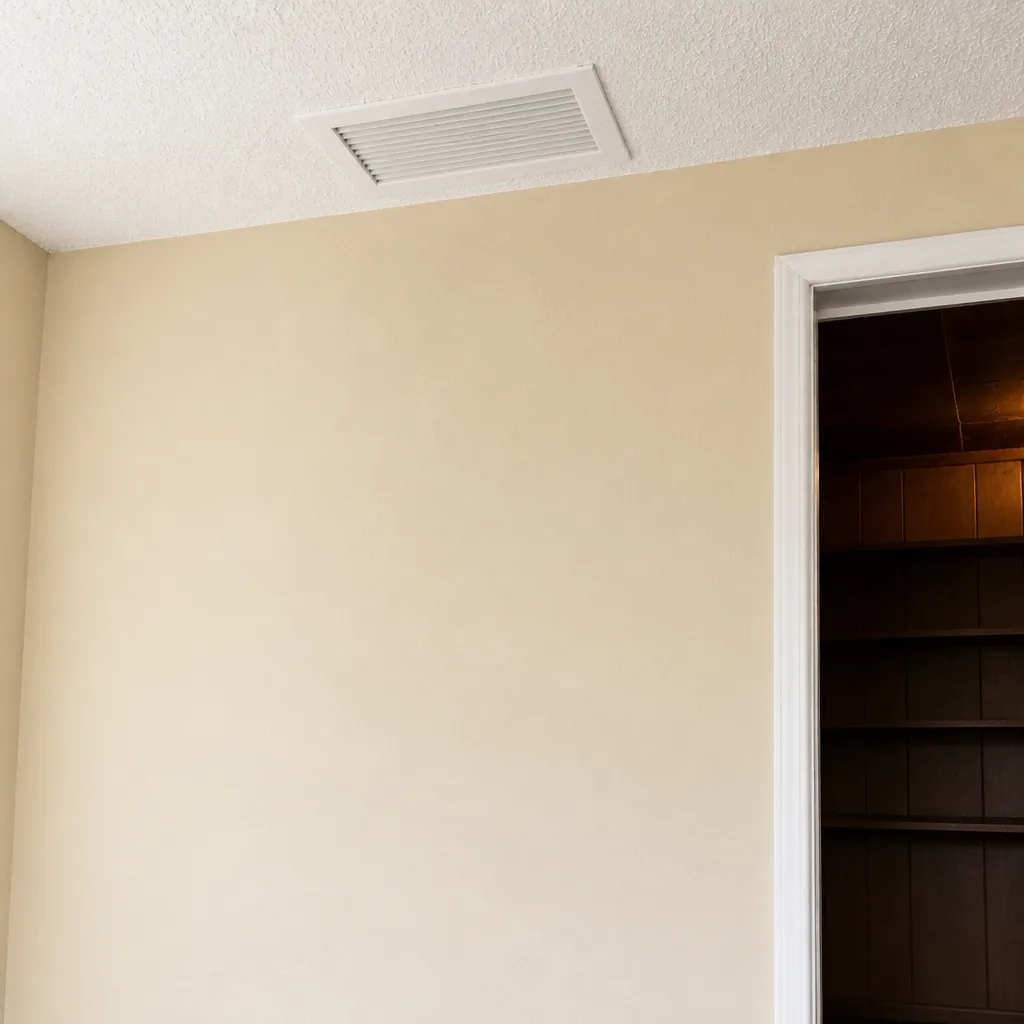 After
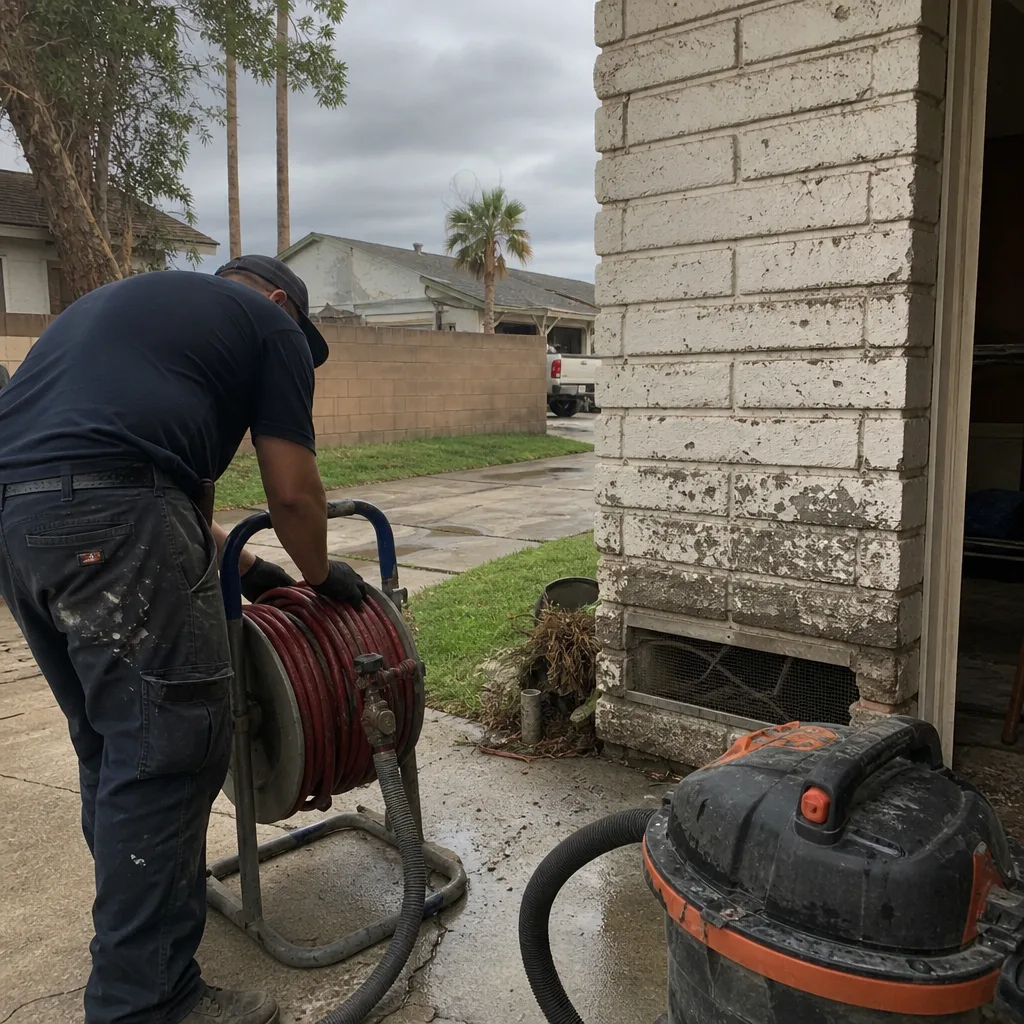 Before
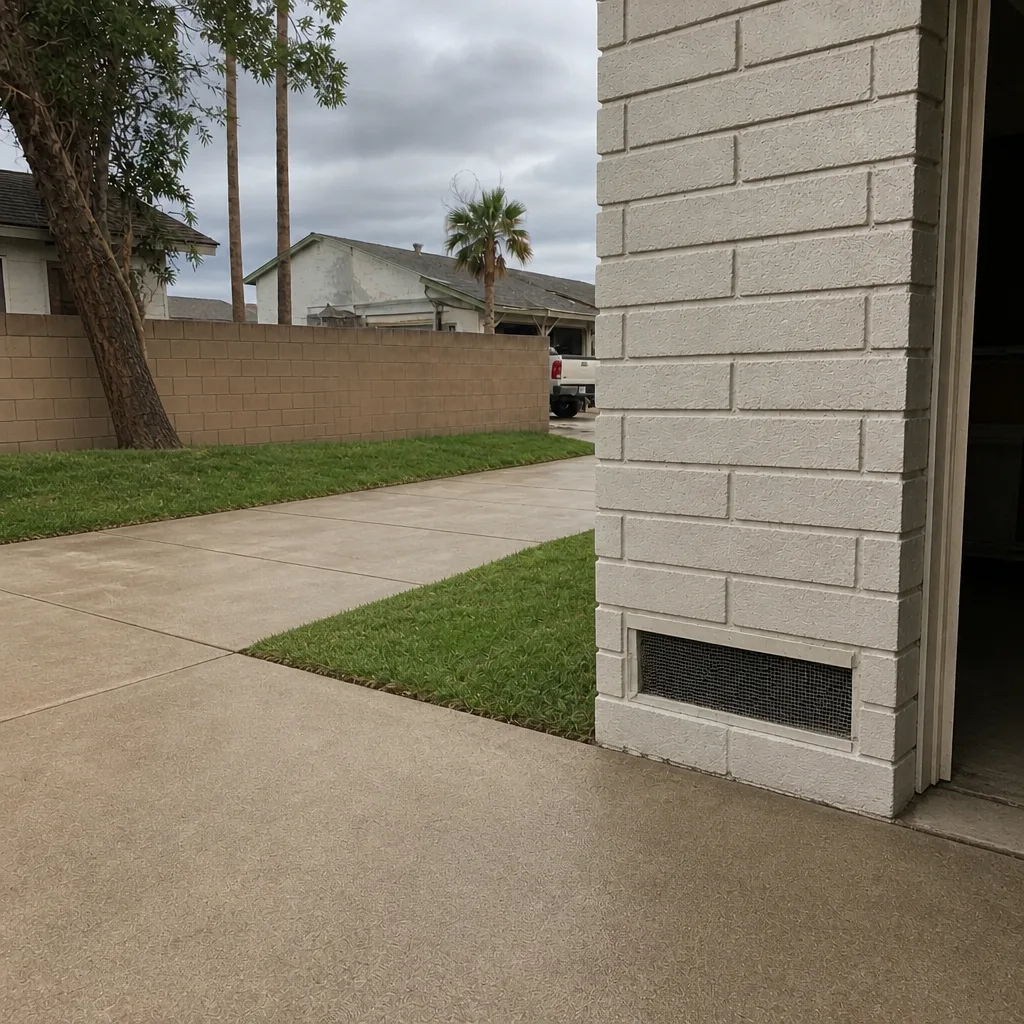 After
When to Call a Professional
Duct cleaning isn’t something every system needs on a routine schedule, but there are clear signals that professional cleaning is the right next step. If anyone in the household has year-round allergy symptoms that don’t ease with filter changes, or if the house has visible dust settling on surfaces days after cleaning, the ducts and air handler deserve a look. Musty odor when the system first starts is a known indicator of biological growth somewhere in the system, usually on the coil or in the return plenum. Renovation within the last 18 months means drywall dust and debris entered the supply runs. A recent move-in where the previous owner’s maintenance history is unknown is a good reason to have the system reviewed. A dryer running longer than usual, or heat that feels stronger than the drum, points to a dryer vent that needs cleaning.
For any of these, our team at Fullerton Air Duct Cleaning Co offers free estimates on-site. Call (877) 792-5884. We answer 24/7, with fast dispatch from 7am to 7pm, Sunday through Friday.
Frequently Asked Questions
A full-system air duct cleaning in Fullerton typically costs $450 to $850 for a single-system home, with multi-system houses, heavy contamination, or difficult attic access landing between $850 and $1,200. The written estimate sets the final price, and the price should not change after the crew arrives unless the scope changes and you approve a new line item. Call (877) 792-5884 for a free on-site estimate.
Cheap quotes usually skip the parts of the job that take the most time: the return ducts, the air handler, the coil, containment setup, and contact vacuuming of every run. A $99 quote with a shop vac and register-only cleaning is not the same scope as $600 with a professional Rotobrush or Nikro system. The final invoices often end up closer than the upfront quotes suggest, and the actual system condition after a coupon job is often not much better. Call (877) 792-5884 for an itemized quote.
Before-and-after photos of the duct interior, per system, are the standard verification. The technician physically opens access ports, cleans each run, and photographs the duct interior at the same access point on the way out. A company that won’t show you photos of your own system is asking you to trust a claim rather than a result. Call (877) 792-5884 to schedule an estimate where photos are part of the deliverable.
Most homes in Fullerton don’t need duct cleaning on a fixed annual schedule. Typical residential systems benefit from a full cleaning every three to five years, with faster cycles if the household has pets, recent renovation, or someone with respiratory sensitivity. The right trigger is condition, not the calendar: visible dust at the registers, musty odor, or known contamination. Call (877) 792-5884 for an honest scope review.
A slab-foundation Fullerton home usually costs less to clean because the ductwork runs through a walkable or semi-walkable attic, which is easier to access than under-floor ducts. Raised foundation homes with below-floor runs need more setup time and more access points, which pushes the price upward on that scope. Neither foundation type changes whether the cleaning is legitimate, only how much time it takes. Call (877) 792-5884 for a quote specific to your foundation and duct layout.
Yes, and it usually makes sense to do all three scopes on one visit. The three systems overlap in access points and set-up, and the total invoice is typically less than scheduling them separately. Each item is still its own line item on the estimate, quoted openly and not bundled as a “package” price. Call (877) 792-5884 to discuss the combined scope.
The Bottom Line
A fair price for air duct cleaning in Fullerton is the price that matches the actual scope on site: supply runs, returns, air handler, coil, and sanitizing, quoted in writing before work starts. Whole-system pricing beats per-vent pricing because it aligns the invoice with the labor instead of the count. Tier 3 is where most homes land. Tier 1 is a coupon job, and Tier 4 is a multi-system or contamination situation that justifies the extra scope. Add-ons belong in the quote when they address a real condition, and they don’t when they don’t. Before-and-after photos and a binding written estimate are the two safeguards that separate a legitimate contractor from a door-knock. The math isn’t complicated. It just has to be done before you book the job, not after.
If you’re ready to get a real number, call (877) 792-5884 for a free estimate. We answer 24/7, with fast dispatch from 7am to 7pm, Sunday through Friday. We clean it, repair it, seal it, and sanitize it in one relationship, and the written estimate sets the final price.
Written by the team at Fullerton Air Duct Cleaning Co.