
Last updated November 25, 2026
 Whole-home duct cleaning
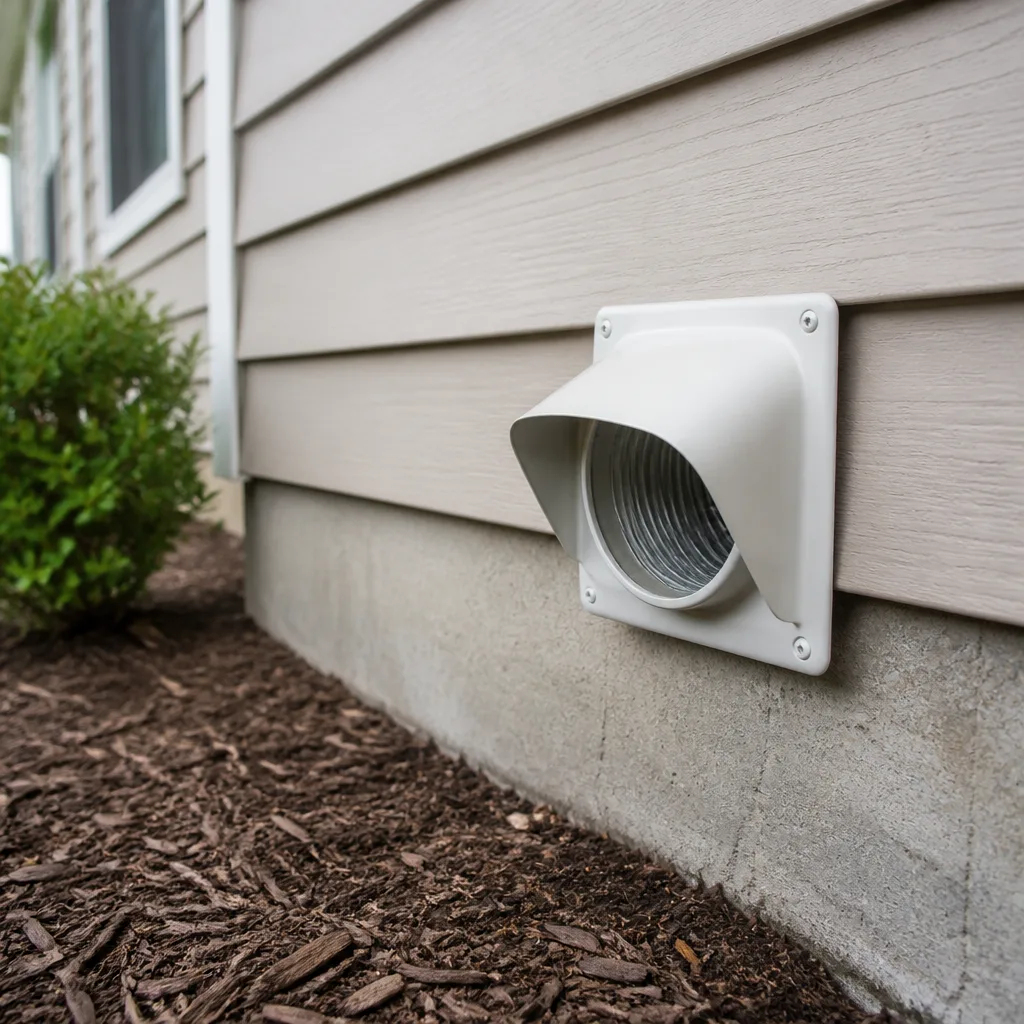 Dryer vent cleaning
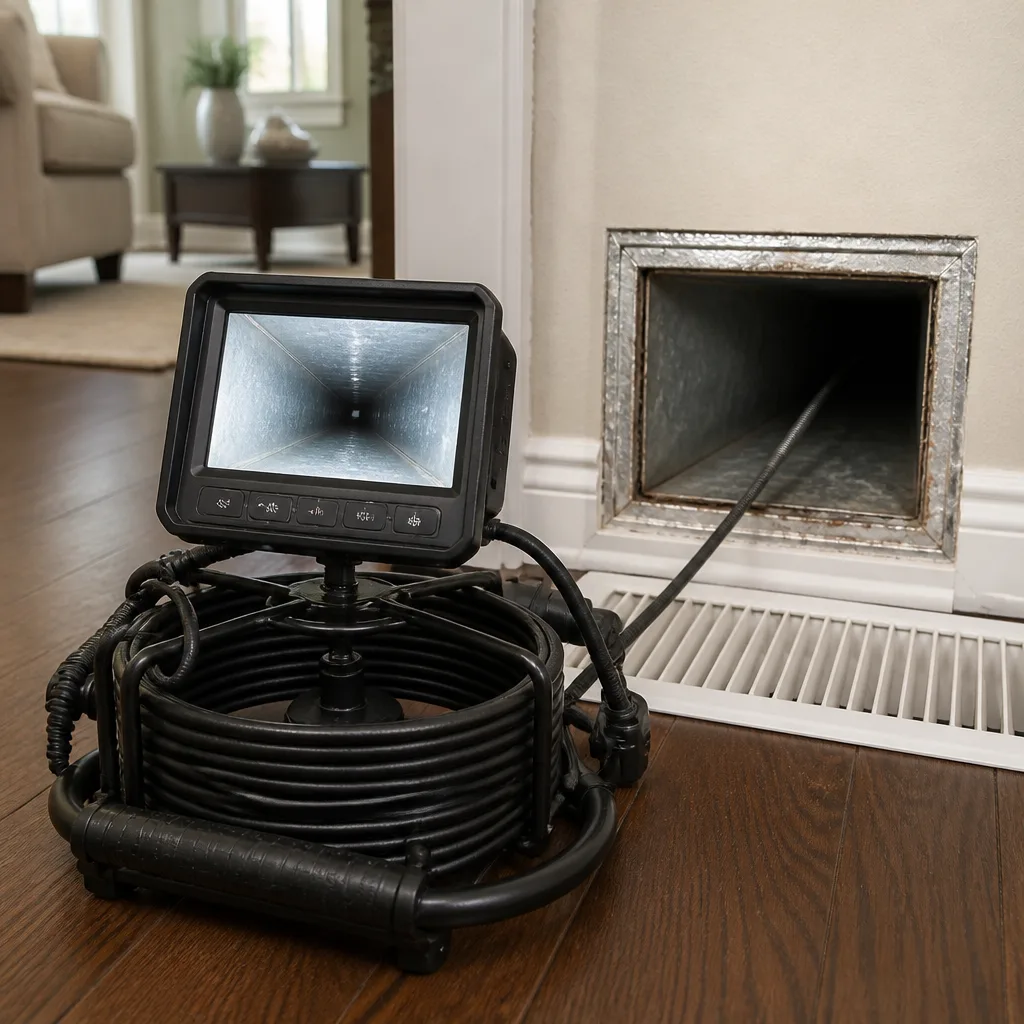 Camera inspection
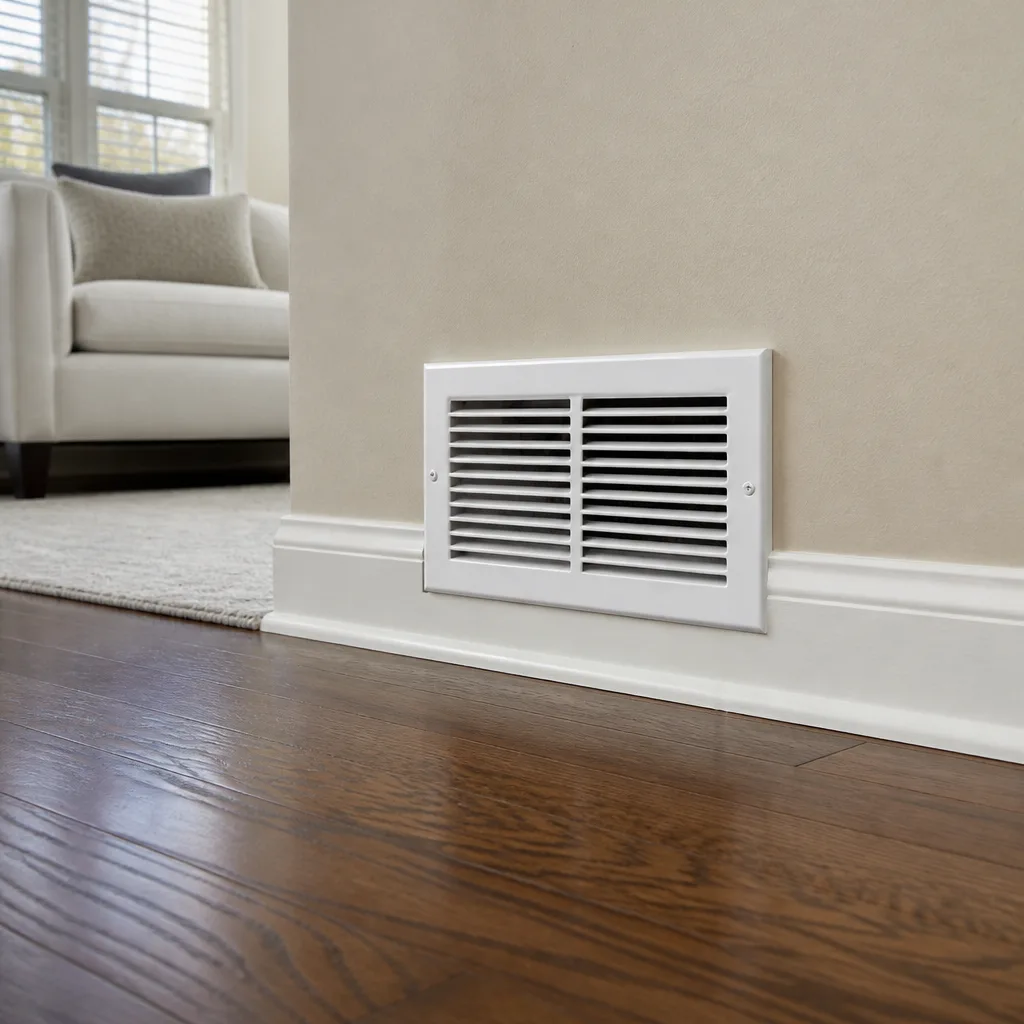 Sanitizing & deodorizing
Whole-system duct and dryer vent check with before-and-after photos - you see exactly what came out of your vents
That "$99 whole-house special" is a bait ad - the real number appears once they are in your hallway, or the "clean" is a shop-vac at the register. We photograph the inside of your ducts before and after instead.
Air Duct Cleaning Warning Signs: A Fullerton Homeowner’s Reference Guide
If one room in your house is always hotter than the others and your HVAC contractor keeps saying the system is “running fine,” the problem is almost certainly in your ductwork, not your equipment. That’s the single most misdiagnosed issue we run into in Fullerton: homeowners replace thermostats, add window units, and pay for tune-ups while the actual fault sits in the ducts feeding the room. This guide walks through the warning signs that point at your duct system specifically, so you can stop chasing the wrong repair. You’ll learn how to read airflow imbalance, register residue, odor types, post-renovation debris, and the difference between a duct that needs cleaning and a duct that needs sealing.
Quick Answer
The most reliable air duct cleaning warning signs in a Fullerton home are persistent room-to-room temperature differences, visible dust rings or dark streaks around supply registers, musty or chemical odors that appear only when the HVAC runs, a noticeable dust film returning within days of cleaning, and construction dust from a recent remodel migrating through the house. If two or more of those show up together, your ducts are the likely source and a professional inspection is the right next call.
Styles & brands we work with
- Whole-home duct cleaning
- Dryer vent cleaning
- Camera inspection
- Sanitizing & deodorizing
Table of Contents
- Airflow Imbalance: When Uneven Rooms Point to Ducts
- What Your Registers Are Telling You
- Odor Diagnostics: Musty, Burning, and Chemical Smells
- Post-Renovation Warning Signs
- Cleaning Problem vs. Sealing Problem
- How a Proper Duct Inspection Actually Works
- What Fullerton Homes Specifically Deal With
- Common Mistakes to Avoid
Airflow Imbalance: When Uneven Rooms Point to Ducts
If your hallway runs cool but the back bedroom cooks every afternoon, that’s not usually a failing air conditioner. It’s a distribution problem. The system can be producing correct air volume at the air handler and still deliver almost nothing to a room whose supply run is crushed, disconnected, or choked with debris. In Fullerton, where most homes run a single central system with long duct runs through warm attic space, that imbalance gets worse in the afternoon heat. The equipment is doing its job; the pathways aren’t.
Here’s how to trace an imbalance back to the ducts rather than the equipment:
- Check supply airflow at each register. Hold a tissue against the grille. All registers should move it with roughly similar force. A weak one is a restriction or a leak upstream.
- Check the return. A single undersized or blocked return will starve every room downstream of it.
- Compare the problem room to the nearest register. If the register blows strong but the room stays hot, the duct may be dumping air into the attic or wall cavity instead of the room.
- Note the timing. Imbalances that appear only at peak afternoon temperatures point to duct runs in unconditioned attic space gaining heat before delivery.
When the equipment checks out but rooms won’t balance, that’s the signature of a duct problem, and it’s the moment to bring in air duct cleaning and inspection rather than another HVAC tune-up. What we find in the ducts is almost always the answer the equipment couldn’t give.
What Your Registers Are Telling You
Registers are the closest thing your duct system has to a diagnostic panel. The patterns around and inside them point to specific conditions inside the ducts behind them. Learning to read them saves you from guessing.
- Dust rings or halos around the grille. A dark ring on the ceiling or wall around a register means air is escaping the seal at the boot, carrying dust that deposits at the edges. That’s a leak and a duct condition, not a paint problem.
- Dark vertical streaking below a supply. Airborne particulates are being pushed out with enough velocity to streak the surface. Often the duct is undersized or the airflow is being forced through a restricted run.
- Oily film on or around the grille. Kitchens and laundry rooms vent residue that condenses on cooler surfaces. If the film forms on registers in rooms far from the kitchen, the duct system may be pulling that residue through and depositing it.
- Visible debris inside the grille. Look up into a supply with a flashlight. A light dust coating is normal; matted fuzz, construction grit, or anything dark and clumped is a sign of buildup.
- Grilles that rattle or whistle. Pressure noise at a register usually means a restriction or a leak elsewhere in the system forcing air past that point at higher velocity.
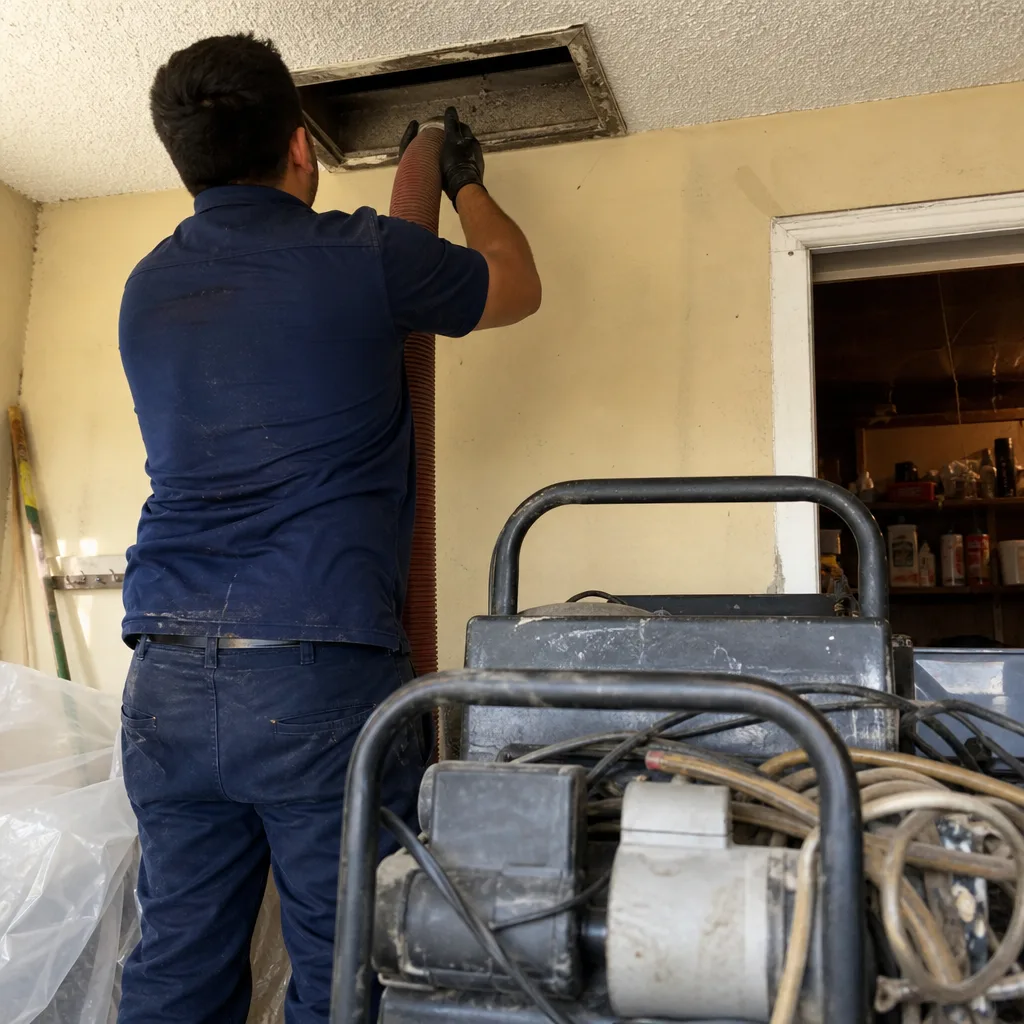
We use Rotobrush and Nikro commercial-grade equipment for exactly this reason: consumer-grade shop vac attachments don’t reach past the boot, and the deposits forming these patterns live well up the run. What’s visible at the register is a small indicator of the condition behind it.
Odor Diagnostics: Musty, Burning, and Chemical Smells
Smell is one of the most useful duct diagnostics there is, because different odors implicate different parts of the system. The mistake is treating every smell as “the HVAC needs service.” In Fullerton, we’ve learned to match the smell to the component before recommending anything.
- Musty or damp-earth smell. Points to moisture in the ducts or in the air handler’s evaporator area. Common in homes with high interior humidity or a system whose condensate line isn’t draining cleanly. A musty smell that shows up only when the fan is running is usually the duct interior, not the room.
- Burning or hot-dust smell. A light hot-dust smell at the start of the season is normal. A persistent burning smell is not, and it deserves a technician’s look before the system runs again; that’s equipment and safety territory, not duct cleaning.
- Chemical or solvent smell. Points to new materials, adhesives, or cleaning products off-gassing into the return path. If the smell appears only after a renovation or new flooring, the return is pulling volatile compounds through the system and spreading them.
- Sour or locker-room smell. Often microbial growth in a damp section of duct or on a wet coil. Abatement Technologies equipment is the right tool when contamination is on the table, because fine particulate and microbial concerns need more than routine agitation.
When the odor is musty or sour, our approach is to clean, then assess whether filtration or humidity control from Honeywell or Aprilaire products makes sense to keep the problem from returning.
Post-Renovation Warning Signs
Construction dust is not the same as household dust, and this is where a lot of Fullerton homeowners get blindsided. Drywall dust, silica, sawdust from rough framing, and floor adhesive particles are jagged, heavier, and more abrasive than everyday household dust. A standard filter catches some of it; the rest settles in the returns and in the horizontal runs where airflow slows. Once it’s there, it doesn’t behave like normal dust.
Signs that renovation debris has migrated into the ducts:
- Fine white or gray dust settling on horizontal surfaces throughout the house. Drywall dust travels far and settles everywhere, not just near the renovation.
- Dust returning within days of cleaning a room. Household dust returns over weeks; construction dust comes back fast.
- Return grilles coated in grit. Pull a return cover and look inside. Sanding dust and drywall grit collect on the first run past the return.
- A gritty smell when the heat runs. Construction particulate carries a mineral smell that’s distinct from normal dust.
- New airflow restrictions after the work finished. Debris that settled into a run can restrict it, producing the same imbalance we covered earlier.
Construction dust needs stronger agitation than routine cleaning, and that’s why professional-grade equipment matters. Rotobrush and Nikro systems create the mechanical action to break it loose; a consumer attachment won’t. If you’ve recently renovated, our HVAC cleaning service addresses both the air handler and the duct network together, because renovation debris ends up in both.
Cleaning Problem vs. Sealing Problem
This is the distinction most homeowners never hear, and it decides which service actually solves the symptom. Cleaning removes what’s already inside the ducts; sealing stops what’s getting in and out. They solve different problems, and hiring for one when you need the other is a wasted call.
Signs you have a cleaning problem:
- Buildup you can see inside the registers or hear described during inspection
- Dust returning to rooms quickly after cleaning the house
- Musty or chemical odors from the ducts
- Post-renovation debris
- Allergy-type irritation that’s worse in the home than outside
Signs you have a sealing problem:
- Rooms that won’t balance temperature even after a full cleaning
- Dust rings around registers (leaks at the boot)
- High energy bills relative to run time
- Attic or wall-cavity air being pulled into the supply
- Whistling or pressure noise at registers
In our experience, many Fullerton homes have both at once. That’s why we offer duct repair and sealing in-house alongside cleaning: problems found during the cleaning can be fixed the same day, rather than kicked to a second contractor who may never coordinate with the first. What we find, we can fix. Full details at Fullerton Air Duct Cleaning Co.
How a Proper Duct Inspection Actually Works
A real duct inspection is not a five-minute glance down a register. It’s a structured process, and knowing the steps keeps you from paying for a service call that only skims the surface.
- Access and camera review. An inspection camera is fed into supply and return runs to see condition past the boot and around bends. What’s found is documented.
- Airflow measurement at registers. Weak or uneven airflow gets mapped, which locates restrictions.
- Seal assessment. Joints, boots, and connections are checked for leaks. This is what separates a “clean” duct from a “sealed” duct.
- Air handler and coil review. A clean duct network feeding a dirty coil still circulates contamination, so both sides get assessed together.
- Contamination screening. If moisture, microbial concern, or fine particulate is present, Abatement Technologies equipment is brought in to handle it correctly.
- Written scope and flat price. You receive the findings and a written estimate before any work begins. The written estimate sets the final price; we never price per vent or upsell after the truck is on site.
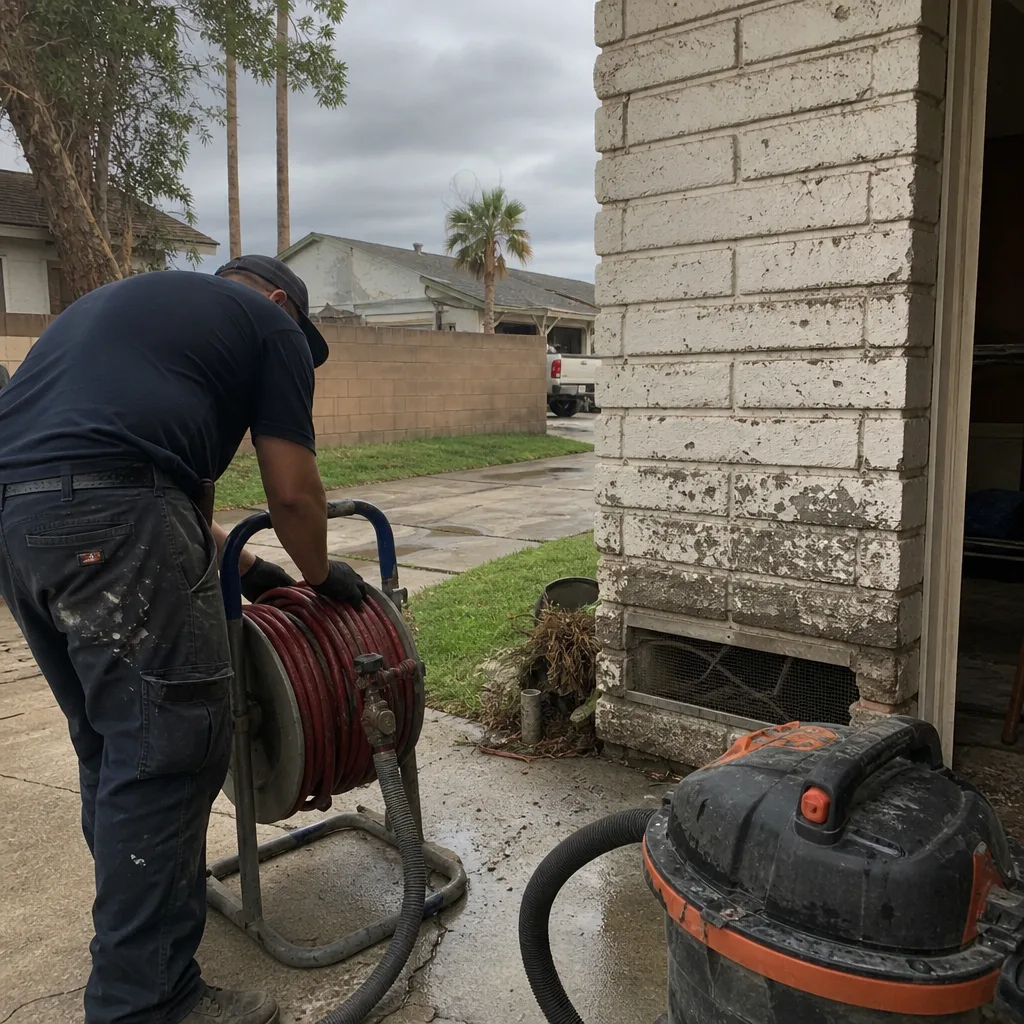
For homeowners who want the full picture, we recommend starting with a full-system review, not just duct cleaning. Our dryer vent cleaning is often paired in, because lint buildup is the same kind of restriction problem in a different pipe.
What Fullerton Homes Specifically Deal With
Fullerton’s climate is the background condition that shapes duct problems here. The interior is dry most of the year and the houses are largely single-family with central systems, so the two big drivers are dust accumulation from the dry months and moisture issues that pop up when the system finally runs hard in the heat. Neither resembles the heavy snow-country or humid-coast duct problems you read about in national guides.
Neighborhood-level context matters too. In older parts of Fullerton, including the areas near downtown and around Commonwealth, homes often have duct layouts from an earlier era with limited returns and boot connections that have loosened over time. Newer developments tend to have tighter ductwork but more problems from post-renovation debris when kitchens or additions are updated. Either way, the diagnostic signs are the same; the fix tends to differ.
Some other local patterns worth knowing:
- Attic duct runs absorb afternoon heat. Rooms at the end of a long run in the attic gain heat before delivery, which shows up as an imbalance rather than a temperature setpoint failure.
- Dust season follows the dry months. Registers collect more dust from open windows and door traffic than most homeowners expect.
- Kitchen and laundry residue matters here. Homes with open kitchen/living layouts move cooking residue through the whole system instead of trapping it near the source.
- Single-return systems in older Fullerton homes are more sensitive to pressure imbalance and benefit most from sealing.
If any of those ring true for your house, the diagnostic questions in this guide will tell you whether to call for cleaning, sealing, or both.
Common Mistakes to Avoid
- Assuming the HVAC contractor is right when they say the system is “running fine.” Equipment health and duct performance are two different questions, and a tune-up doesn’t answer the second. In Fullerton this costs homeowners real money in wasted service calls.
- Buying a cheap duct cleaning on price alone. Per-vent teaser pricing nearly always means the scope gets trimmed once the technician is there. Ask for a flat price per system before work starts, not a per-register figure.
- Treating musty smells with air fresheners. A musty smell from the ducts is telling you where moisture is; masking it leaves the source untouched and often worsening.
- Skipping the ducts after a remodel. Renovation dust has already migrated through the return path by the time the job is done. Waiting months to address it means it’s already in the furniture, bedding, and carpet.
- Hiring a cleaning crew that doesn’t offer sealing. If cleaning reveals a leak and the crew can’t fix it, you’ll be scheduling a second visit from a different company. Choose a provider who can do both.
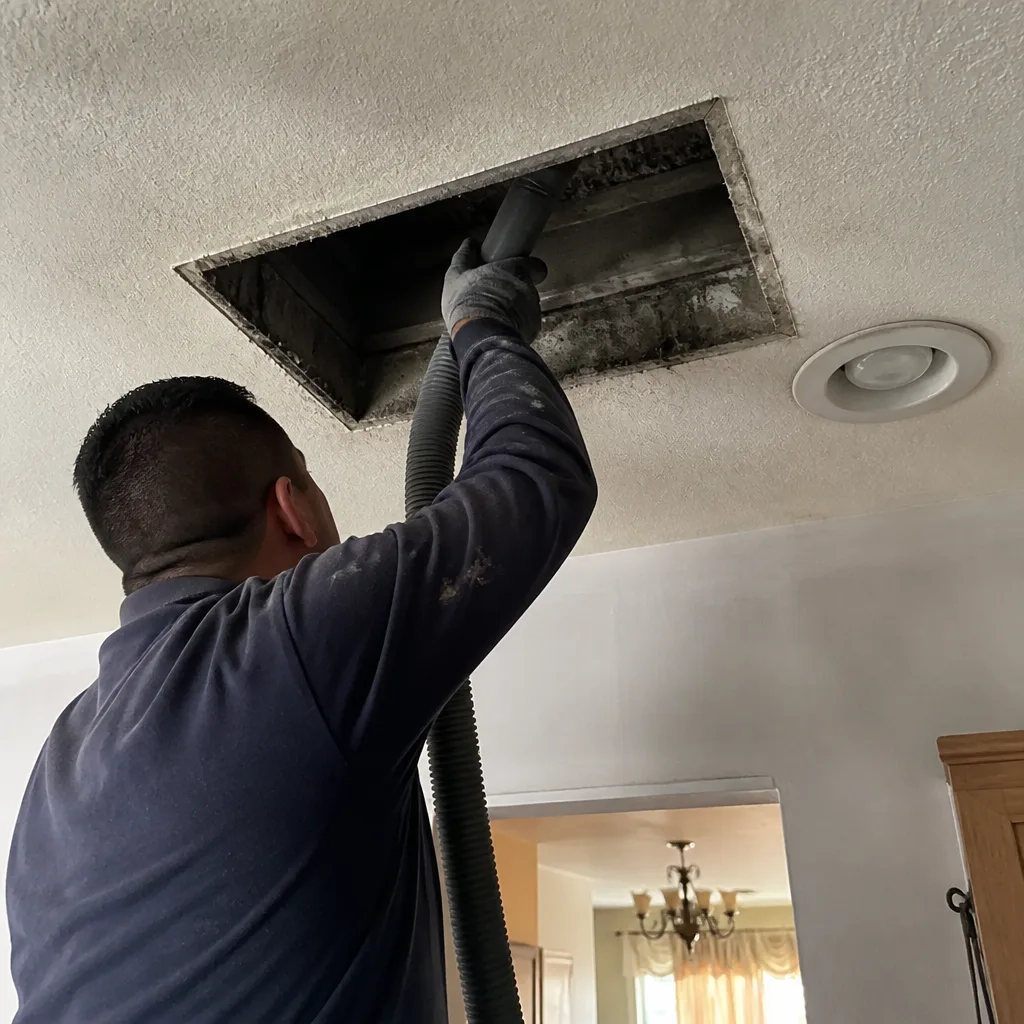
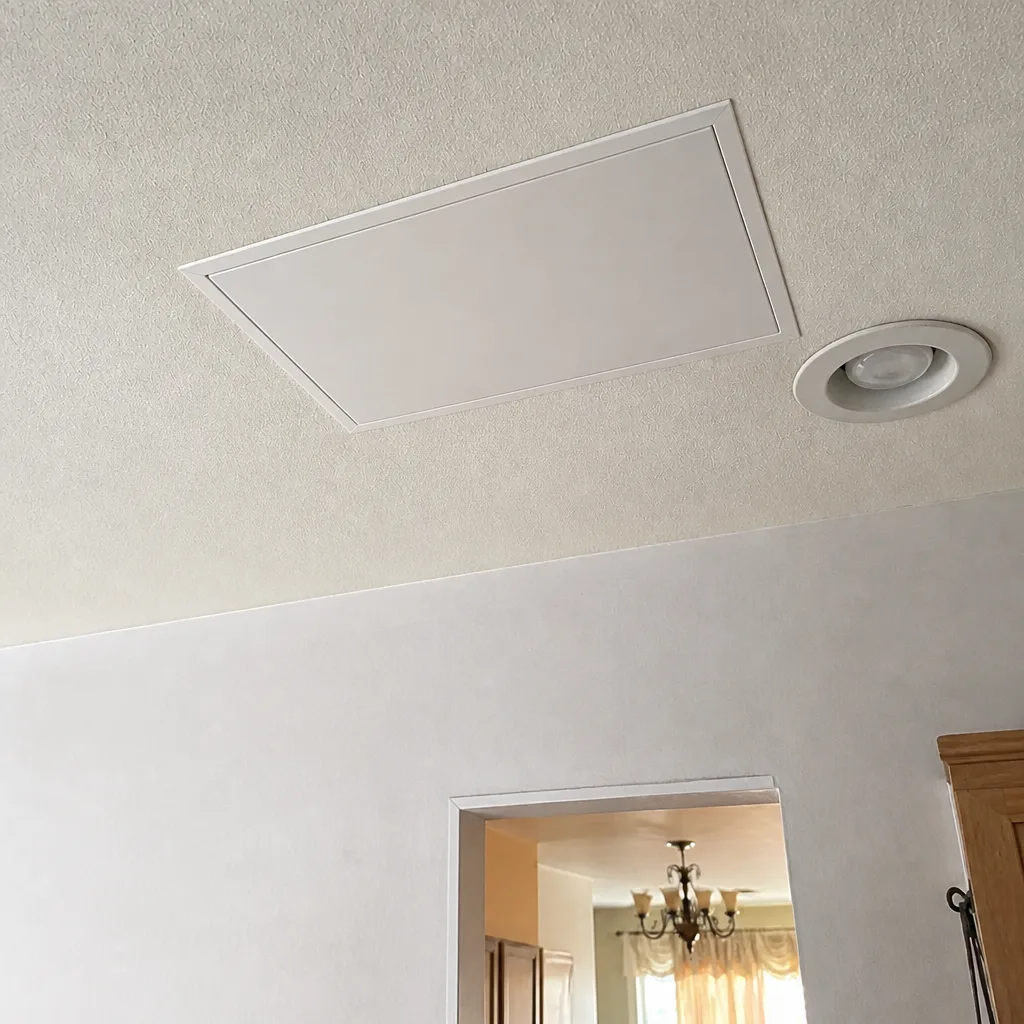
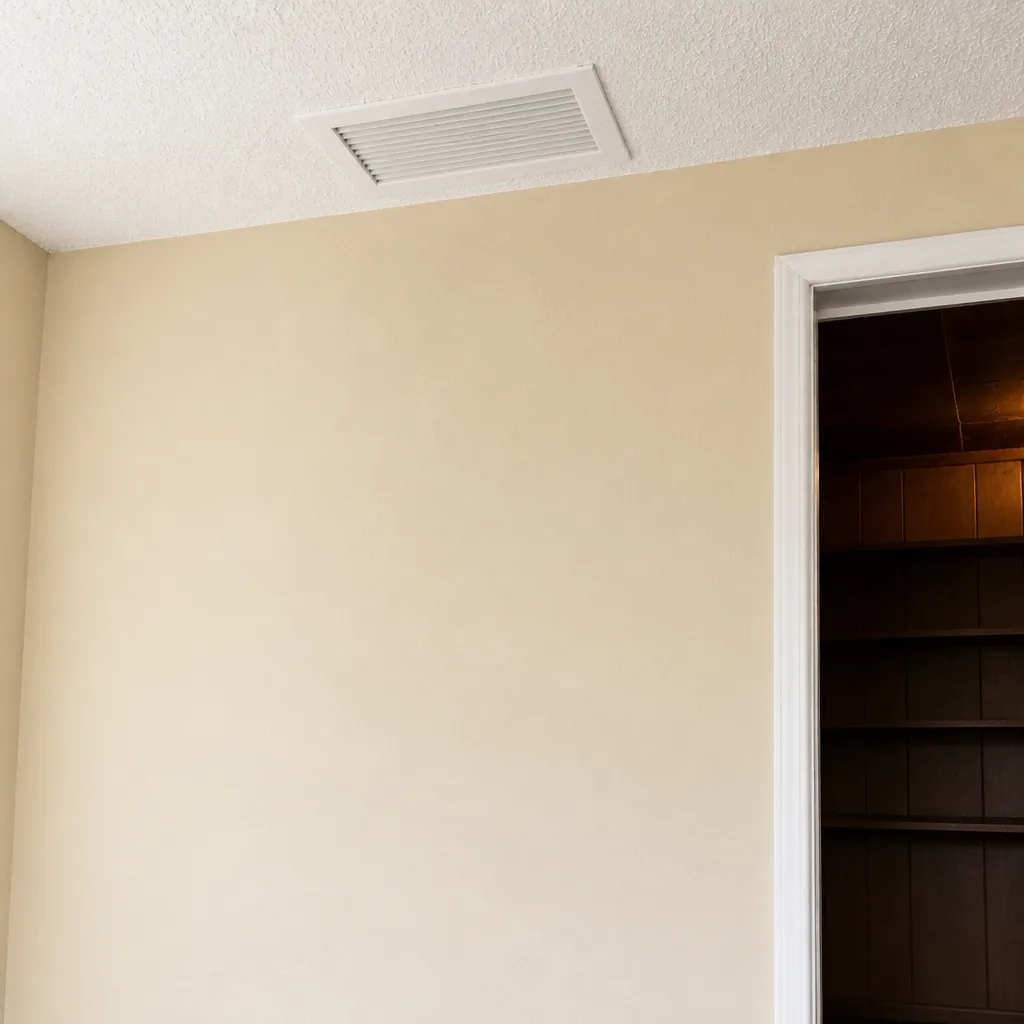
- Believing “we cleaned it, it’s fixed.” Ask for before-and-after photos of your own ducts. A legitimate provider documents the work; a discount crew usually can’t show you what was inside.
- Assuming the dryer vent isn’t a duct. It’s a duct with the same restriction and lint-buildup profile as the rest of your system, and it’s worth including on the same visit.
See the difference
 Before
 After
 Before
 After
 Before
 After
When to Call a Professional
Call a professional the moment two or more of the warning signs in this guide overlap. Persistent room-to-room temperature imbalance, dust rings around registers, musty smells that appear when the fan runs, dust returning within days of cleaning, and construction dust after a remodel are all reasons to book a professional inspection rather than wait. Safety matters too: if you smell burning or suspect a gas leak, shut the system down and call your utility or a licensed HVAC technician, not a duct cleaner. Ductwork itself is safer than high-voltage equipment or gas lines, but DIY mechanical cleaning can damage flex runs and dislodge deposits into the air handler. Both are reasons we recommend trained technicians with proper containment equipment.
Fullerton Air Duct Cleaning Co offers free estimates in Fullerton. Call (877) 792-5884. We answer 24/7. Fast dispatch from 7am to 7pm, Sunday through Friday.
Frequently Asked Questions
Persistent room-to-room temperature imbalance, visible dust rings or dark streaks around registers, musty or chemical odors that appear when the system runs, dust returning within days of cleaning, and construction dust from a recent remodel are the most common signs. Two or more together usually means the ducts are the source. Call (877) 792-5884 for a free estimate to confirm what’s actually happening in your system.
Pricing depends on the size of the system and whether repair or sealing is needed, so it’s set per job by a written estimate rather than quoted blindly over the phone. Any company offering a suspiciously low coupon price per vent is almost always going to shrink the scope or add charges once they’re on site. We give one flat price per system, agreed before work starts. Call (877) 792-5884 for an exact quote; estimates are free.
Low quotes typically price per vent, arrive with consumer-grade shop vac equipment, and either skip critical components like the air handler or add charges once they arrive. Real professional-grade equipment (Rotobrush and Nikro systems, containment, and a documented pre- and post-cleaning look) has a real cost behind it. Ask any company what equipment they use and whether repair and sealing are offered in-house. Then call (877) 792-5884 and compare against our flat-price estimate.
Ask for before-and-after photos of your own ducts, not stock photos. A professional provider documents what was found during inspection, shows it to you, and provides photos after the work. If a company can’t show you your own ductwork, you haven’t seen the work. Call (877) 792-5884 and we’ll walk you through exactly what documentation you’ll receive.
Most homes don’t need it on a fixed schedule; the answer depends on pets, allergies, recent renovations, and whether the ducts are sealed. Homes with no pets, no recent remodel, and no symptoms can go years between cleanings. Homes with allergy concerns, pets, or renovation debris often need attention sooner. If you’re unsure, a free estimate and inspection will tell you what’s actually needed. Call (877) 792-5884.
Cleaning alone rarely fixes imbalance. Uneven rooms are usually a distribution problem, meaning the ducts leak or run long and gain heat before delivery; sealing and repair are what solve that. Cleaning removes buildup but doesn’t stop leaks. Most Fullerton homes with imbalance need both, which is why we offer cleaning and repair in the same visit. Call (877) 792-5884 to schedule a free estimate.
The Bottom Line
Duct problems masquerade as HVAC problems, air quality complaints, and allergy triggers, and that’s why homeowners spend months chasing the wrong fix. The signs in this guide point to your duct system specifically: airflow imbalance, register residue, odor types, post-renovation debris, and the cleaning-versus-sealing distinction. Read them together, not in isolation. When two or more overlap, call a professional who uses real equipment and can repair and seal what they find, not just clean around the edges. That’s what a proper Fullerton duct inspection is for, and it costs nothing to find out.
Call (877) 792-5884 for a free estimate. We answer 24/7. Fast dispatch from 7am to 7pm, Sunday through Friday. Closed Saturday.
Written by the team at Fullerton Air Duct Cleaning Co.