
Last updated November 25, 2026
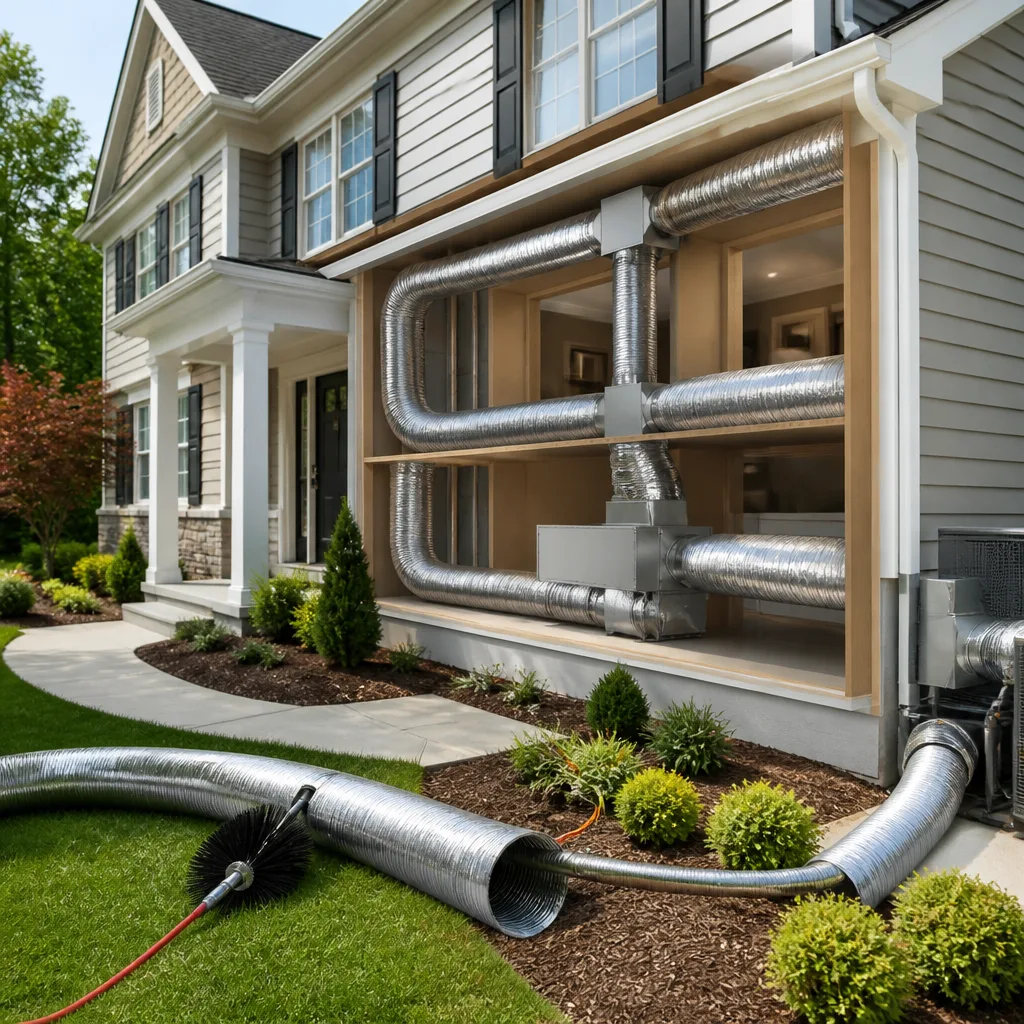 Whole-home duct cleaning
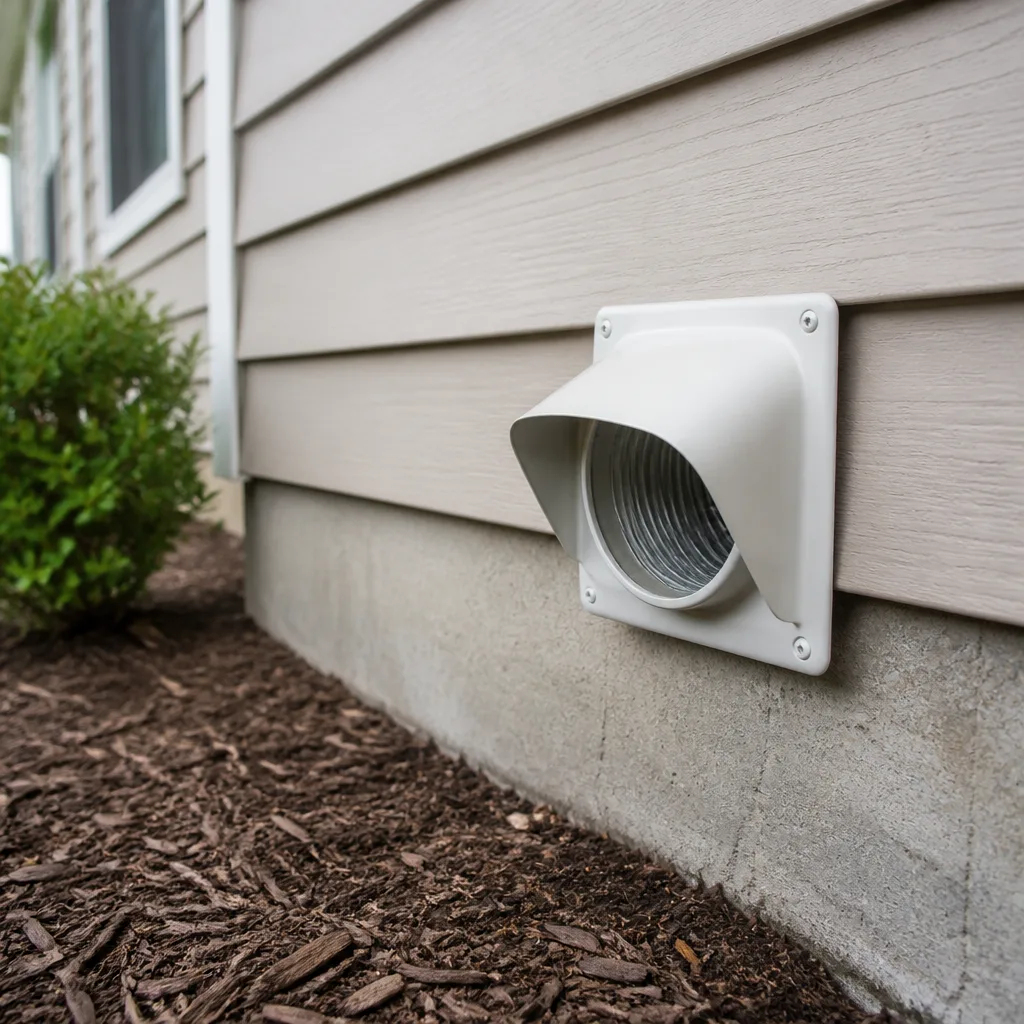 Dryer vent cleaning
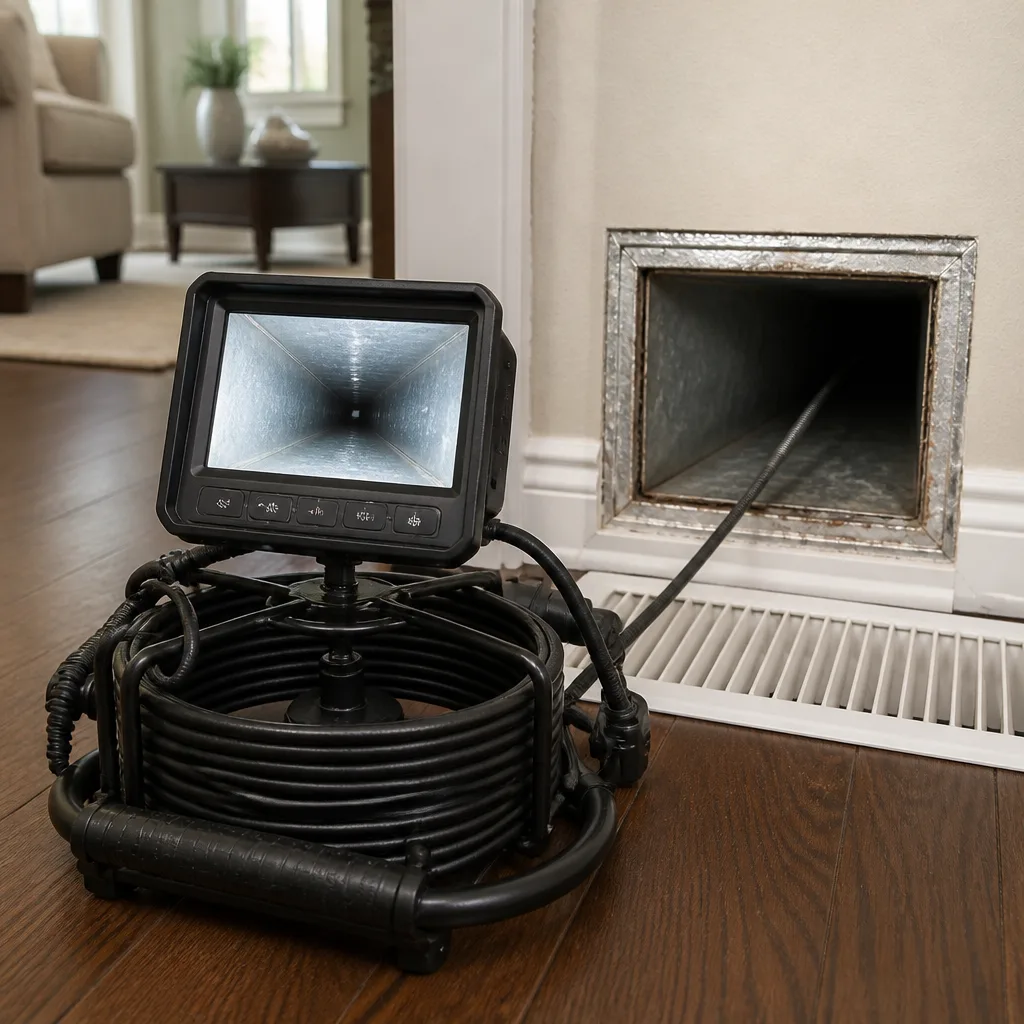 Camera inspection
 Sanitizing & deodorizing
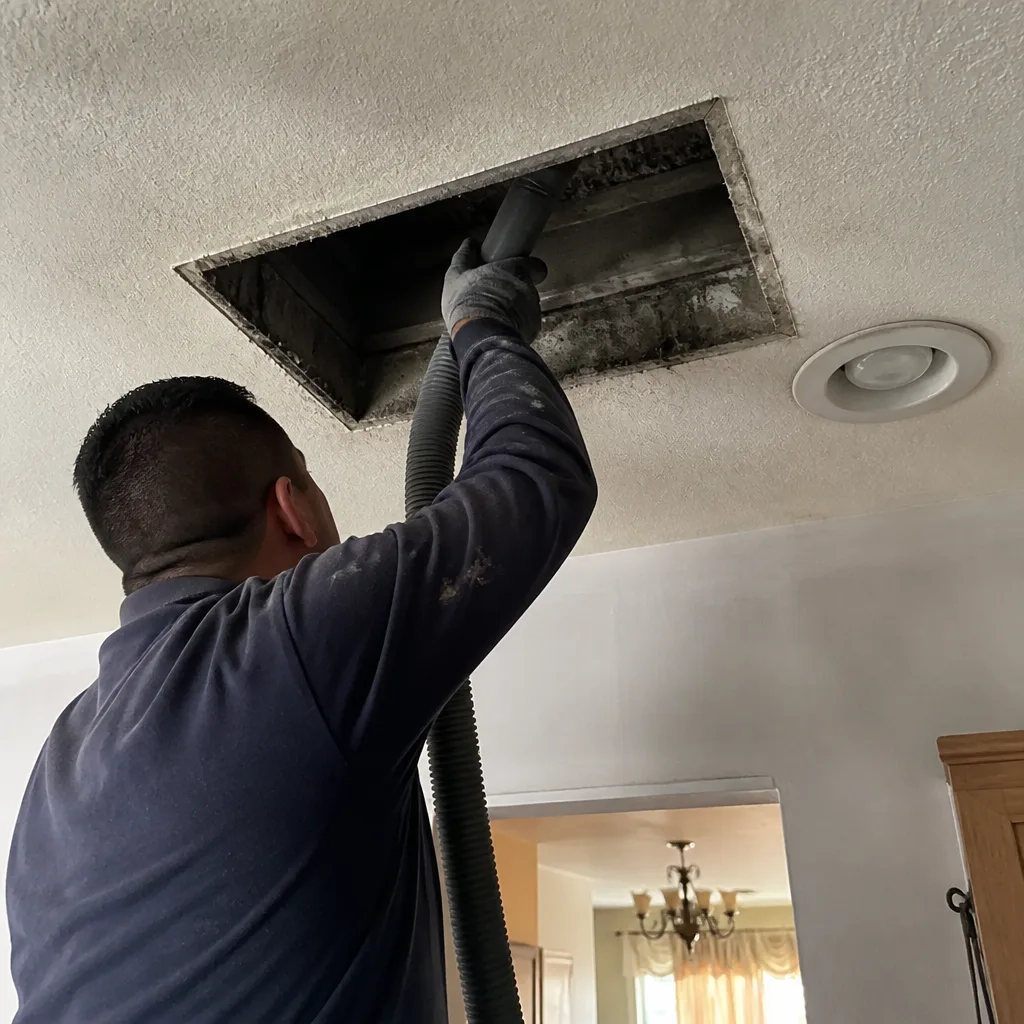
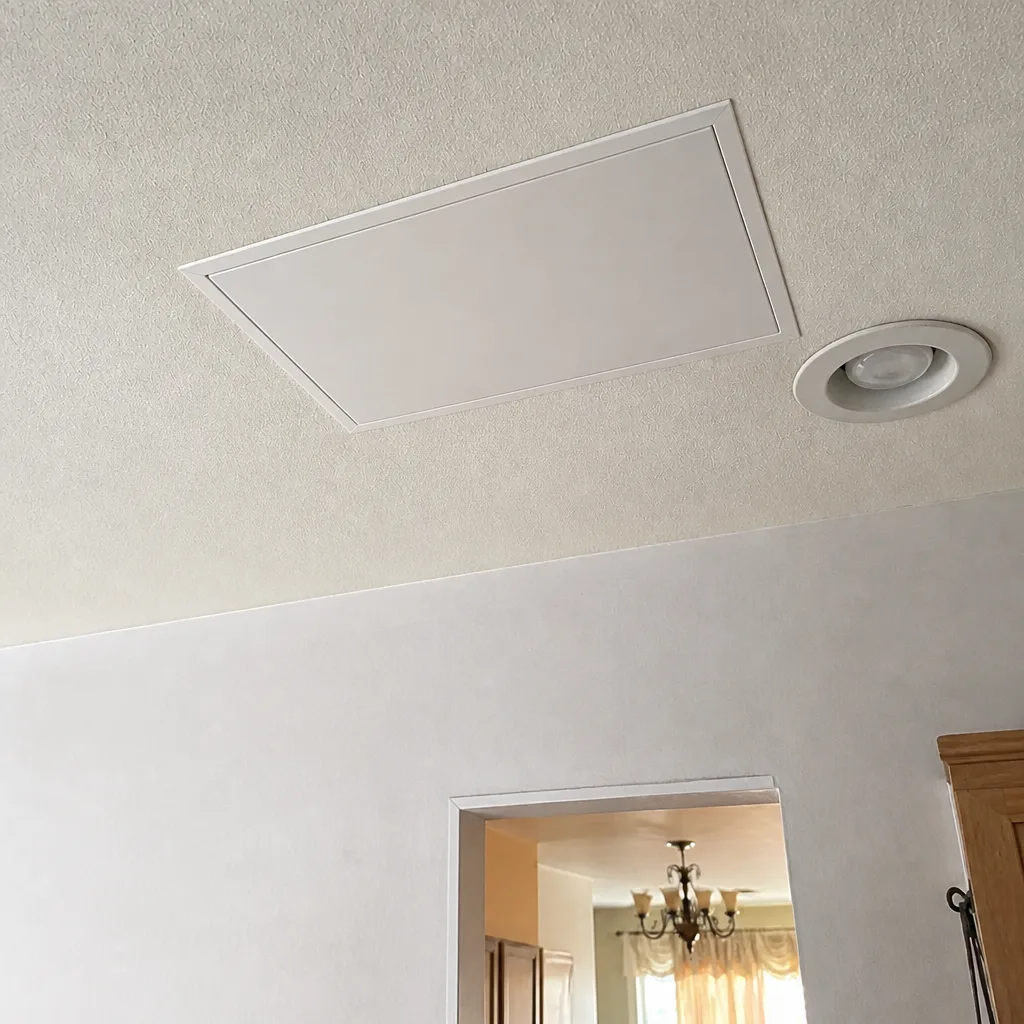
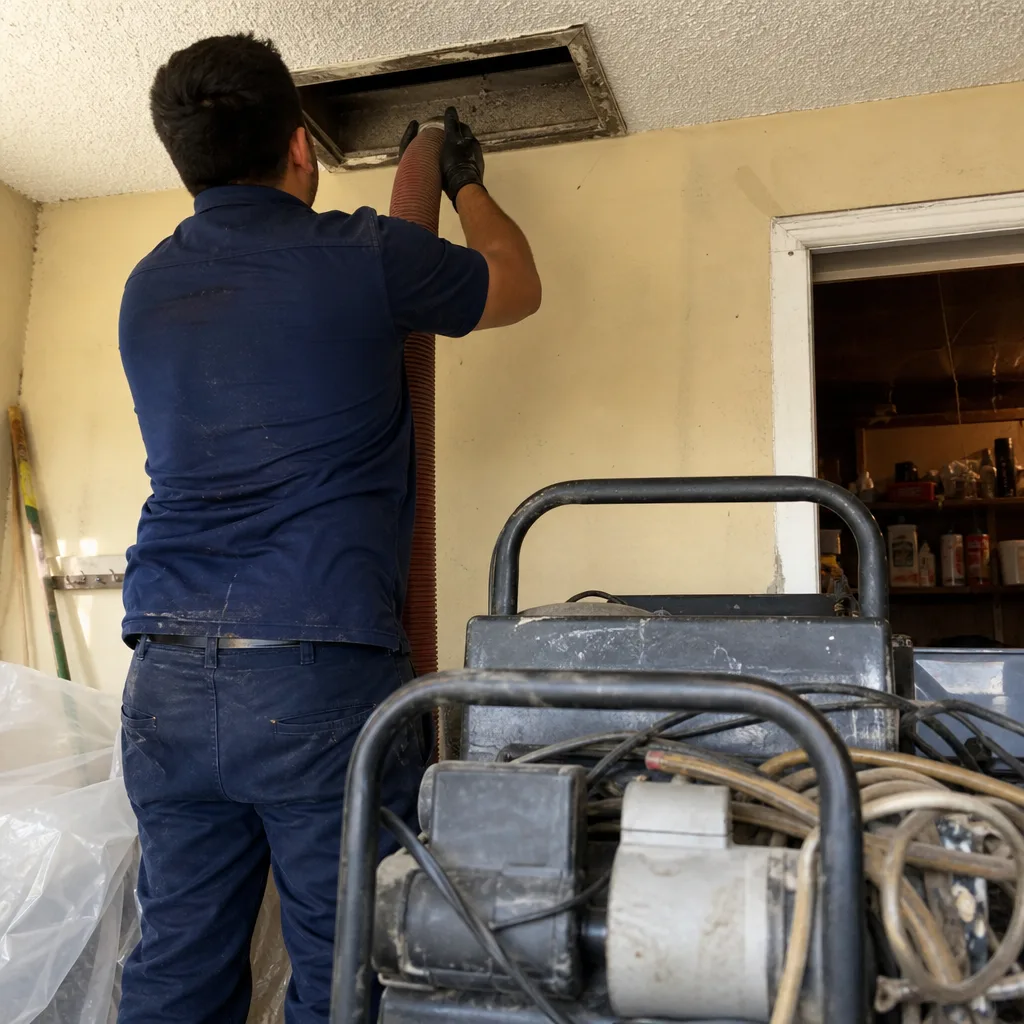
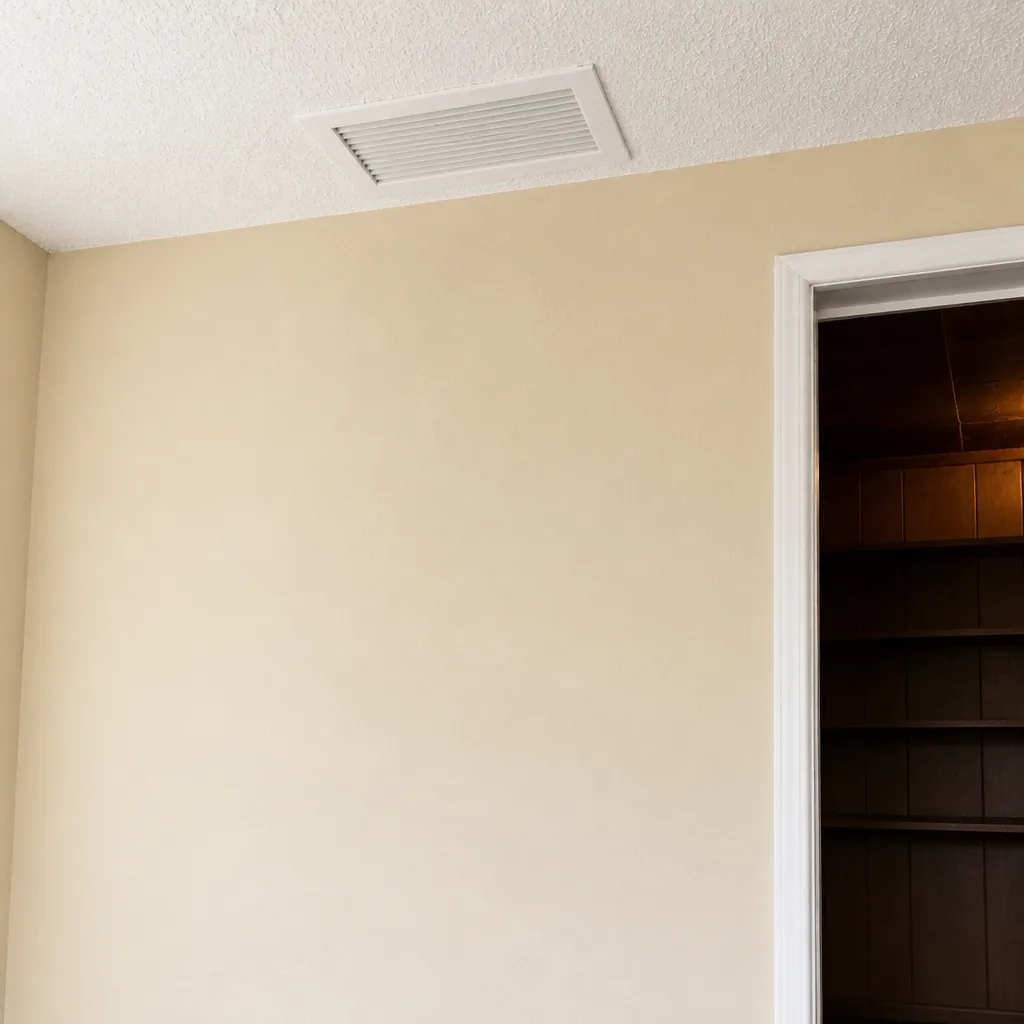
Whole-system duct and dryer vent check with before-and-after photos - you see exactly what came out of your vents
That "$99 whole-house special" is a bait ad - the real number appears once they are in your hallway, or the "clean" is a shop-vac at the register. We photograph the inside of your ducts before and after instead.
The Complete Guide to Air Duct Cleaning in Fullerton
A shop vac pressed against a supply register isn’t duct cleaning. It’s theater. The vacuum pulls a little loose dust off the grille, the technician waves a flashlight at the vent, and the homeowner is left with the same dirty system and a receipt. What separates a cleaned system from a disturbed one comes down to three things: sustained negative pressure on the whole system, real access points cut into the trunk and branches, and what actually happens at the air handler. This guide walks through each of those in plain language, explains how Fullerton’s older slab homes shape the work, and gives you a standard to hold any quote against. By the end you’ll know exactly what a complete cleaning involves and how to tell whether a crew is doing it.
Quick Answer
A complete air duct cleaning in Fullerton means putting the entire system under negative pressure with a truck-mounted or high-capacity vacuum, agitating every branch line with rotary and contact tools through real access holes, cleaning the air handler and evaporator coil, then sealing the access points and replacing filtration. Anything short of that – a shop vac at the registers, a “sanitizing fog” with no mechanical cleaning first, or a truck running while nobody touches the interior surfaces – doesn’t count as duct cleaning. The test is simple: the work has to touch every surface air passes over, and the debris has to leave the building.
Styles & brands we work with
- Whole-home duct cleaning
- Dryer vent cleaning
- Camera inspection
- Sanitizing & deodorizing
Table of Contents
- What Does a Complete Air Duct Cleaning Actually Involve?
- The NADCA Standard, and What Budget Crews Do Instead
- How Fullerton’s Older Housing Stock Shapes the Work
- The Equipment Chain: Why Every Step Matters
- The Coil and Air Handler Work Most Crews Skip
- What a Post-Cleaning Inspection Should Include
- What Air Duct Cleaning Costs in Fullerton
- Duct Repair, Sealing, and What Happens After Cleaning
What Does a Complete Air Duct Cleaning Actually Involve?
A complete cleaning treats the entire HVAC system as one connected air path and cleans every part of it: supply trunks and branches, return ducts, the air handler cabinet, the blower, the evaporator coil, and the filter rack. The point isn’t to make the visible grilles look better. The point is to remove the accumulated dust, construction debris, and biological growth that circulate through the living space every time the system runs.
Here’s the sequence a full-system job follows:
- Inspection and assessment. Before any equipment hooks up, we walk the system and document what’s inside: dust load, debris type, evidence of moisture, damaged flex, disconnected joints, and any signs of pest activity. Photos go on record.
- Negative pressure setup. A high-capacity vacuum connects to the main trunk through a dedicated access port. The goal is to hold the whole system at negative pressure so nothing escapes into the home while work proceeds.
- Source removal with agitation. A rotary brush or air whip runs each branch line to break the bonded layer off the duct walls. Contact vacuuming follows behind the agitation to pull the loosened material into the vacuum stream.
- Air handler and coil cleaning. The blower wheel, cabinet interior, and evaporator coil get cleaned separately – these are where the real air quality impact lives.
- Sanitizing. A sanitizer is applied after cleaning, not instead of it, on surfaces that have already been mechanically cleaned.
- Sealing and final inspection. Access holes are sealed, filters replaced, and the system is run to confirm airflow and confirm visually that the interior surfaces are clean.
The difference between a complete cleaning and a partial one is almost always steps four through six. A crew that skips the coil and the air handler can show you a clean supply register and still leave most of the problem in place. In our experience the air handler is where the majority of what comes out of a Fullerton duct system actually sits.
The NADCA Standard, and What Budget Crews Do Instead
The National Air Duct Cleaners Association publishes a standard called ACR – Assessment, Cleaning, and Restoration – that defines what a duct cleaning is supposed to accomplish. The short version: source removal of contaminants, verified by visual inspection, using equipment and procedures capable of achieving it. The standard assumes access points, mechanical agitation, negative pressure, and post-cleaning verification. It does not describe blowing dust around with a shop vac and spraying a deodorizer.
What budget crews typically do instead is a recognizable pattern:
- The vacuum-only job. A truck-mounted vacuum or a large portable gets hooked up, the technician opens each register for a few seconds, and the job is done in under an hour. No agitation means the bonded dust layer never lifts.
- The sanitizing fog shortcut. A scented sanitizer is fogged through the system with no mechanical cleaning first. The smell covers the problem; the source is still there.
- Register-only cleaning. The technician cleans the grilles, and the visible result looks clean. The trunk line behind the wall is untouched.
- Access holes cut and left unsealed. A crew makes a hole in the trunk for access and patches it with tape or leaves it open. That leaks conditioned air into a wall cavity, which is a new problem, not a fix.
The standard isn’t a marketing badge. It’s the difference between a system that performs differently after the job and a system that looks better but doesn’t. When you’re comparing quotes in Fullerton, ask each one what the crew does at the air handler and how they verify the interior surfaces are clean. The answer tells you which category you’re buying.
How Fullerton’s Older Housing Stock Shapes the Work
Fullerton has a lot of housing built during the postwar boom through the 1980s, and much of it is slab-on-grade construction with the ductwork embedded in the slab or run through a shallow attic space. That matters for a cleaning in ways a crew that works mostly newer homes won’t always anticipate.
Three things change the job in older Fullerton homes:
- Access is harder. Slab-embedded ducts have fewer natural access points than a modern attic system. Access has to be cut in strategic locations, reinforced, and sealed properly when work finishes. A crew without the right tools for this leaves permanent leaks behind.
- Debris type is different. Decades of settled dust in a low-clearance system gets compacted and bonded to the metal in a way that newer systems don’t see. Agitation has to be strong enough to lift it without damaging the ducting. That’s why rotary brush systems matter more than air alone.
- Renovation debris is common. Fullerton has a lot of homes being updated – kitchen remodels, additions, floor replacements. Drywall dust and construction particles settle into the system during the work and don’t leave on their own. A post-renovation cleaning is a different job than a maintenance cleaning, and it needs equipment capable of handling fine particulate without putting it back in the air.
Mild weather most of the year means Fullerton homes run the HVAC heavily in summer and spring, and less in winter. That pattern concentrates the debris load in the return and air handler side rather than distributing it evenly. When we scope a cleaning, we weight the inspection toward the return plenum and air handler for exactly that reason.
The Equipment Chain: Why Every Step Matters
Duct cleaning is a chain of tools, and the job only performs as well as the weakest link. Each piece has a specific reason to exist:
- High-capacity negative pressure source. A truck-mounted or high-CFM portable vacuum holds the entire duct system under negative pressure. Without it, agitation just puts dust into the air you breathe. This is the foundation every other step depends on.
- Rotary brush agitation. Rotary brushes – the kind used in professional-grade systems like those from Nikro and Rotobrush – run down each branch and scrub the duct wall to break the bonded layer. Air alone can’t lift adhered dust, especially in an older Fullerton system.
- Air whips and skipper balls. For larger trunks or flexible duct, air-driven tools agitate the full inner circumference, including areas a rigid brush can’t reach.
- Contact vacuuming. Handheld HEPA contact vacuums clean the reachable surfaces the main vacuum can’t draw from directly: register boots, return plenums, and the air handler cabinet.
- HEPA filtration on the exhaust side. For contamination or fine-particulate situations – post-renovation debris, mold concerns, or pest contamination – Abatement Technologies equipment lets the crew capture fine material without re-releasing it into the home.
- Sanitizing application tools. Applied after cleaning, not before. Sanitizer on a dirty surface does nothing useful; sanitizer on a clean surface extends the result.
The consumer-grade version of duct cleaning skips most of this. A shop vac attached to a register is a toy next to a rotary brush and a negative-pressure truck, and the outcome is different in kind, not just in degree. Our technicians have up to 14 years of experience running this equipment chain, and the difference shows up in what the air handler looks like when the job is finished.
If you want a good overview of the cleaning side before you keep reading, our air duct cleaning page covers the scope and what we handle. The rest of this guide is the standard you can use to judge any quote, whoever you hire.
The Coil and Air Handler Work Most Crews Skip
The evaporator coil and air handler are where the indoor air quality outcome is actually decided. A duct cleaning that leaves these alone is a partial job, and it’s the most common shortcut in the trade.
Why it matters:
- The coil is damp. During cooling season the evaporator coil condenses moisture out of the air. A dirty coil with a persistent damp film is the single most common place for biological growth to establish. Cleaning the ducts and skipping the coil leaves the source intact.
- The blower wheel captures dust. The blower pulls air through a filter, but fine particulate gets past it. Over years the blower wheel loads up and loses efficiency. A cleaning that doesn’t touch the blower is leaving performance on the table.
- The cabinet is the collection point. Everything that settles in the air handler cabinet gets sucked into the supply a little at a time. It has to be cleaned by hand, not just vacuumed from a distance.
- Filter rack and transition. Gaps in the filter rack and transition ducting leak unfiltered air into the system. Sealing those gaps after cleaning is a permanent improvement.
Beyond the mechanical work, we use Honeywell and Aprilaire products when a homeowner wants to improve the system after cleaning – upgraded filtration, humidity control, or a better filter setup matched to the HVAC equipment. Cleaning without addressing filtration is a job you’ll be repeating sooner than you need to. If your home runs a standard 1-inch filter, moving up to a proper media cabinet (like the Aprilaire and Honeywell options we work with) cuts the dust load reaching the coil in the first place.
Fullerton homes that run the system hard through summer benefit the most from this step, because the cooling cycle keeps the coil wet and warm for months at a stretch. A clean coil and a clean cabinet hold the result. A clean duct trunk feeding a dirty coil does not.
Why HVAC Cleaning Belongs in the Same Job
Duct cleaning and HVAC cleaning are the same job done properly. The ducts exist to move air through the air handler; the air handler is the machine doing the moving. Treating them as two separate services sold by two separate companies is how systems end up half-cleaned and underperforming.
What HVAC cleaning includes beyond the duct surfaces:
- Blower wheel and blower housing cleaning
- Evaporator coil cleaning on both the accessible face and, where parts allow, the deeper fins
- Condensate pan and drain cleaning to prevent standing water (which is where growth starts)
- Cabinet interior cleaning and re-sealing of cabinet seams
- Filter rack and transition duct inspection and gap sealing
- Post-cleaning airflow check to confirm the system is moving the right volume of air
The reason it belongs together: when the crew is already under negative pressure on the system, the air handler is right there. Adding it to the job is efficient. Splitting it across two visits and two companies means the second contractor has to re-establish access and re-set the equipment. More importantly, from a results standpoint, a duct-only cleaning leaves the largest debris reservoir in the system untouched.
If your HVAC cleaning needs are all you’re after, that’s fine – but if a crew is already cleaning the ducts and hasn’t mentioned the air handler, ask why.
What a Post-Cleaning Inspection Should Include
Any cleaning you pay for should end with verification you can see and understand. A responsible crew documents the job and shows you what changed. Here’s the checklist to hold them to:
- Before-and-after photos of the same locations. The trunk line, a branch run, the air handler cabinet, and the coil. Old photos from another job are common bait-and-switch, so ask them to show you the ones from your home while they’re still on site.
- Visual confirmation at the access points. You should be able to shine a light into the trunk through a sealed access panel and see clean metal. If access wasn’t cut, you weren’t getting a real cleaning.
- Airflow check. A simple airflow reading at a register before and after cleaning is quick and tells you whether the system is performing better.
- Sealed access ports. Every hole the crew cut should be sealed with a proper plate or mastic, not tape. This is the most commonly skipped step and the one that matters most for long-term performance.
- Filter replacement. A new filter goes in at the end of the job. Ask what filter was installed and match the replacement interval to it.
- Written report. Any damage, disconnected flex, or sealing issues found during the job should be documented in writing so you can decide whether to address them now or later.
If you hire us, the same-day repair option matters here: when the inspection finds a disconnected flex run or a sagging joint, we can seal it or repair it before we pack up. If you hire a crew that doesn’t do repair, you get the written note and a second company to call.
What Air Duct Cleaning Costs in Fullerton
Air duct cleaning in Fullerton typically runs $350 to $800 for a whole-house system, and that range reflects access difficulty and how much of the system the crew actually touches. The lower end covers a straightforward single-story home with accessible attic runs; the higher end covers larger homes, slab-embedded ductwork that requires more access points, and jobs that include air handler and coil cleaning in the scope.
Here’s how the components typically break out:
- Whole-system duct cleaning (standard single-family home): $350-$600 typical estimate
- Larger homes or complex duct layouts: $500-$800 typical estimate
- Air handler and coil cleaning as an add-on: $150-$350 typical estimate
- Post-renovation or heavy-debris cleaning: higher end of the range, priced per job
- Duct repair and sealing: priced per job after inspection
- Sanitizing: included in most full-system quotes, priced separately when scoped alone
These are typical estimates for the Fullerton market, not fixed prices. The written estimate after inspection sets the final price. The one flat price covers the whole system – a proper quote doesn’t price by the vent, and a per-vent quote is a warning sign that the job is being priced to lure you in rather than to cover the work.
Two things drive the total more than anything else: the number of access points the system needs, and whether the air handler is in scope. When a quote comes in dramatically below the range above, one of those two has usually been quietly removed.
Call (877) 792-5884 for a free estimate. We answer 24/7. Fast dispatch from 7am to 7pm, Sunday through Friday.
Duct Repair and Sealing, and What Happens After Cleaning
Most duct cleanings in older Fullerton homes turn up at least one issue: a disconnected flex run, a sagging trunk joint, a crushed section under a floor, or an access point that was poorly sealed by a previous crew. Finding these on the walkthrough is normal. The question is whether the crew doing the cleaning can fix them on the same visit.
Duct repair and sealing is part of the service we perform, which means the inspection findings don’t wait for a second contractor:
- Disconnected flex and takeoffs get reconnected and mechanically fastened, not taped and hoped for.
- Loose joints and seams get sealed with mastic and mesh or proper foil tape, depending on the duct material.
- Access panels from the cleaning get permanent sealing plates, insulated where needed.
- Crushed or kinked runs get documented and quoted for replacement if repair won’t restore airflow.
Sealing matters because a leaking duct doesn’t just waste energy – it pulls air from wall cavities and attics into the living space, undoing the cleaning you just paid for. A duct system that leaks 10-15% of its conditioned air into an unconditioned attic is a dirty system again within a couple of years regardless of how well it was cleaned.
If you also run a dryer inside the home, the same logic applies to the exhaust side. See our dryer vent cleaning page for how that service fits into a full indoor air quality picture.
Common Mistakes to Avoid
- Buying on the coupon price. A low advertised price usually means the truck never hooks up, no access is cut, and the air handler is untouched. Ask the crew specifically what they’ll do at the air handler before you book.
- Accepting “sanitizing” as a substitute for cleaning. A fogged sanitizer with no mechanical cleaning behind it leaves the debris and adds a smell. Cleaning comes first; sanitizing is what happens at the end.
- Believing the “we can’t get access” line in older Fullerton homes. Slab-embedded ducts need access cut in strategic spots. A crew that says they can’t is telling you they don’t have the tools or the training to do it right.
- Skipping the air handler and coil. It’s the single most common shortcut in the trade. A duct-only cleaning in a home that runs the system hard through summer leaves the coil’s moisture problem intact.
- Scheduling the cleaning before a major renovation. Drywall dust settles in for months. If drywall or flooring work is planned, wait until it’s done; a post-renovation cleaning is the job that actually lasts.
- Not asking for photos during the job. Before-and-after photos at the same locations, taken on your property, not pulled from a sales sheet. Ask for them while the technician is still on site.
- Ignoring disconnected flex behind the scenes. A disconnected run pulls attic or cavity air into the home. If the cleaning crew finds it and can’t fix it, it will undo the cleaning within a year or so.
When to Call a Professional
Schedule a professional duct cleaning if you’re seeing any of these: persistent dust on surfaces a few days after cleaning, a musty smell when the system first comes on, visible debris or pest evidence at the registers, recent renovation work that generated drywall dust, a system 15 years or older that hasn’t been cleaned (whether it’s ever been cleaned, in some cases, is unknown), or allergy symptoms that get worse when the HVAC is running. If you’ve bought a home and don’t know the cleaning history, an inspection is worth the visit – even if it turns out the ducts are in decent shape, knowing what’s inside is useful information. Fullerton Air Duct Cleaning Co offers free estimates in Fullerton – call (877) 792-5884. We answer 24/7, and we dispatch from 7am to 7pm, Sunday through Friday.
Frequently Asked Questions
Air duct cleaning in Fullerton typically costs $350-$800 for a whole-house system, with the exact figure set by a written estimate after inspection. Larger homes, slab-embedded ductwork, and jobs that include the air handler and coil push toward the higher end. A quote that falls well below that range almost always excludes the air handler or the access work, which means you’re not buying the same service. Call (877) 792-5884 for an exact quote – estimates are free.
Cheaper quotes skip the expensive parts of the job: access points, negative pressure, agitation, the air handler, and coil cleaning. A truck-mounted vacuum and a rotary brush system cost real money and take real time to run, and per-vent pricing on a coupon is a sign the scope has been trimmed to match. Ask any crew what they’ll do at the air handler and how many access points they’ll cut – the answer tells you what you’re actually buying. Call (877) 792-5884 for an honest, whole-system quote.
You know it was done when you see before-and-after photos from the same locations on your property, access panels cut into the trunk and properly sealed afterward, and the air handler cleaned by hand. Ask for the photos while the technician is still there, not from a sales sheet. A written report of what was found and what was done is also standard for a professional job. Call (877) 792-5884 if you’d like to see examples of what a full-system cleaning looks like.
Most Fullerton homes land somewhere between every three and seven years, depending on household factors rather than a fixed schedule. Homes with pets, recent renovations, allergy sufferers, or active smokers in the household need it more often; a low-dust home with a good filtration setup can stretch further. The airflow test and the visible condition of the air handler are better measures than a fixed calendar. Call (877) 792-5884 if you’d like an honest assessment of your home’s interval.
Yes. Homes built from the 1960s through the 1980s often have slab-embedded ducts with fewer natural access points, so the crew has to cut access strategically and seal it properly afterward. Debris in older systems is more compacted and bonded to the metal, which makes agitation tools essential – air alone won’t lift it. Post-renovation debris in older homes is also heavier and needs fine-particulate capture, not just airflow. Call (877) 792-5884 to talk through your home’s specific setup.
Yes, because the reasons to clean go beyond allergies: system efficiency, the longevity of the coil and blower, and eliminating the conditions where biological growth establishes itself on damp coil surfaces. A dirty air handler loses efficiency and stresses the equipment; that cost shows up on summer utility bills and in repair frequency over years. A clean system also means a cleaner home generally, which most homeowners notice within a few weeks. Call (877) 792-5884 for a free estimate – if your ducts are in decent shape, we’ll tell you.
The Bottom Line
A complete air duct cleaning in Fullerton is a negative-pressure job that touches every surface air passes over – the supply and return, the air handler, the coil, the blower, and the filter rack – with real agitation tools and sealed access points when it’s done. Anything short of that is a partial job, and a shop vac at the register isn’t even a partial job. Hold every quote you get to the same standard: what happens at the air handler, how many access points get cut, and how does the crew verify the result. That’s the test that tells you whether you’re buying a cleaning or a coupon. For a free estimate on a complete, professional-grade cleaning, come back to our Fullerton Air Duct Cleaning Co home page, and when you’re ready to book, call (877) 792-5884. We answer 24/7. Fast dispatch from 7am to 7pm, Sunday through Friday.
Written by the team at Fullerton Air Duct Cleaning Co.
See the difference
 Before
 After
 Before
 After
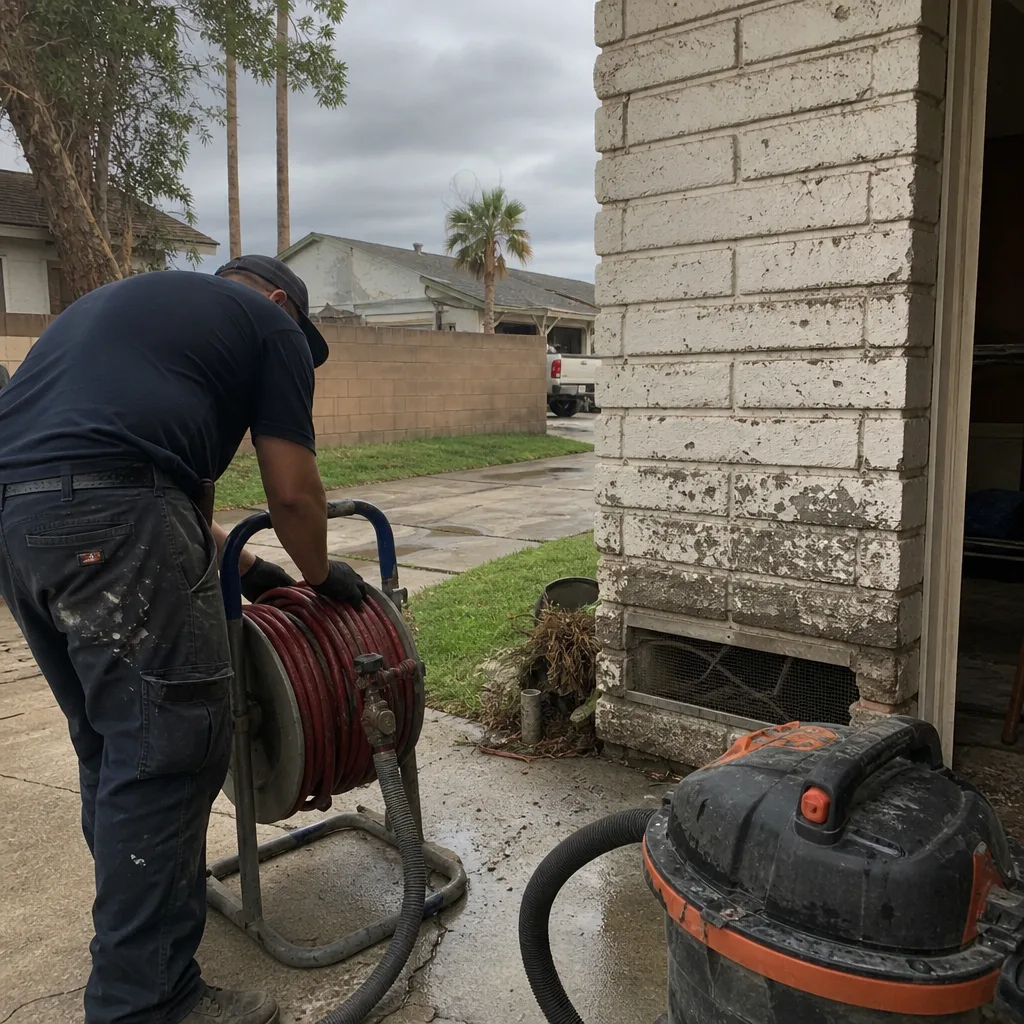 Before
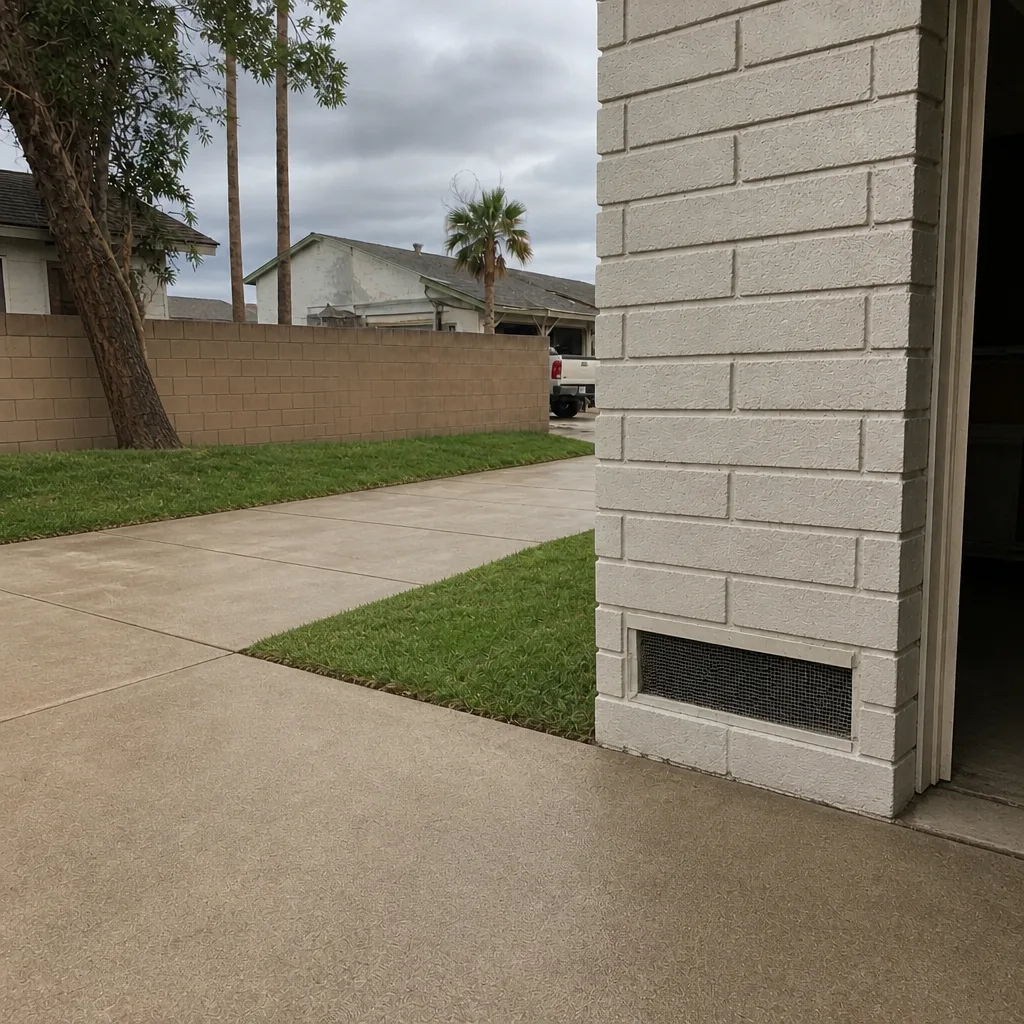 After