
Last updated November 25, 2026
 Whole-home duct cleaning
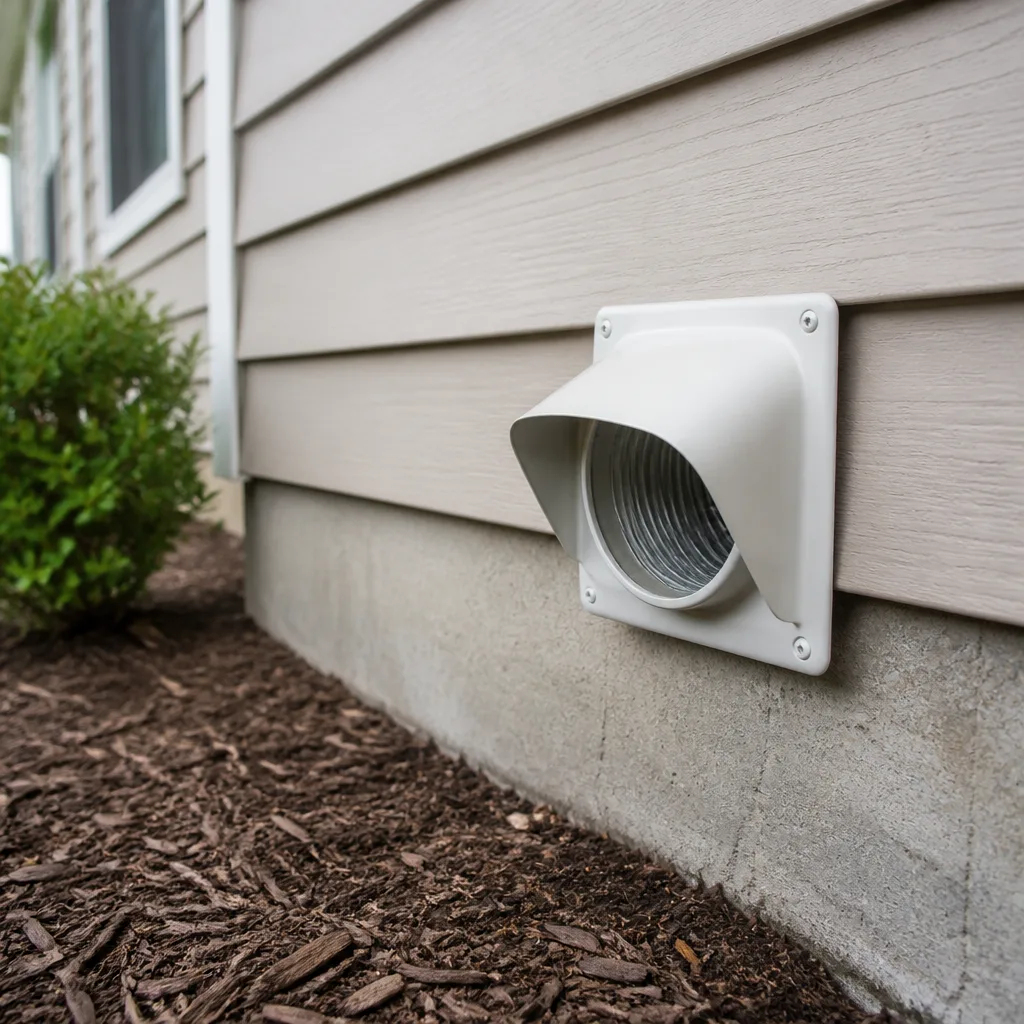 Dryer vent cleaning
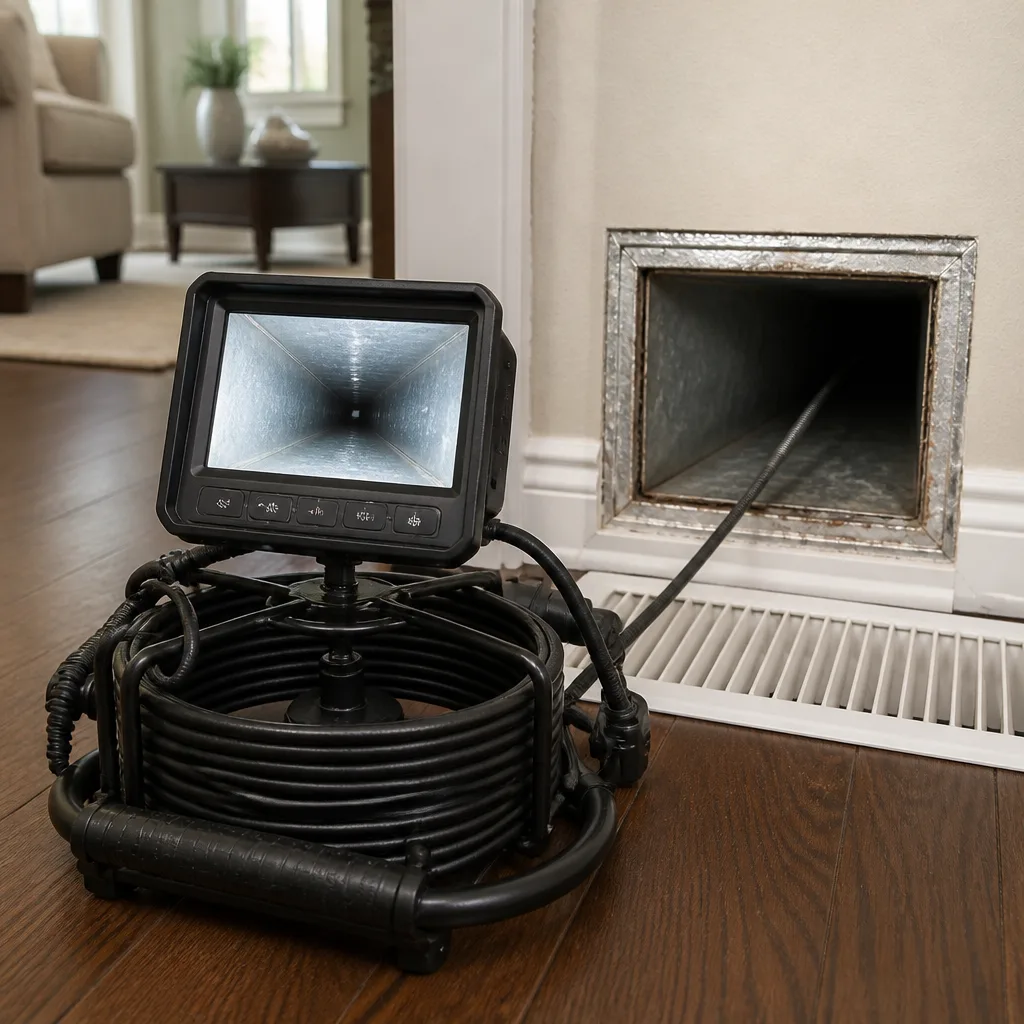 Camera inspection
 Sanitizing & deodorizing
Whole-system duct and dryer vent check with before-and-after photos - you see exactly what came out of your vents
That "$99 whole-house special" is a bait ad - the real number appears once they are in your hallway, or the "clean" is a shop-vac at the register. We photograph the inside of your ducts before and after instead.
How to Hire an Air Duct Cleaning Contractor in Fullerton: A Step-by-Step Guide
Most homeowners shop for duct cleaning the way they shop for a haircut: find a coupon, call the number, hope for the best. That works fine when the stakes are low. It doesn’t work here, because duct cleaning is one of the few trades in Southern California with almost no barrier to entry. There’s no state certification that proves a crew actually cleans ducts, no mandatory equipment standard, nothing stopping a van and a wet-dry vac from advertising a whole-house job. The vetting burden lands on you. This guide gives you the exact questions, the verification steps, and the red flags that separate a qualified contractor from a bait-and-switch operation, written from our vantage point here in Fullerton.
Quick Answer
To hire a duct cleaning contractor in Fullerton, verify three things before you book: that the crew uses truck-mounted or commercial negative-pressure equipment (not shop vacs and rotary brushes alone), that they’ll do a walk-through and hand you a written scope-of-work before touching anything, and that they hold an active California contractor license you can look up yourself. Ask specifically about negative pressure specs, air handler access, and containment. If any of those questions draw a vague answer, you have your decision.
Styles & brands we work with
- Whole-home duct cleaning
- Dryer vent cleaning
- Camera inspection
- Sanitizing & deodorizing
Table of Contents
- Why duct cleaning has such a low barrier to entry in Southern California
- The exact questions to ask before you book
- What NADCA membership actually certifies (and what it doesn’t)
- How to verify a California contractor license (and why it matters for you)
- Red flags in quotes: per-vent pricing and vague scope language
- What a legitimate walk-through and written scope-of-work looks like
- Equipment matters: what professional-grade actually means
- What Fullerton homeowners should know about their duct systems
Why Duct Cleaning Has Such a Low Barrier to Entry in Southern California
California licenses contractors in dozens of classifications, but duct cleaning on its own doesn’t sit in a neat box the way electrical or plumbing does. A crew can operate under a general building classification, an HVAC classification, or in plenty of cases, no verifiable license at all. Nothing in the state’s licensing structure specifically tests whether someone knows how to clean a duct system well. That gap is the whole problem. It means a caller has to do their own groundwork.
Fullerton makes this especially relevant. The city’s housing stock is old enough that many homes still have the original sheet-metal ductwork installed decades ago, often with accessible crawl spaces and attic runs that a serious contractor can inspect easily. Newer builds and retrofits sometimes use flex duct, which is far easier to damage with the wrong brush. A contractor who doesn’t know the difference will over-agitate flex duct, tear seams, or leave the system worse contained than when they arrived. The right question isn’t just whether they’ll clean it. It’s whether they understand what they’re cleaning and how to protect it.
There’s also a market dynamic that feeds the low-barrier problem. Because the barrier is low, the industry attracts two very different kinds of operators: companies that invest in professional equipment and honest scope, and companies whose entire business model is a low advertised price followed by an on-site upsell. The two can look identical on a website. The only way to tell them apart is to ask.
What we’ve learned over time is that homeowners who ask three or four specific questions before booking almost never get burned. The vetting is not difficult once you know what to ask. It’s knowing what to ask that most people don’t have. That’s what the rest of this guide is for.
The Exact Questions to Ask Before You Book
These are the questions we’d ask if we were hiring instead of doing the hiring. Ask them on the phone, before you commit to an appointment. A qualified contractor will answer them directly and without deflecting.
- What equipment will you use? Commercial truck-mounted or portable negative-pressure systems with HEPA filtration are the standard. A shop vac and a rotary brush is not the same thing and never will be. Ask for the brand and model if they’ll give it.
- How will you create negative pressure, and what’s the CFM rating? Negative pressure is the whole mechanism behind proper duct cleaning: it pulls loosened debris out of the system while preventing it from blowing into your living space. If they can’t tell you roughly what they run, they may not be running it.
- How will you access the system at the air handler? The air handler and plenum need to be cleaned, not just the visible return grilles. Ask what happens there. Vague answers usually mean it doesn’t get touched.
- Will you cut access holes, and how do you seal them? Sometimes access requires cutting into ductwork. That’s normal. Whether they seal it properly after is the whole point. Ask if they patch and seal, or just tape over it.
- What’s included in the written scope? Ask for it in writing before work begins. Every supply run, every return, the air handler, containment during the job. If they can’t put it in writing, they haven’t defined the job.
- What happens if you find damaged or disconnected ductwork? The honest answer is “we’ll show you and quote repair separately.” The dishonest answer is silence until the check is being written.
That last question is the one most homeowners forget, and it’s often the most important one. Duct cleaning and duct repair are separate skills, and in Fullerton, the number of contractors who can diagnose a disconnected return trunk and then actually repair it under the same visit is smaller than you’d think. If the crew that arrives can only clean and not diagnose, you’ll be scheduling a second visit with a different company the moment they find something.
What NADCA Membership Actually Certifies (and What It Doesn’t)
NADCA – the National Air Duct Cleaners Association – does not license contractors. No one does, in this trade. What NADCA does is set an industry standard for assessment, cleaning, and restoration of HVAC systems, and it offers a certification exam for air systems cleaning specialists (often abbreviated ASCS). Membership in the association and individual certification are two separate things, and both are worth understanding.
Here’s what NADCA standards actually mean when you see them referenced:
- Assessment: the standard requires that a contractor assess the system before quoting, not just show up and start scrubbing. A real assessment looks at the system’s condition, its cleanliness, and whether cleaning is even the right answer.
- Cleaning: it establishes a standard for what “cleaned” means – the full system, not just the parts visible from the return grille.
- Restoration: it addresses sealing and restoring access points and system integrity after the work.
What NADCA doesn’t do: it doesn’t investigate a company for questionable business practices, and it doesn’t guarantee that a company follows the standard even if it advertises membership. If a contractor claims NADCA certification, ask exactly which certification and who holds it. A company can claim “NADCA-certified” without any individual on the crew actually holding the ASCS credential.
What we suggest, and what we think is fair to any homeowner in Fullerton: verify. If the contractor says they hold NADCA certifications, ask which ones and who holds them. Look it up. It takes two minutes. When a real contractor holds the credential, they’ll be happy to let you do it.
How to Verify a California Contractor License (and Why It Matters for You)
California has a specific tool for this: the Contractors State License Board lookup, available at cslb.ca.gov. You can search by license number or by business name, and it tells you whether a license is current, what classification it holds, and whether any disciplinary action has been filed. It’s free. Use it before you book.
What to look for when you pull the record:
- Is the license active and in good standing? An expired or suspended license is a real problem, not a technicality. It often means the contractor can’t legally take your job.
- What’s the classification? Generally, a C-20 HVAC or a B general building classification is what you’d expect to see on a legitimate duct cleaning and repair business. Ask if you’re not sure what the classification on the record means.
- Are there disciplinary actions on file? The board’s record shows them. If there are, ask the contractor to explain.
- Is the name on the license the one on the quote? If the name on the estimate doesn’t match any licensed entity, you’re not hiring who you think you’re hiring.
Why this matters for you, specifically: if an unlicensed crew damages your ductwork or causes a problem during the job, you have very few avenues for recourse. A licensed contractor is subject to complaint filings through the board. An unlicensed one may simply disappear. That’s not a scare tactic. It’s the practical reason the lookup exists.
We strongly recommend looking up any contractor in Fullerton before booking, including us. The lookup is public, and we think every homeowner should run it. It takes a minute and it tells you more than any website can.
Red Flags in Quotes: Per-Vent Pricing and Vague Scope Language
This is where you’ll save yourself the most trouble. The red flags are specific once you know them. They cluster around two patterns: pricing per vent and scope language that says nothing.
Red flag one: per-vent pricing
Per-vent pricing is the standard bait. It appears as “$12 per vent” or “$15 per vent” with a low headline number, then jumps by hundreds of dollars the moment a real house is counted. A typical Fullerton home has more vents than most people expect, and the number almost always changes when the technician shows up and “does an assessment.” Ask for a per-system price. If a company can’t quote a system, they can’t quote a system.
Red flag two: vague scope language
Anything along the lines of “basic duct cleaning for the whole house” with no specific description of what gets touched isn’t a scope, it’s a placeholder. A written scope should say what’s cleaned, how the air handler is accessed, whether the plenum is included, and where the vacuum runs.
The rest of the red flags, shortened
- No mention of containment: if “negative pressure” never comes up, ask. If the answer is a silent pause, hang up.
- No mention of access panels: any contractor planning to clean the full system will discuss how they get to it and how they close it up afterward.
- An offer to “sanitize everything” without first cleaning: sanitizing before cleaning seals dust in place. Cleaning has to come first.
- No written estimate before the work: one flat price per system, agreed in advance, is the standard. Anything else is a moving target.
- A price that’s dramatically lower than every other quote: the low number is a door-opener, not a discount. The real number arrives after the technician is inside.
If you’re seeing two or three of these at once, that’s your answer. Walk away from the quote and start over.
What a Legitimate Walk-Through and Written Scope-of-Work Looks Like
The walk-through is where a real contractor earns the job. Not on the phone, not on the website, but in your house with the crew on site and the system looked at. If a company quotes a job without looking at the system, the quote is a guess. Here’s what the walk-through should include:
- Inspection of the accessible ductwork: returns, supplies, and the air handler. A technician should look at the system’s actual condition before quoting a scope.
- Assessment of the air handler and plenum: this is often where the worst accumulation sits, and it’s often what discount operators skip.
- Identification of any existing damage: disconnected runs, torn flex, crushed sections. This is exactly what a repair-capable contractor is looking for, and what a clean-only contractor will either miss or leave untouched.
- A written scope: a page or a document listing exactly what’s cleaned, what’s accessed, what’s sealed, and the total per-system price.
- A clear statement of what’s not included: honest contractors tell you what’s outside the scope, not just what’s in it.
If the contractor finishes the walk-through and hands you a written scope with a specific per-system figure, you have a real quote. If the walk-through turns into a sales pitch, or if the scope changes materially between the walk-through and the invoice, you know exactly what you’re dealing with. Every job we quote gets one flat price per system, agreed before work starts, with before-and-after photos of your own ducts at the end so you can see exactly what was cleaned.
While you’re at it, this is the right moment to also think about the rest of the system. HVAC cleaning covers the air handler and coil surfaces that a duct cleaning alone doesn’t reach. If both need attention, a walk-through is when you’d want to know.
Equipment Matters: What Professional-Grade Actually Means
Every company claims to use “professional-grade equipment.” Ask for brand names. In this trade, the names that carry weight are recognizable: Rotobrush and Nikro for cleaning systems, Abatement Technologies for contamination and fine-particulate control, Honeywell and Aprilaire for air quality products that can be installed after cleaning to improve filtration or humidity control. A contractor who works regularly with real systems will know these names and use them. A contractor who doesn’t have to reach for an answer.
What the equipment difference actually means in practice:
- Negative pressure systems pull loosened debris out of the system while preventing cross-contamination of your living space. A vacuum attachment alone cannot duplicate this.
- Rotary agitation tools loosen debris from duct walls. Consumer brush attachments don’t have the reach, torque, or bristle design for a real supply run.
- HEPA filtration captures fine particulate at the exhaust end. Without it, “cleaning” can just mean moving dust around.
- Contaminant equipment like Abatement Technologies matters when the job involves more than routine dust: fine particulate, mold concerns, or renovation debris that has collected in the system.
The reason this matters to a homeowner choosing a contractor is this: equipment limits scope. A crew without real negative pressure cannot honestly offer a full-system clean, because the mechanism that makes a full-system clean safe is the negative pressure. A crew without contaminant equipment cannot honestly handle a contaminated system. When we clean a system, we’re using Rotobrush and Nikro equipment because that’s the standard the job requires, and we bring Abatement Technologies equipment because contamination happens more often than people expect. When we finish, we can address the filtration and humidity side with Honeywell and Aprilaire products under the same visit. Clean, repair, seal, sanitize: all from the same company, not three.
It also matters because duct repair emerges from cleaning. The most common repair request we field is from homeowners whose ducts were cleaned by a crew that found a disconnected run, said nothing, and left with a check. A real scope covers repair and sealing because the right tools find problems, and air duct cleaning that stops at the cleaning has only done half of what the system needed.
What Fullerton Homeowners Should Know About Their Duct Systems
Fullerton’s climate is mild through most of the year, which shapes how systems age here in ways that surprise people moving from harsher climates. Furnace and air handler runtimes tend to be long but gentle, which means ductwork doesn’t experience the thermal shock it would in a colder region. That’s good news for the metal. It’s less good news for accumulation over time, because the low-grade, continuous circulation means dust, pollen, and pet hair settle into the system slowly and evenly rather than in seasonal bursts. The result is a system that doesn’t look dirty from the grille but is loaded up behind the register boots.
The other local factor is renovation debris. Fullerton has a lot of older homes going through updates, and drywall dust is the most common non-dust contaminant in the system after a remodel. It’s fine and it travels. That’s exactly the case where having Abatement Technologies equipment and containment matters.
If you’re in the neighborhoods around Downtown Fullerton, the historic district, or the older tracts near the colleges, your system is more likely to be original or minimally modified metal ductwork, and cleaning should include careful inspection for disconnected runs and crushed sections rather than just agitation. In the newer areas of the city, flex duct is more common, and how the crew handles brush pressure matters more. A contractor who can’t tell you the difference between how they’d clean a metal system and how they’d clean a flex system hasn’t done enough of either.
Common Mistakes to Avoid
- Booking on the coupon price alone. A low advertised number is a door-opener, not a quote. Without a written scope and a per-system price, you don’t know what the job will cost until the technician is inside.
- Assuming “NADCA-certified” is a single thing. It isn’t. Ask which certification, who holds it, and confirm it yourself. The whole point of the credential is that it can be checked.
- Skipping the CSLB lookup. Two minutes on cslb.ca.gov tells you whether the license is active and whether the business on the quote is licensed at all. Skipping that step is where homeowners find out afterward that they had no recourse.
- Accepting per-vent pricing. Vent counts change. Systems don’t. If the price is quoted per vent, the final number is out of your control.
- Not asking about the air handler. The air handler and plenum are the hardest part to clean and the easiest part to skip. If your scope doesn’t mention it, it probably isn’t in the scope.
- Assuming cleaning and repair come from the same company. In Fullerton, they often don’t. If the crew that arrives can only clean, a disconnected duct found mid-job becomes a second contractor and a second invoice.
- Skipping the walk-through. A quote without an in-person assessment is a guess. The walk-through is where a real contractor earns the job, and where you learn what you’re actually paying for.
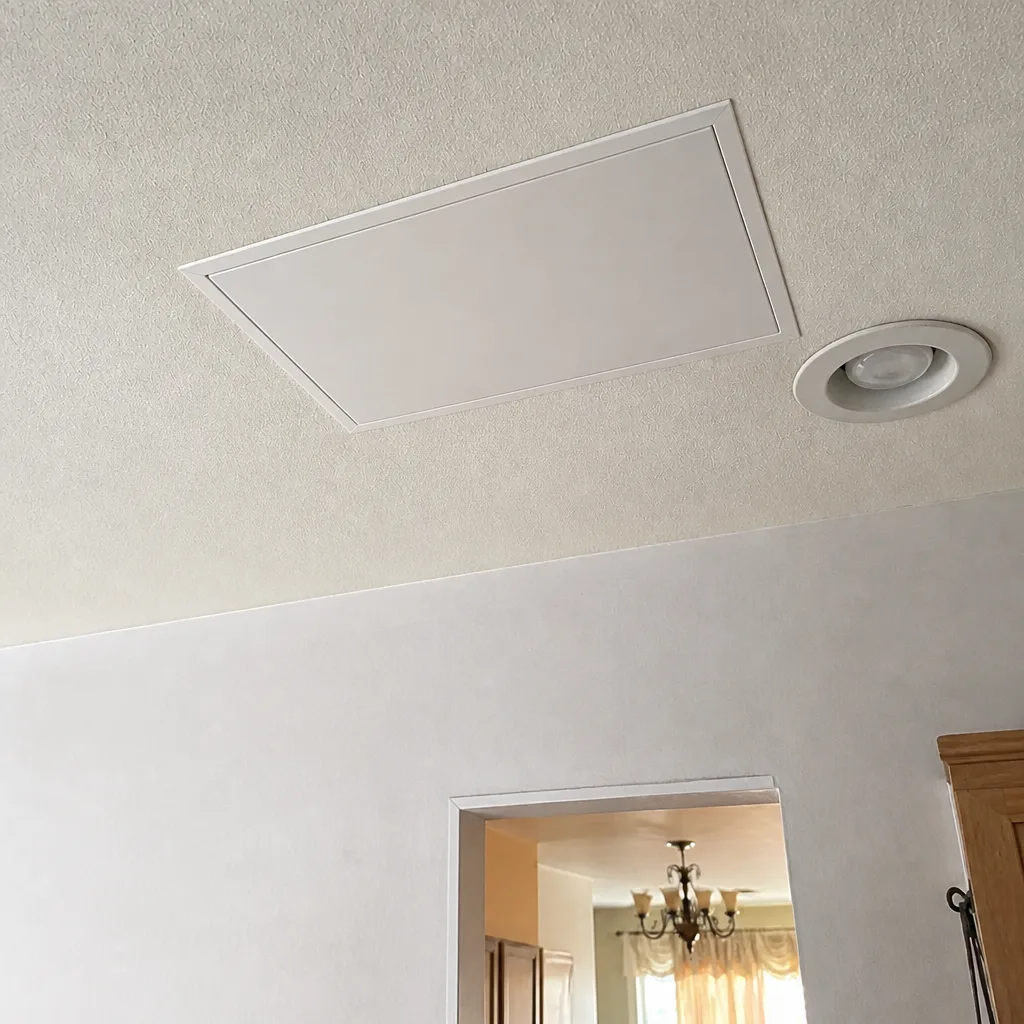
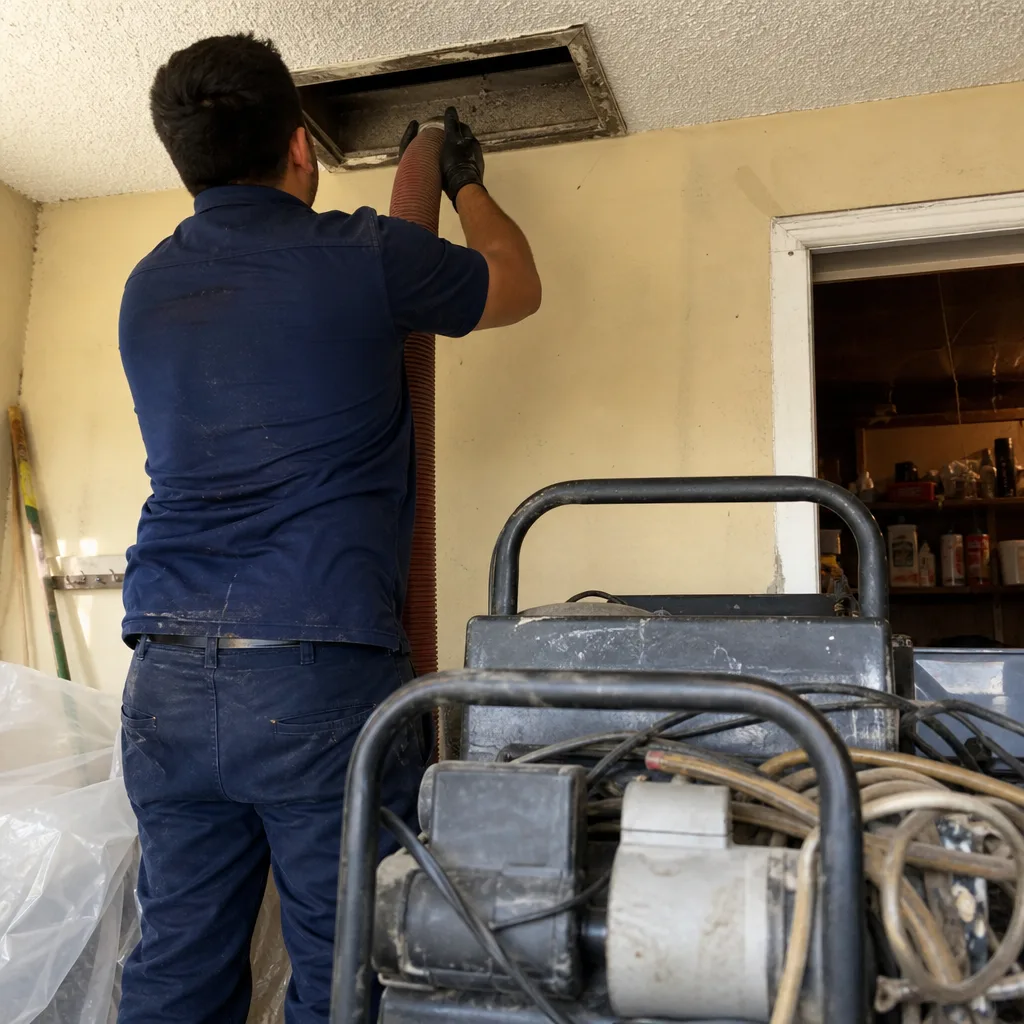
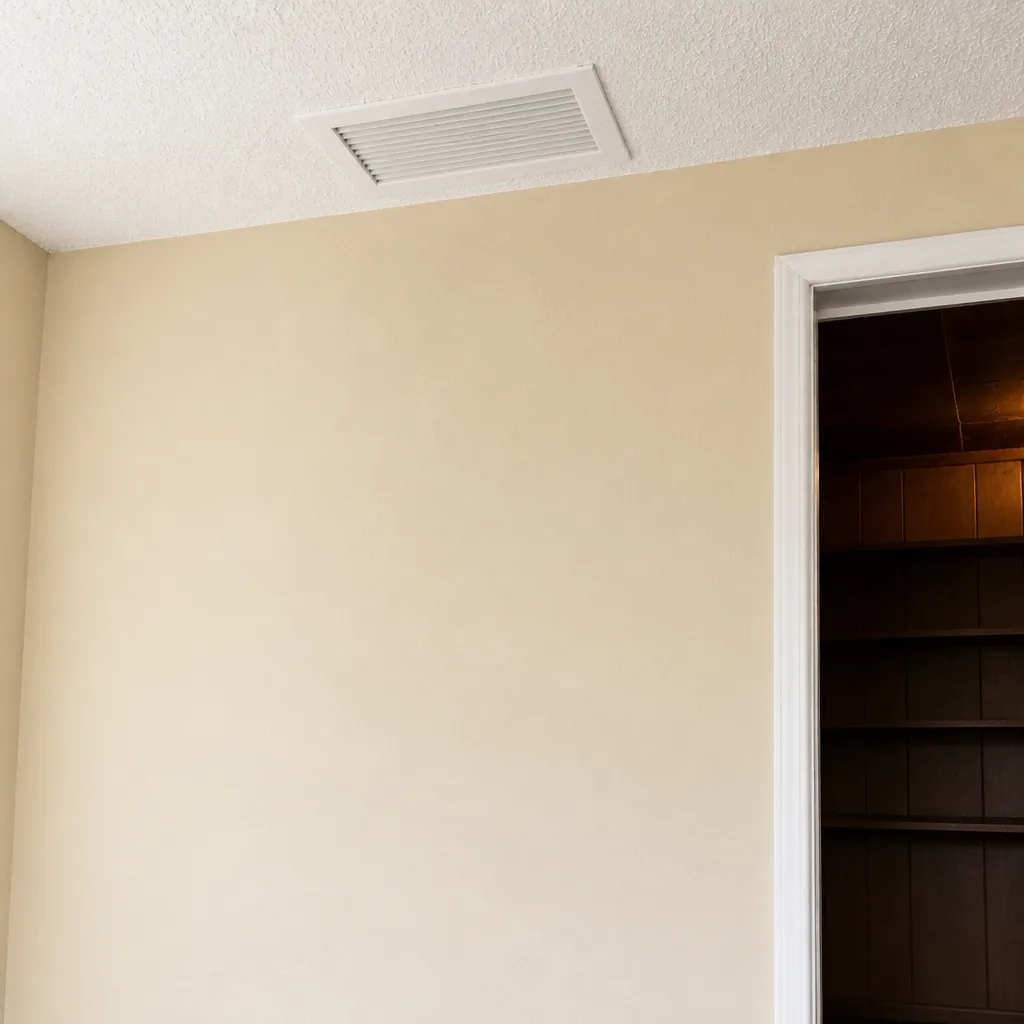
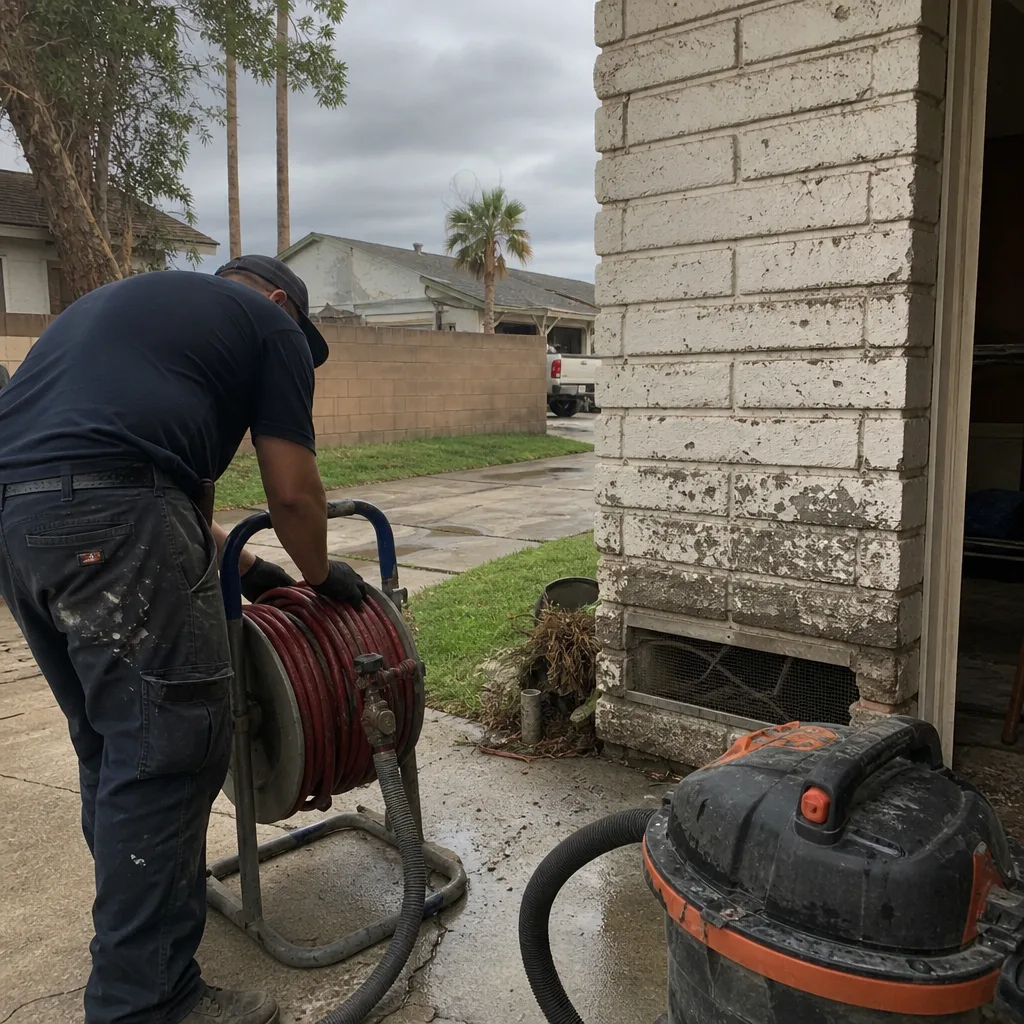
See the difference
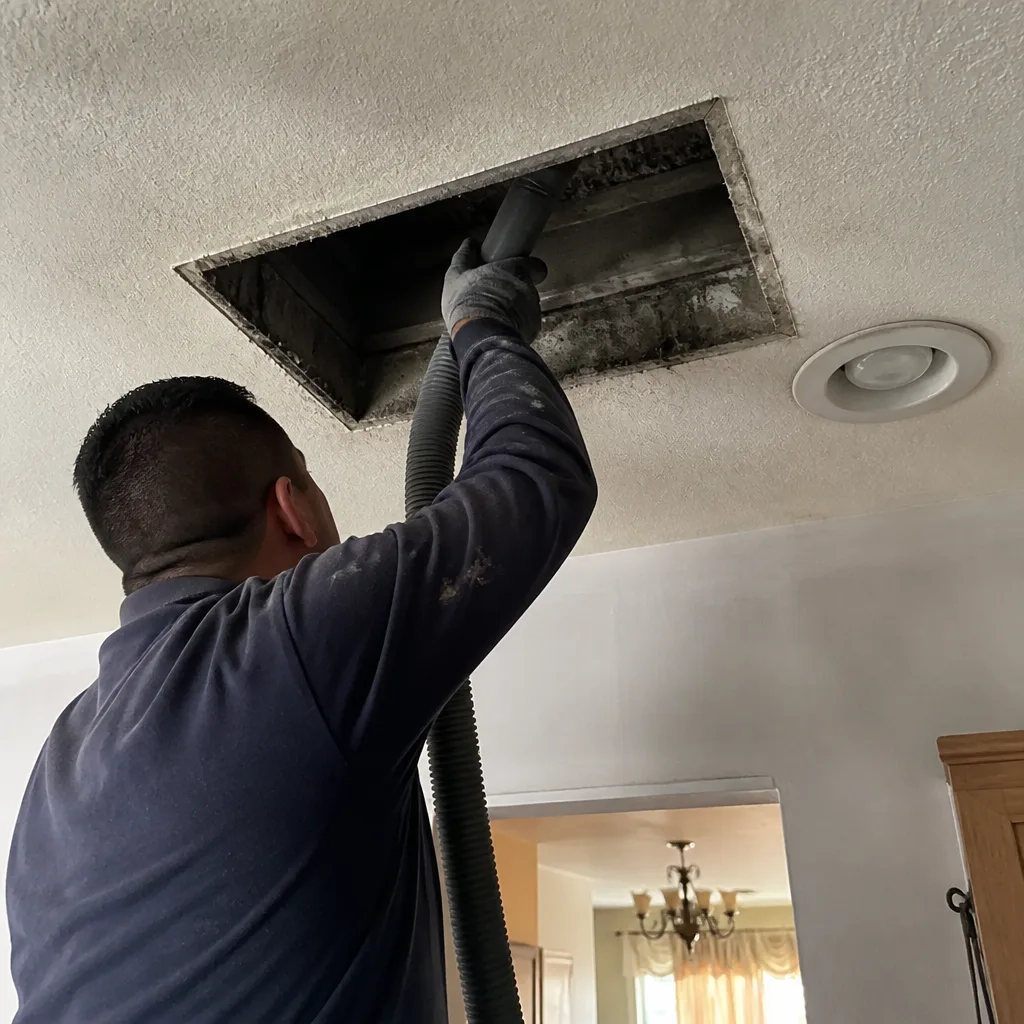 Before
 After
 Before
 After
 Before
 After
When to Call a Professional
You should call a professional when the symptoms are specific enough to point at the system. A musty smell that appears the moment the air handler kicks on, visible dust puffing from a supply register when the system starts, a recent remodel where drywall or sawdust entered the returns, or an HVAC system that hasn’t been cleaned in over a decade are all solid reasons to get someone out to look. Allergy flare-ups that consistently worsen indoors are another. None of these need overnight attention. What they need is a real assessment with the right equipment, and a contractor who can repair what they find rather than referring you elsewhere.
Fullerton Air Duct Cleaning Co offers free estimates in Fullerton – call (877) 792-5884. We answer 24/7. Fast dispatch, 7am-7pm, Sunday through Friday. Our technicians have up to 14 years of experience, they run Rotobrush and Nikro equipment, and one flat price per system is agreed before work starts.
Frequently Asked Questions
Air duct cleaning in Fullerton is priced per system by a written estimate, not per vent, and the price reflects the actual scope after a walk-through. The honest answer is that any quote you receive before someone has looked at your system is a guess. The important thing is that you get one flat price per system, agreed before work starts, and that the number doesn’t change mid-job. If the price is set per vent or a low coupon number, treat it as an opening bid, not a quote. Call (877) 792-5884 for an exact quote – estimates are free.
Because the low number isn’t the price of the job; it’s the price of getting inside your house. A dramatically cheap quote is usually a per-vent teaser or a coupon that expands once the technician does their “assessment” and finds a reason to add scope. The other reason is equipment: a crew without commercial negative pressure can quote lower because they aren’t doing the same job. Compare quotes on scope and method, not on the headline number. Call (877) 792-5884 for an exact quote.
Ask before you book, not after. A contractor doing real work will offer before-and-after photos of your own ducts at the end of the job, and will walk you through the system’s condition on the way in. If a quote doesn’t include photos as a standard part of the service, that’s worth noting. The best verification is your own eyes on the before-and-after, and a written scope that says exactly what was cleaned. Call (877) 792-5884 for an exact quote.
There’s no fixed schedule, and anyone who sells you one is selling you something. The honest rule is condition-based: after a renovation that put drywall or sawdust into the returns, after moving into a home with unknown history, or when symptoms show up (musty odor, visible dust at registers, worsening indoor allergies). Healthy systems in a stable home often go much longer than people expect. The right time is when the system gives you a reason. Call (877) 792-5884 for an exact quote.
Cleaning itself generally doesn’t require a permit, but sealing, cutting new access panels, or repairing duct runs in some cases may. The right answer is to ask the contractor, since they’re the one who knows exactly what the scope involves. If a repair involves modifying ductwork in a way that would normally need a permit, a licensed contractor will tell you so. Ask your city’s building department if you want to confirm independently. Call (877) 792-5884 for an exact quote.
Yes. dryer vent cleaning is one of the five services we offer alongside duct cleaning, HVAC cleaning, duct repair and sealing, and air quality and sanitizing. It’s a separate scope from duct cleaning, but the same visit often covers both, and it’s worth asking about during your walk-through. Call (877) 792-5884 for an exact quote.
The Bottom Line
Hiring a duct cleaning contractor in Fullerton comes down to a few specific checks. Verify the equipment (commercial negative pressure, not shop vacs). Verify the license through the CSLB. Ask for a written scope and a per-system price before work begins. Ask who cleans the air handler and whether they can repair what they find. Look up any certification claims yourself, and treat per-vent pricing and low coupons for what they are. The rest is straightforward. When you’re ready, call (877) 792-5884 for a free estimate. We answer 24/7. Fast dispatch, 7am-7pm, Sunday through Friday.
If you want to see how we structure the work from start to finish, our main service page at Fullerton Air Duct Cleaning Co covers the full scope: cleaning, repair, sealing, and sanitizing, all with professional-grade equipment.
Written by the team at Fullerton Air Duct Cleaning Co.