
Last updated November 25, 2026
 Whole-home duct cleaning
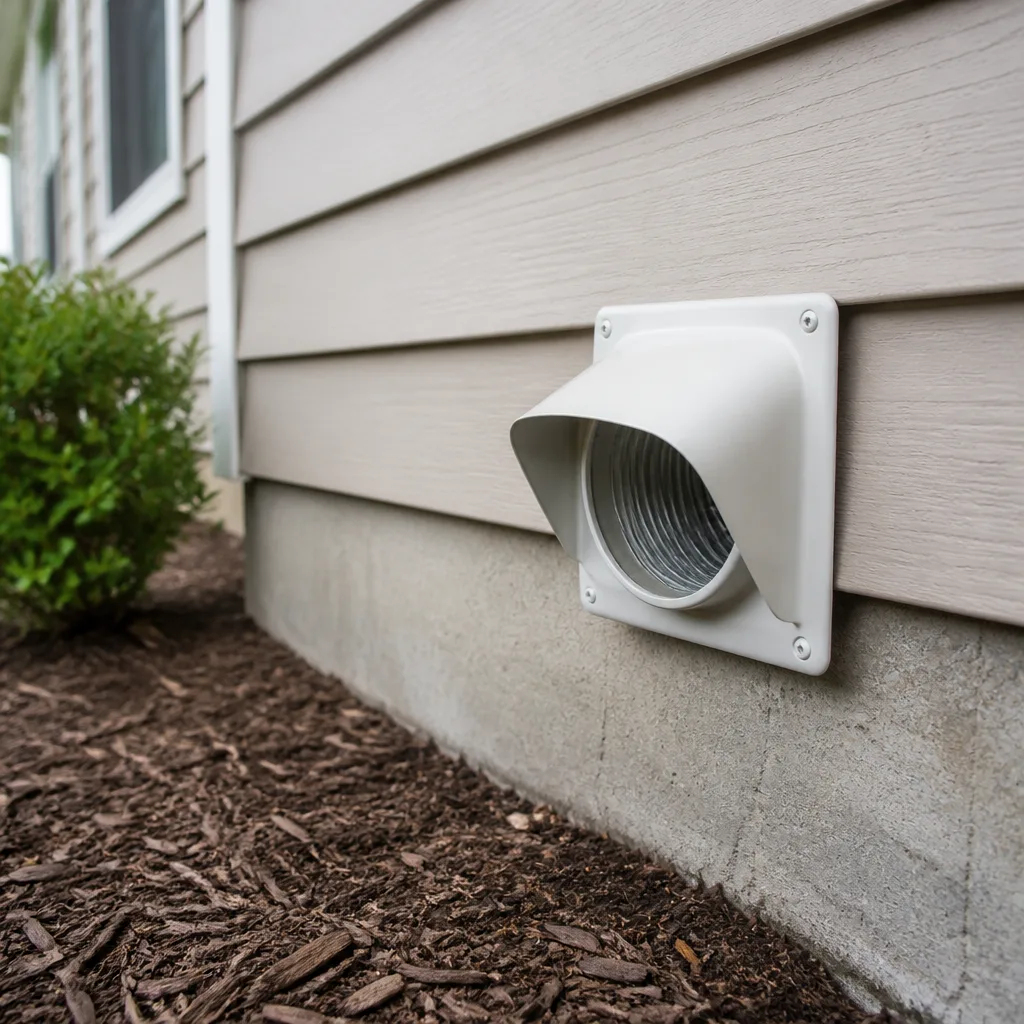 Dryer vent cleaning
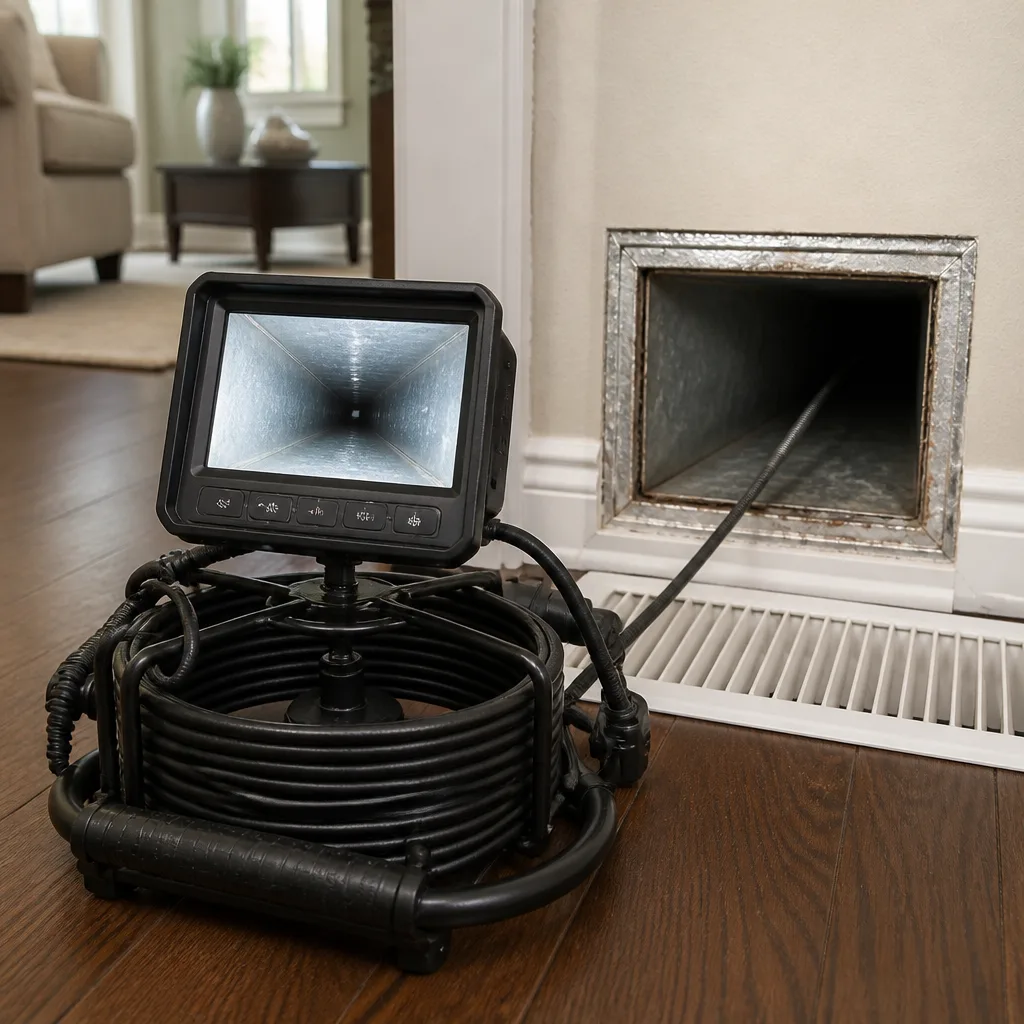 Camera inspection
 Sanitizing & deodorizing
Whole-system duct and dryer vent check with before-and-after photos - you see exactly what came out of your vents
That "$99 whole-house special" is a bait ad - the real number appears once they are in your hallway, or the "clean" is a shop-vac at the register. We photograph the inside of your ducts before and after instead.
Air Duct Cleaning Permits, Codes & Inspections in Fullerton, CA: What You Need to Know
Here’s the part most homeowners get backwards: cleaning your ducts almost never needs a permit, but the repairs that turn up during a cleaning often do. A contractor can run a brush through your ductwork with no paperwork at all. The moment they cut out a crushed section of flex duct, rebuild a plenum, or add a new access panel, they’ve crossed into permitted territory under the California Mechanical Code. Skip that step and the work exists in your house but nowhere in city records. A buyer’s inspector will notice a mismatched duct run or an unsealed penetration long before closing. This guide walks Fullerton homeowners and property managers through what triggers a permit, when the Fullerton Building Division wants a call, how Title 24 fits in, and what clean documentation of duct work actually looks like.
Quick Answer
Air duct cleaning on its own does not require a permit in Fullerton. Repairing, replacing, or modifying ductwork – including flex duct replacement, plenum work, and new access panels – generally does require a mechanical permit and an inspection under the California Mechanical Code. If the work touches ducts in conditioned space and falls under California’s Title 24 energy rules, it also has to meet duct sealing and documentation requirements. Cleaning is paperwork-free; altering the system is not.
Styles & brands we work with
- Whole-home duct cleaning
- Dryer vent cleaning
- Camera inspection
- Sanitizing & deodorizing
Table of Contents
- Cleaning vs. Repair: Where the Permit Line Falls in Fullerton
- The Fullerton Building Division: When to Call and What Triggers an Inspection
- What the California Mechanical Code Says About Duct Work
- Title 24 Compliance When You Modify Ductwork in an Existing Home
- What Proper Documentation of Duct Sealing Looks Like
- How Unpermitted Duct Work Affects a Fullerton Home Sale
- What Buyers’ Inspectors Actually Look For
- How a Duct Inspection Works and What to Expect
Cleaning vs. Repair: Where the Permit Line Falls in Fullerton
The single most useful distinction in this entire topic is the one between maintenance and construction. Cleaning is maintenance. Anything that changes the physical duct system is construction, and construction is what the permit process exists to track.
Think of it the way you’d think about a car. Changing the oil doesn’t require a mechanic to file paperwork with the state. Replacing the engine block does. Duct cleaning is the oil change. Duct repair and replacement are the engine swap.
Here’s how the split breaks down in practice:
- No permit typically required: routine cleaning of supply and return ducts, removal of dust and debris, sanitizing, access through existing registers, cleaning the air handler cabinet, and cleaning of the blower compartment.
- Permit generally required: replacing a run of flex duct, removing and reinstalling rigid duct sections, cutting a new access panel where none existed, rebuilding a plenum connection at the air handler, extending or rerouting a duct run, and changing the number or location of supply registers.
- Case by case: sealing existing joints with mastic or approved tape, reattaching a disconnected duct to a boot, and minor repairs to a single damaged section. Whether these need a permit depends on scope and how the work is classified locally.
The reason this matters in Fullerton specifically is the housing stock. Large parts of the city were built during mid-century tract development, and a lot of those homes still have original rigid duct systems with modifications layered on over the decades. When a technician opens a wall or ceiling cavity to inspect, the odds of finding a duct that was replaced at some point without paperwork are high. We’ve found plenty of them. What we can’t do is fix one and leave the record blank again.
If you’re calling us for air duct cleaning, the cleaning itself is our scope. If the inspection turns up a crushed or disconnected run, we’ll tell you plainly whether the repair is the kind of work that needs to go through the permit process, and we won’t quietly do it under a cleaning invoice.
The Fullerton Building Division: When to Call and What Triggers an Inspection
The City of Fullerton Building Division handles permits and inspections for work inside the city limits. If you’re inside Fullerton and the duct work is structural in the sense described above, that’s the office that issues the mechanical permit. If your property sits just outside the city boundary, a different jurisdiction covers it, and the permit authority changes accordingly.
What actually triggers an inspection is worth understanding, because a lot of homeowners assume inspections are punitive. They aren’t. An inspection is a neutral verification that the work matches what was permitted and meets code. That’s it.
The kinds of work that typically draw an inspection include:
- Rigid duct removal and replacement – any time a section of the system is cut out and a new one installed, the inspector wants to see the seal, the support, and the connection.
- Plenum modifications – work at the air handler where the trunk connects is heavily scrutinized because a bad seal there dumps conditioned air into a garage or attic.
- New duct penetrations through walls or ceilings – any new hole through a building assembly.
- Adding or relocating registers – changing the system’s delivery points is a system modification.
- Ductless mini-split or new system installation – full system installs get a mechanical permit, and the duct work connected to them is part of the scope.
Two practical notes we pass along to Fullerton customers. First, ask the question, “Will this repair need a permit?” before the technician starts, not after. Second, keep the paperwork you get back. The stamped permit card and final inspection record are the receipts that prove the work was done legally, and they matter more than you think when you sell. A permit card is the single cheapest insurance policy on a duct repair that you’ll ever buy.
The cheapest possible answer here is a phone call to the Building Division asking whether your specific repair requires a permit. Most cities would rather answer the question than deal with the consequences of unpermitted work.
If you’re unsure whether your situation crosses into permit territory, call us at (877) 792-5884 and describe what’s happening. We answer 24/7. Fast dispatch from 7am to 7pm, Sunday through Friday.
What the California Mechanical Code Says About Duct Work
The California Mechanical Code is the state’s adoption of the Uniform Mechanical Code, and it addresses duct systems in several places. We’re not going to pretend to be your code official, and we’re not going to quote section numbers we can’t verify. What we can do is explain what the code is fundamentally about so you understand why an inspector cares what an inspector cares about.
The mechanical code regulates the installation, alteration, repair, and replacement of mechanical systems, and duct work is part of that. Three themes come up again and again:
- Material and installation quality: duct materials have to be listed and installed per manufacturer instructions. That means flex duct can’t be stretched taut or sagged, and it can’t be kinked around a tight corner. Rigid duct has to be supported at code intervals and sealed at every joint.
- Sealing: duct systems in conditioned spaces and in certain unconditioned spaces have to be sealed. Loose joints, unsealed boots at the register, and gaps at the air handler are all leaks, and the code treats them as defects.
- Clearances and support: duct work runs near heat sources, through attics, and past combustible materials, and the code sets minimum clearances and support requirements to keep the system safe and stable.
For Fullerton homeowners, the practical takeaway is this: when a repair crew opens up the system, the standard isn’t “make it work.” The standard is “make it match the code and the manufacturer’s installation instructions.” A repair that’s technically functional but doesn’t meet the material, sealing, or support requirements is the kind of thing an inspector flags, and it’s the kind of thing a buyer’s inspector flags too.
If you want to see how the rest of the system fits into this picture, our overview of HVAC cleaning covers the air handler side. Duct work and the equipment it serves are one system, and the code treats them that way.
Title 24 Compliance When You Modify Ductwork in an Existing Home
Title 24 is California’s building energy efficiency standard, and it applies to alterations to existing homes, not just new construction. That’s where a lot of people get surprised. Duct work falls squarely inside Title 24’s scope when you modify it.
Here’s the concept in plain language. California has decided that duct systems waste a meaningful amount of the energy you pay for, so the energy code sets requirements around duct insulation and duct sealing. When you alter or replace ducts in a home in a climate zone where those requirements apply, the work has to meet them. Fullerton sits in a climate zone where duct sealing and insulation requirements are enforced. That means a replacement of ducts in unconditioned space, like an attic, requires attention to insulation values, sealing, and documentation.
What does this mean for a typical Fullerton homeowner?
- If you’re replacing ducts, expect sealing and insulation to be specified. A crew that just runs new flex and walks away isn’t meeting the standard.
- If you’re repairing, the repair should match the energy code requirements that apply to the surrounding duct. Patching with unsealed tape over an inspection gap doesn’t.
- If your home has ducts in an unconditioned attic, you should ask what sealing and insulation requirements apply before work starts. This is the single most common place we see shortcuts in Fullerton, because the attic is out of sight.
One honest caveat. Title 24 compliance is a specialist topic and the requirements can vary based on the scope of work. The right thing to ask the contractor is: “Does this duct work need to meet Title 24, and what documentation do I get when it’s done?” If the answer is vague, find another contractor.
In our own service, duct repair and sealing are done in-house for exactly this reason. When we’re on a cleaning and we find a problem, we can handle the repair and the sealing together so we’re not handing the customer off to a second contractor who has to start the permit conversation from scratch. That’s part of the reason we use dryer vent cleaning as a natural companion service – both categories of work live in the same sealed-systems discipline.
What Proper Documentation of Duct Sealing Looks Like
Documentation is where the paperwork trail either works for you or doesn’t. A permit card proves a permit was pulled. An inspection record proves the work passed. What the homeowner usually doesn’t get is a plain-language record of what sealing work was actually done and where. That’s the gap we recommend closing.
Here’s what a complete record of duct sealing work should include:
- The permit number and issuing authority if a permit was required for the scope.
- The final inspection result and date, if the work involved a permitted repair or replacement.
- A written description of the sealing work – which joints were sealed, what material was used, and whether the plenum connection at the air handler was included.
- Photographs before and after of the duct runs affected by the work. Not glamour shots. Actual documentation of open ductwork and sealed joints.
- A statement of Title 24 compliance if the work falls under energy code requirements, along with any paperwork the contractor is required to provide.
- Material data sheets for mastic, tape, or sealant used, so a future contractor knows what’s on the system.
For a property manager, this folder of paperwork is worth its weight in gold at turnover. For a homeowner, it’s the answer to the question a buyer’s inspector will ask two years from now: “Was this work permitted and was it done to code?”
The reason we push on this is that documentation is one of the lowest-cost, highest-value things in the whole trade, and almost nobody in duct cleaning is careful about it. We provide before-and-after photos of your own ducts as a standard part of the service so you have a record that’s specific to your home, not a stock photo in a brochure. Add the permit paperwork to that folder and you’ve built a credible history of your system.
How Unpermitted Duct Work Affects a Fullerton Home Sale
California residential real estate transactions require sellers to disclose material facts about the property. Unpermitted construction is a classic material fact. When a buyer asks “Are you aware of any work done without permits?” and the honest answer is yes, the transaction can slow down, and in some cases the seller’s insurer or the buyer’s lender gets involved.
Here’s what tends to happen in practice with unpermitted duct work in Fullerton:
- The buyer’s inspector flags an anomaly. A mismatched duct material, a joint that doesn’t match code expectations, or a plenum connection that doesn’t line up with the rest of the system. Most general home inspectors aren’t duct specialists, but they notice what doesn’t fit.
- The buyer requests a credit or a permit correction. Depending on the market and the scope, the seller may end up retracing the work through the permit process at their own expense.
- The lender wants it corrected before close in some cases, particularly if the work affects the property’s appraised condition.
None of that is the end of the world, but all of it is avoidable with a $200-$500 permit pulled before the work is done. That’s the trade. A permit before the work is cheap. A permit after the work is a negotiation with the city and a negotiation with the buyer, and neither one goes your way.
One clarification that matters for how you think about this. A cleaning done on your ducts doesn’t create any disclosure obligation at all, because no permit is required. What creates the risk is the repair that gets quietly attached to the cleaning invoice. If a technician finds a crushed duct and repairs it as part of the cleaning visit without any permit conversation, the disclosure exposure is already baked in. We’d rather lose the repair scope than put a homeowner in that spot, so we’re upfront about it during the estimate.
What Buyers’ Inspectors Actually Look For
Buyer’s inspectors and city inspectors are looking at different things but the overlap is large. Here’s the practical list, because knowing what gets flagged protects you before the repair ever happens.
- Duct material mismatch: new flex duct replacing a rigid section, or vice versa, in a way that a permit would have documented. A permit record turns an anomaly into a legitimate repair.
- Unsealed joints at boots and registers: the sneakiest leaks in a house, because the register cover hides the gap. Inspectors pull the register covers.
- Plenum connection condition: the intersection of duct and equipment is where inspection attention concentrates.
- Duct support and routing: sagging flex duct or duct laying on attic framing gets flagged.
- Access panels without proper framing or sealing: a hole cut into a wall or ceiling to reach a duct is a hole that needs to be closed properly.
- Inconsistency with the property record: permit records on file should match visible duct configuration. When they don’t, that’s the question the inspector asks.
- Signs of moisture or contamination inside the ductwork: a different kind of problem, but one that comes up in the same conversation. If there’s visible mold growth inside a duct, both the inspection report and the buyer’s attention will land on it.
For contamination and fine-particulate concerns, the response is a real assessment and a real remediation scope, not a spray-and-hope sanitizing pass. We carry Abatement Technologies equipment on hand specifically because contamination problems need containment and filtration capability, not just a brush and a shop vac.
How a Duct Inspection Works and What to Expect
There are two distinct inspections in this world, and it’s worth knowing the difference so you don’t confuse them.
The city inspection happens when a permit is pulled. An inspector from the city or its designated agent reviews the permitted work after it’s complete and before it’s covered up. For duct work, that usually means looking at the sealed joints, the support, the plenum connection, and the installation quality against the code. If it passes, you get a final inspection record. If it doesn’t, the contractor corrects and reschedules.
The pre-service assessment is what you want before any cleaning or repair work begins. It’s not a city inspection and it doesn’t replace one. What it does is give you and the contractor a shared picture of the system before anything is touched. A proper assessment includes:
- A visual review of accessible ductwork at the air handler, plenums, and registers.
- A camera inspection of duct interiors where accessible, to see debris accumulation, contamination, and any disconnected or crushed runs.
- A look at the filter and air handler compartment as a diagnostic for how the system is running.
- A written scope of what’s cleaned, what’s repaired, and what’s tested, agreed with you before work starts.
This is where our equipment matters. We use Rotobrush and Nikro commercial-grade systems – the same equipment professional HVAC contractors rely on, not consumer-grade attachments. That changes what an inspection can find, because it can actually reach and see the full duct run rather than only the near-register sections. If a repair is needed, we can seal and repair it on the same visit rather than handing you off to a second contractor. That single relationship is what makes documentation clean and the permit conversation straightforward.
A quick note on the building envelope. If the assessment turns up moisture problems in the ductwork or at the plenum, the fix is almost always more than cleaning. If you’re facing that kind of problem, our air duct cleaning service covers the cleaning and sanitizing; sealing and repair come with it. If you want to understand the full lifecycle of the service, the Fullerton Air Duct Cleaning Co overview is the right starting point.
And if the assessment includes dryer vent work, that’s the service where lint buildup is a real fire-safety concern and worth inspecting on its own schedule.
Common Mistakes to Avoid
- Assuming cleaning equals repair, or that repair equals cleaning. They’re different scopes with different permit implications, and conflating them is how a homeowner ends up with unpermitted construction without realizing it.
- Skipping the permit to save time on a repair. It takes a fraction of the total job time to pull a mechanical permit for a duct replacement, and the paperwork is the proof that the work was done legally. Fullerton’s inspectors aren’t slow; the paperwork is.
- Hiring a contractor who doesn’t bring up Title 24 at all. If you’re replacing ducts in a Fullerton home, ask about energy code requirements before the work starts, not after. A contractor who doesn’t know how to answer is a contractor you don’t want on your ducts.
- Accepting a verbal description of sealing work with no photos. “We sealed everything up there” is not documentation. Photos of the sealed joints are.
- Throwing away the permit card and inspection record. Keep them with the home’s other maintenance records. They’re the single best defense at resale.
- Letting a cleaning crew cut a new access panel without discussing the permit question. A new hole in the wall or ceiling is a modification, not maintenance.
- Assuming the buyer’s inspector won’t look at ducts. They do, and the ducts are exactly where inspection reports get interesting.
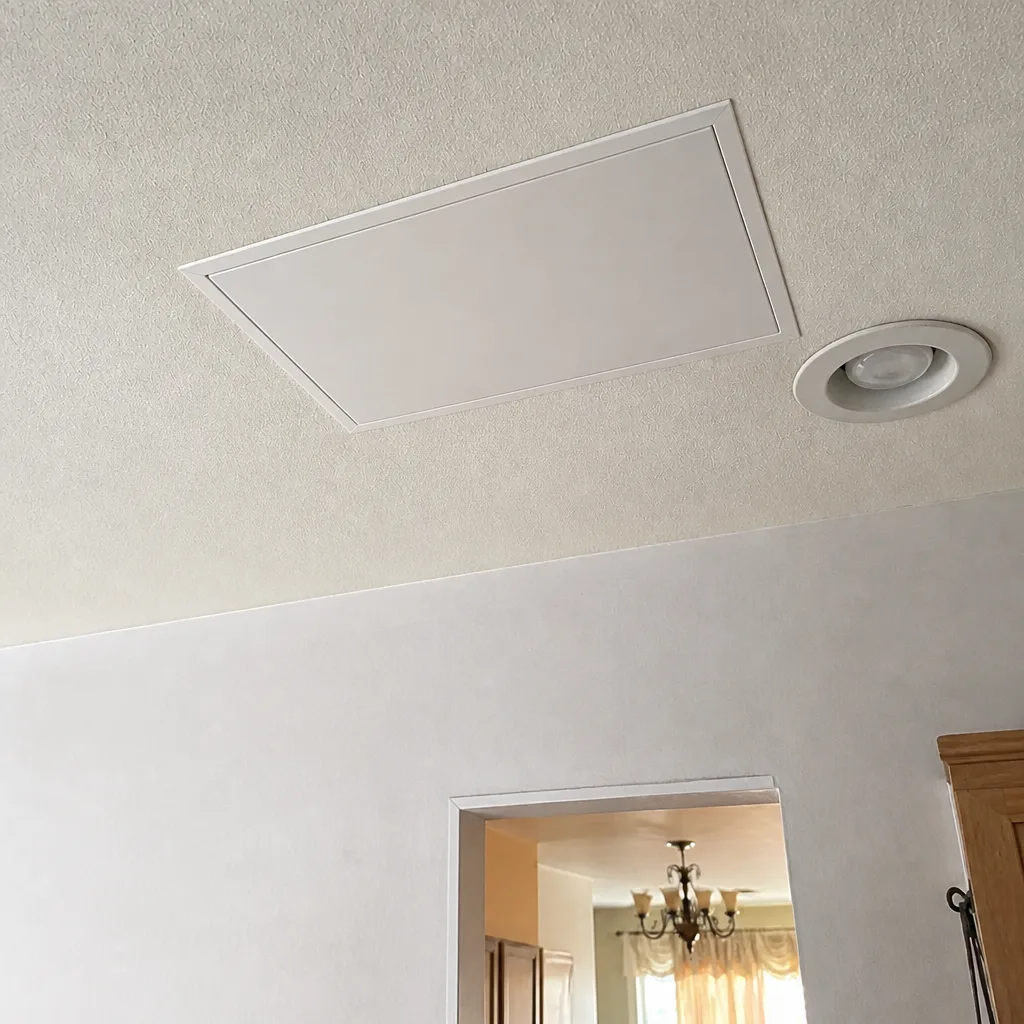
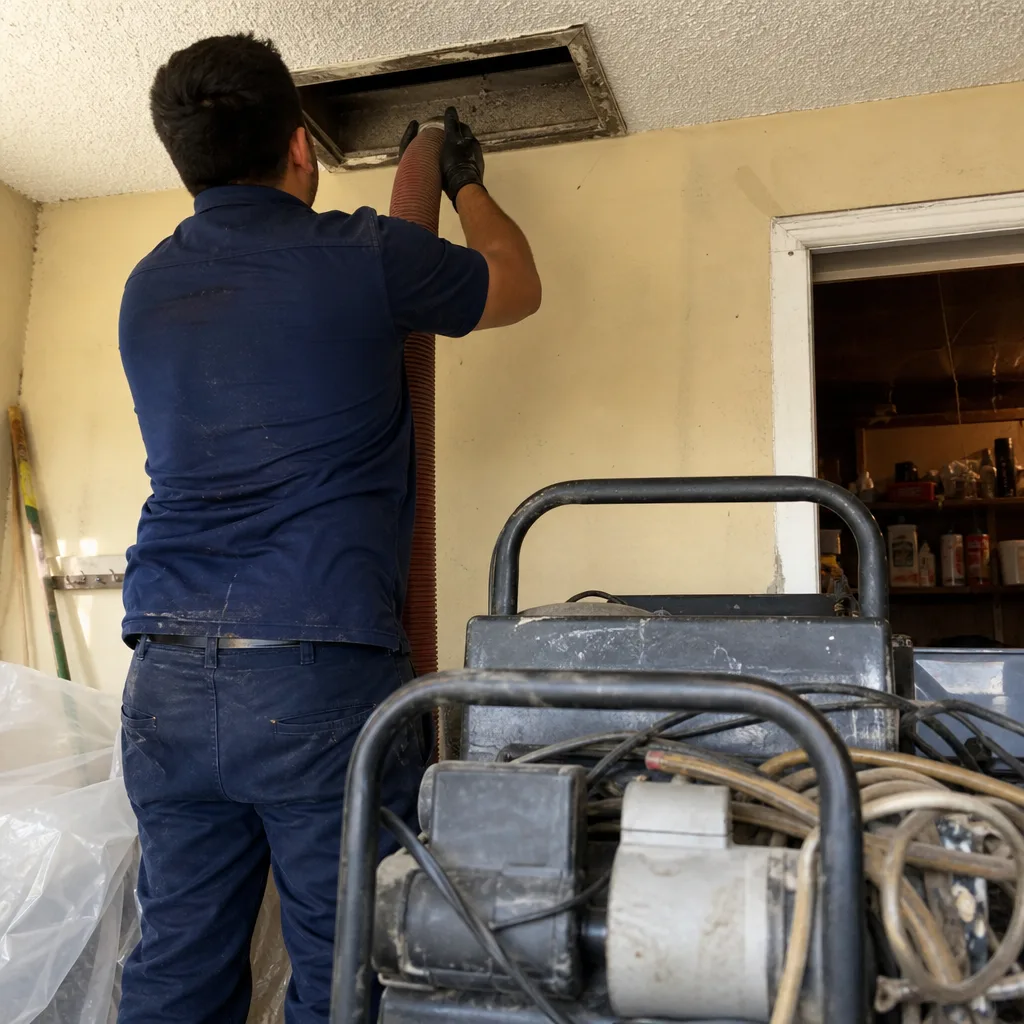
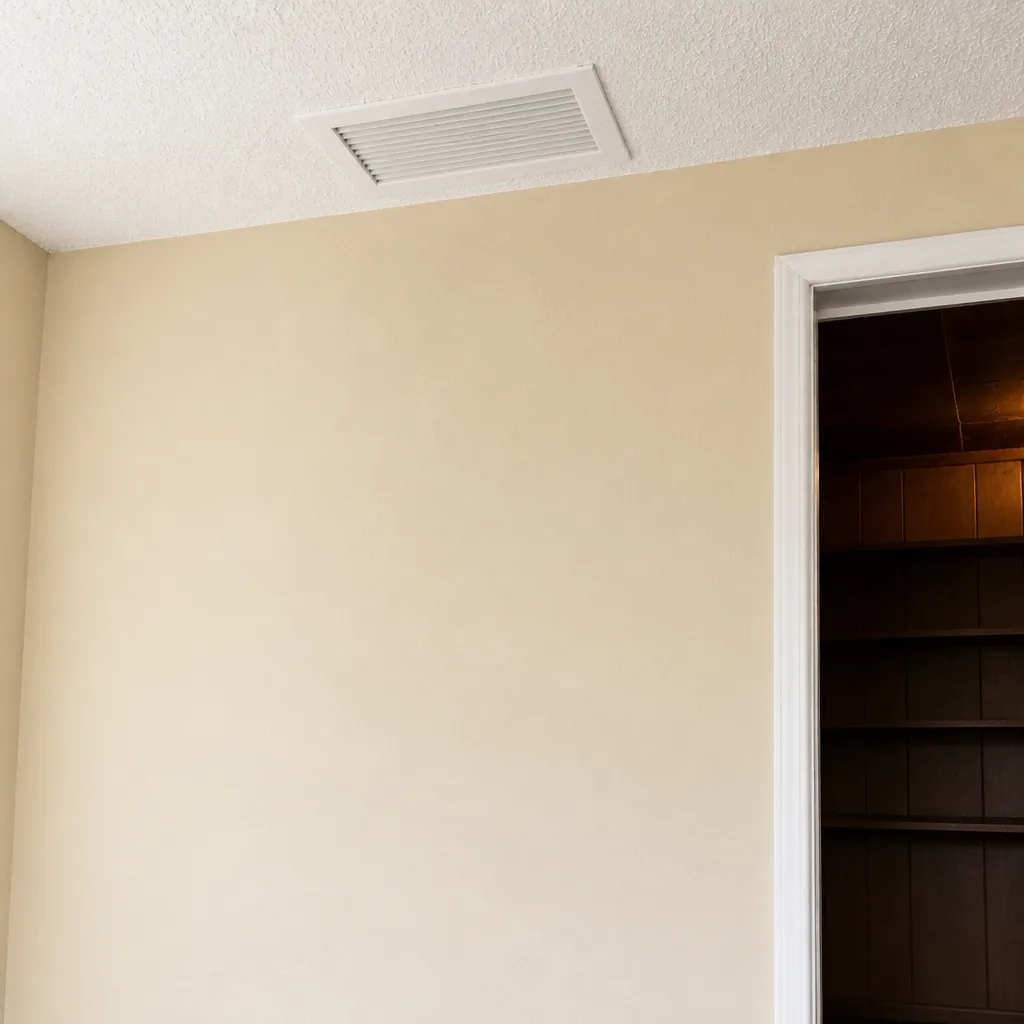
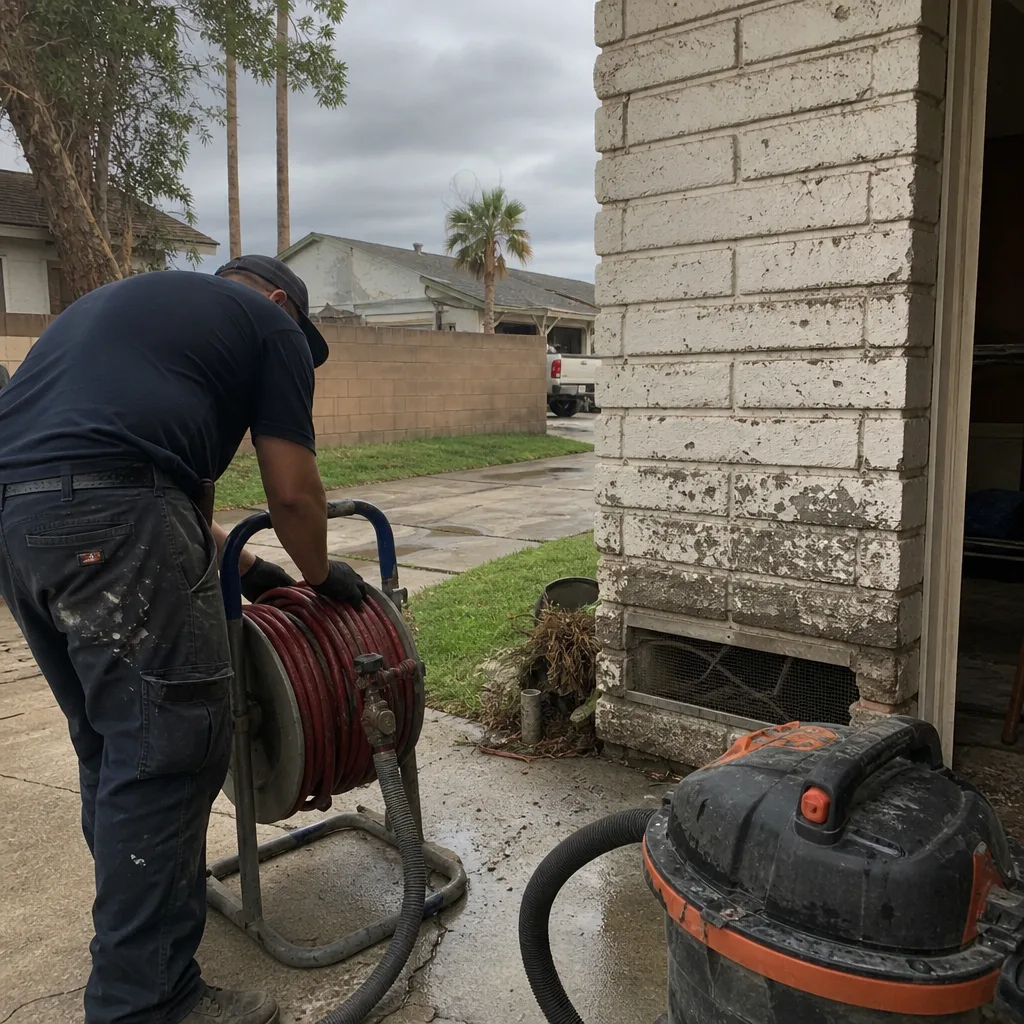
See the difference
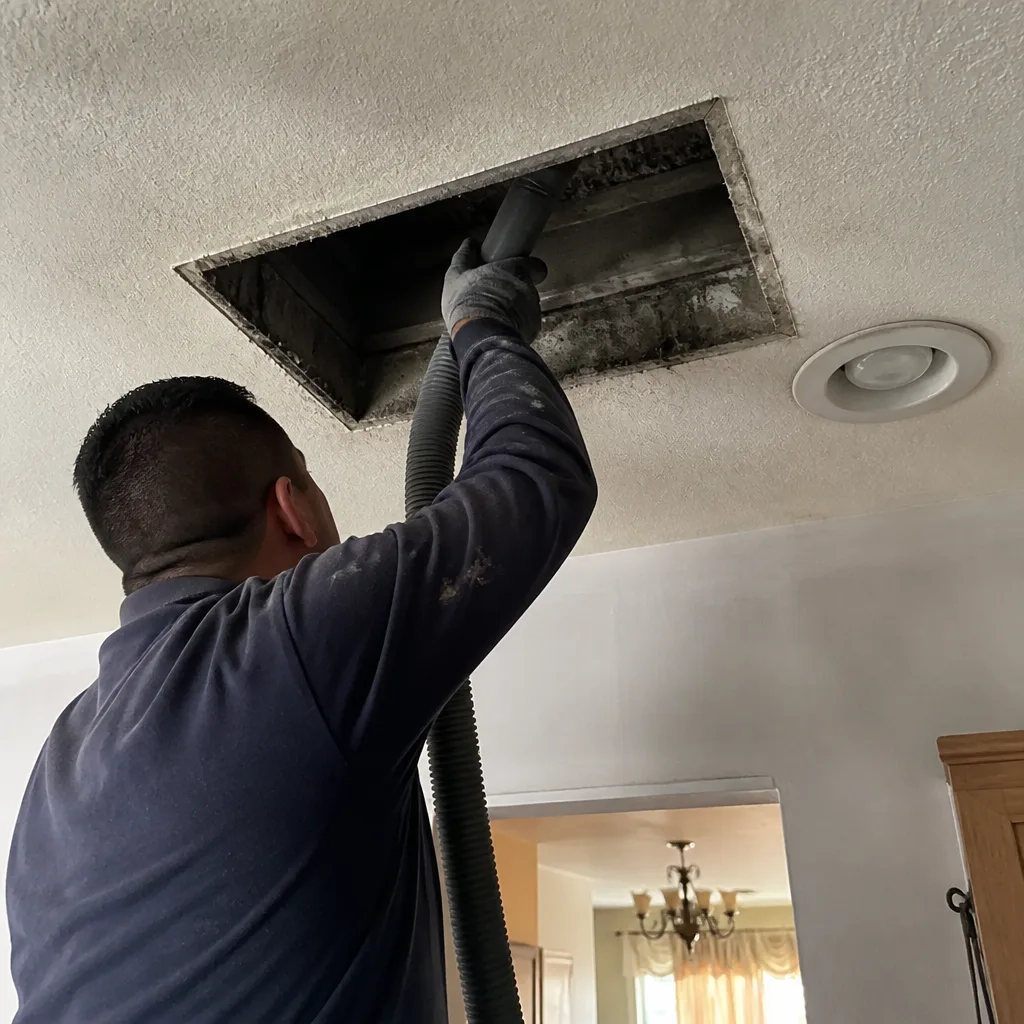 Before
 After
 Before
 After
 Before
 After
When to Call a Professional
Call us when you’re planning duct work and want an honest read on whether a permit is coming, when a cleaning visit turns up a repair that needs a real scope, or when you’re a property manager facing a turnover and want the system in documented good condition before the next tenant. Call us if you’re buying a Fullerton home and want a pre-close assessment of the duct system and its permit record before you sign. Call us if you suspect the previous owner did duct work without a permit and you want to know what the buyer’s inspector is likely to flag. Fullerton Air Duct Cleaning Co offers free estimates in Fullerton – call (877) 792-5884. We answer 24/7. Fast dispatch from 7am to 7pm, Sunday through Friday.
Frequently Asked Questions
No. Air duct cleaning on its own does not require a permit in Fullerton. Cleaning is maintenance, not construction. The permit question only comes up when the work involves repairing, replacing, or modifying the duct system itself – replacing a run of flex duct, rebuilding a plenum, adding an access panel, or rerouting ductwork. If your service is a straight cleaning, there’s no permit conversation. If a repair is needed, we tell you clearly so you can decide what you want to do. Call (877) 792-5884 for an exact quote – estimates are free.
Duct repair generally requires a mechanical permit when it involves replacing a section of duct, modifying a plenum, adding new penetrations, or altering the number or location of registers. Sealing existing joints and reattaching a disconnected duct are usually case-by-case, and whether a permit applies depends on the scope. The most reliable answer is a phone call to the Fullerton Building Division with a description of what needs doing. If you want, call us first and we’ll describe the scope so your question is sharp. Call (877) 792-5884 for an exact quote – estimates are free.
Yes, in many cases. Title 24 covers alterations to existing homes, and duct sealing and insulation requirements apply when you replace or significantly modify ductwork, particularly in unconditioned spaces like attics. Fullerton is in a climate zone where duct sealing and insulation are enforced. Ask your contractor directly: “Does this scope need to meet Title 24, and what documentation do I get?” A vague answer is a red flag. Call (877) 792-5884 for an exact quote – estimates are free.
You should have the permit number and issuing authority (if a permit was required), the final inspection record, a written description of which joints were sealed and what material was used, before-and-after photographs of the affected ducts, and any Title 24 compliance documentation the scope requires. Keep all of it with your home records. Photos are the piece most homeowners don’t think to ask for, and they’re the piece that matters most at resale. Call (877) 792-5884 for an exact quote – estimates are free.
It can, and it often does. Buyer’s inspectors flag duct material mismatches, unsealed joints, unusual plenum connections, and duct configurations that don’t match the permit records on file. Once flagged, it becomes a disclosure item, which can slow the transaction or cost the seller a credit. Pulling the permit before the work is done is the cheapest way to avoid all of that. If you’re already facing an unpermitted repair, call us and we’ll help you think it through. Call (877) 792-5884 for an exact quote – estimates are free.
Before-and-after photos of your own ducts, taken during the service. Not stock photos, not an invoice description, but actual images of the duct runs at your property. We make this a standard part of our service because it’s the only reliable record you have. Pair that with the permit paperwork and inspection record if a permit was required, and you have a documented history of the system. Call (877) 792-5884 for an exact quote – estimates are free.
The Bottom Line
Cleaning your ducts is a maintenance decision and needs no permit. Repairing or modifying them is a construction decision and generally does. That single distinction covers 90% of the confusion this topic generates. Pull the permit for the repair, get the paperwork and photos, ask about Title 24 before the work starts, and keep the file with your home records. When a future buyer’s inspector looks at your ducts, the documentation makes the difference between a smooth close and a negotiation. Duct work you can verify is duct work that holds its value. Insist on the paperwork.
If you’re in Fullerton and want a straightforward assessment of your duct system, call (877) 792-5884 for a free estimate. We’ll tell you what we see, what’s within cleaning scope, and what would need a permit conversation before we touch it.
Written by the team at Fullerton Air Duct Cleaning Co.